Stainless Steel Sheet & Plate Supplier

Walmay is a stainless steel sheet supplier and mill-direct exporter shipping flat-rolled material to more than 100 countries. We hold 304, 316L, 430, 904L and 2205 duplex in thicknesses from 0.3 mm to 150 mm, widths to 2,000 mm, in 2B, BA, No.4 brushed, hairline, No.8 mirror and matte finishes. Every order is supplied against ASTM A240, EN 10088-2 or JIS G4304 with a mill test certificate, and can be cut to your drawing with a length tolerance of plus or minus 0.5 mm. As a stainless steel plate supplier we also stock heavy hot-rolled plate for pressure and structural work.

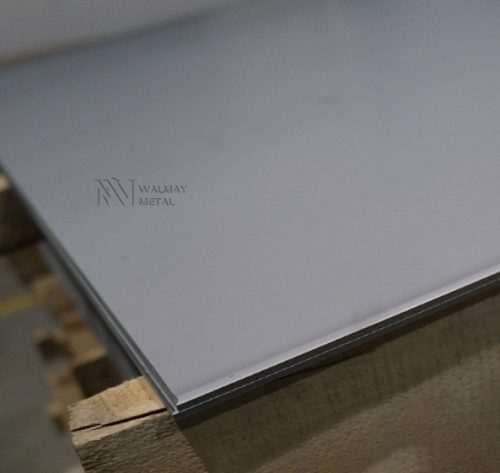
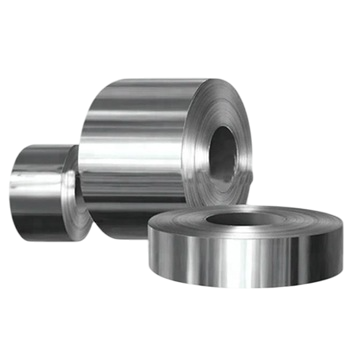
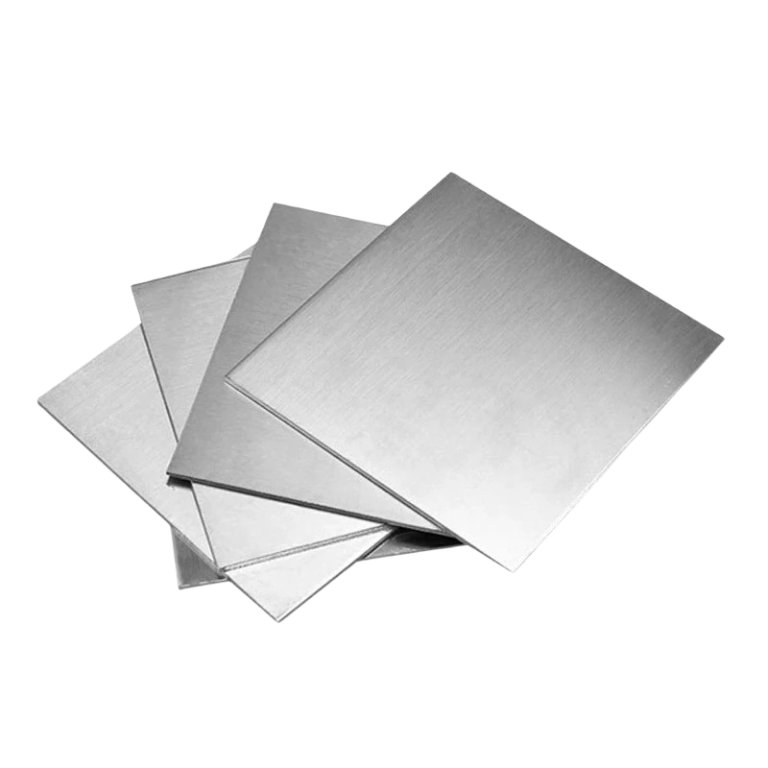
Stainless Steel Plate & Sheet Supplier Featured Image
Filter by Grade Family
  • Austenitic Grades
  • Duplex Grades
  • Ferritic Grades
  • Martensitic Grades
Filter by Rolling Condition
  • Cold Rolled
  • Hot Rolled
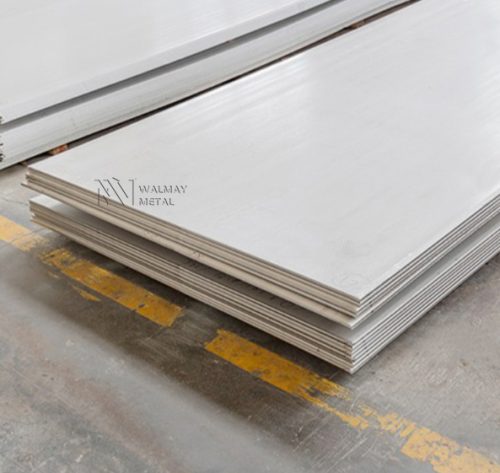
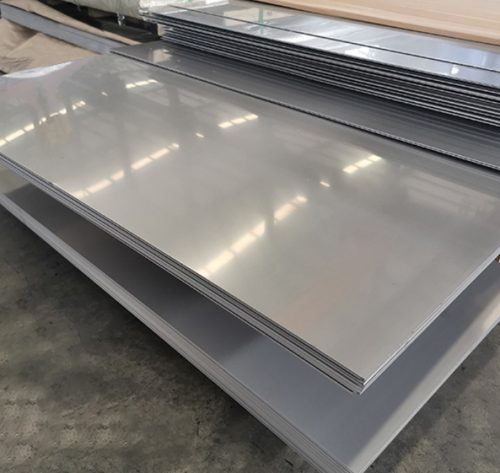
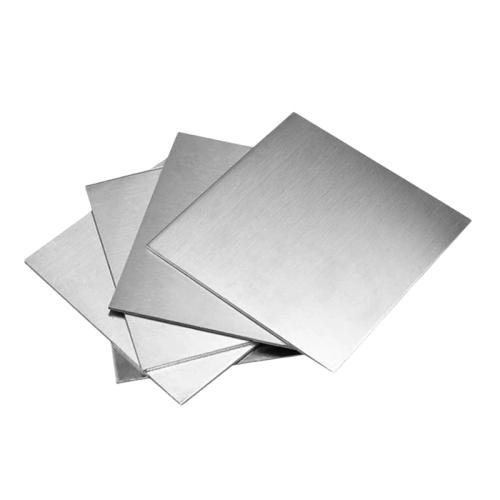
Stacked stainless steel sheets on a warehouse rack with mill markings on the edge and a forklift in the background
Close-up of a stainless steel sheet corner being measured with a caliper, showing the rolled surface and cut edge

Walmay is a stainless steel sheet supplier and mill-direct exporter shipping flat-rolled material to more than 100 countries. We hold 304, 316L, 430, 904L and 2205 duplex in thicknesses from 0.3 mm to 150 mm, widths to 2,000 mm, in 2B, BA, No.4 brushed, hairline, No.8 mirror and matte finishes. Every order is supplied against ASTM A240, EN 10088-2 or JIS G4304 with a mill test certificate, and can be cut to your drawing with a length tolerance of plus or minus 0.5 mm. As a stainless steel plate supplier we also stock heavy hot-rolled plate for pressure and structural work.

Stainless Steel Sheet and Plate We Stock

Each grade below has its own datasheet with chemical composition, mechanical properties and available sizes.

GradeFamilyStandardThickness rangeTypical use
304 / 304LAusteniticASTM A2400.3-80 mmGeneral fabrication, food contact, indoor architecture
316 / 316LAusteniticASTM A2400.4-80 mmMarine, coastal cladding, chemical vessels
316TiAustenitic stabilisedASTM A2401.5-40 mmWelded assemblies held at 400-800 C
321Austenitic stabilisedASTM A2400.5-30 mmExhaust systems, aerospace, expansion joints
317LAustenitic high-molyASTM A2401.0-25 mmPulp and paper bleaching, flue gas scrubbers
310SAustenitic heat resistingASTM A2401.0-50 mmFurnace parts, kiln liners to 1,050 C
904LSuper austeniticASTM B6251.0-40 mmSulphuric and phosphoric acid service
2205 duplexDuplexASTM A2401.5-80 mmPressure vessels, heat exchangers, offshore
2507 super duplexSuper duplexASTM A2402.0-60 mmSeawater systems, high-chloride process lines
201Austenitic manganeseASTM A2400.3-6 mmCost-driven indoor decoration, appliance panels
430FerriticASTM A2400.4-6 mmAppliance trim, indoor decorative panels
409FerriticASTM A2400.8-6 mmAutomotive exhaust, silencers
410MartensiticASTM A2401.0-50 mmWear parts, valve components
420MartensiticASTM A2401.0-60 mmBlades, moulds, hardened wear plate

Two grade hubs group every form we roll for the high-alloy families: 904L stainless steel and 310 / 310S stainless steel.

Grade by Corrosion Environment

For general and indoor service choose 304 / 304L. For chlorides or coastal exposure choose 316 / 316L. When those limits are exceeded, move to 904L, 2205 duplex or 2507.

Corrosion environment Recommended grade Caveats
Mild / indoor / low chloride 304 / 304L Prefer 304L for heavy welded sections. Finish and cleaning still matter.
Coastal air, de-icing salts, mild chlorides 316 / 316L Neither grade is immune to crevice attack in seawater.
Reducing acids (sulphuric / phosphoric duty) 904L or 317L Confirm acid type, concentration and temperature on the enquiry.
Higher chloride / stress-corrosion risk 2205 duplex Roughly double the yield of 304; confirm welding procedure.
Raw seawater / high-chloride process 2507 super duplex Verify fabrication and heat-input limits with the quote.

Actual performance depends on concentration, temperature, surface finish, fabrication and maintenance — not grade alone.

Sheet, Plate and Sheet Metal: What the Terms Mean

Buyers describe this product in several ways and the wording changes by region and by trade. An enquiry for sheet metal stainless steel, a sheet of stainless steel, or stainless steel sheeting all point to the same flat-rolled mill product. Above roughly 4.75 mm the industry switches vocabulary: the identical material becomes stainless steel plate, stainless steel metal plate, or plate stainless steel in day-to-day speech. We quote against your dimensions rather than the label, so send thickness in millimetres or gauge and there is no ambiguity.

Product formAlso calledThicknessRolling route
Stainless steelSteel plate, steel sheet, coil and strip0.3-150 mmCold or hot rolled
SheetSheets of stainless steel, sheet metal, sheeting0.3-4.75 mmCold rolled, 2B or BA base
PlateStainless steel plates, metal plate4.75-150 mmHot rolled, pickled and annealed
StripSlit coil, narrow sheet0.1-3.0 mmCold rolled and slit to width

The distinction matters for two practical reasons. Cold-rolled sheet arrives with a decorative, dimensionally tight surface and is normally specified by finish. Hot-rolled stainless steel plate arrives pickled with a duller surface and is specified by mechanical properties and flatness, because it goes into pressure parts and structures rather than visible panels.

Size, Tolerance and Finish Options

Walmay supplies stainless steel sheet and plate in custom thickness from 0.3 mm to 150 mm.

Parameter Options
Thickness 0.3 mm to 150 mm
Width 1,000 / 1,219 / 1,500 / 2,000 mm, slit to any narrower width
Length 2,000 / 2,438 / 3,000 / 6,000 mm, or cut to size
Length tolerance plus or minus 0.5 mm on cut-to-size orders
Flatness 0.1 mm per square metre on levelled material
Surface finish 2B, 2D, BA, No.4 brushed, HL hairline, No.8 mirror, matte, embossed, colour coated
Edge Mill edge or slit edge
Certification EN 10204 3.1 mill test certificate, SGS inspection on request

Per-grade thickness bands on the stock table above still apply (for example 304/304L 0.3–80 mm, 316/316L 0.4–80 mm, 430 0.4–6 mm). State thickness in millimetres — not only “sheet” or “plate” — on the enquiry.

Standard Sheet Sizes and 4x8 ft Weights

The most requested size in global procurement is the 4x8 ft sheet, 1,219 by 2,438 mm, which we ship from stock in 304, 316 and 430. Because freight and handling are quoted by weight, the table below gives the calculated mass of one 4x8 austenitic sheet at 8.0 g/cm3, with the US gauge equivalents buyers most often quote.

GaugeThicknessWeight per 4x8 sheet (kg)Weight per 4x8 sheet (lb)
24 ga0.64 mm15.133
22 ga0.79 mm18.841
20 ga0.95 mm22.650
18 ga1.27 mm30.267
16 ga1.59 mm37.883
14 ga1.98 mm47.1104
12 ga2.78 mm66.1146
11 ga3.18 mm75.6167
10 ga3.57 mm84.9187
-6.00 mm142.7315

Ferritic grades such as 430 and 409 run about 3 percent lighter at 7.7 g/cm3, and duplex 2205 sits at 7.8 g/cm3. For non-standard dimensions we produce custom stainless steel plates cut to your drawing, which usually removes a shearing operation and the associated offcut from your own shop.

How to Choose the Right Stainless Steel Sheet Grade

304 and 304L

The default austenitic grade and the right answer for most indoor and non-chloride work. It is FDA compliant for food contact, readily formed and welded, and available in every finish we carry. Choose 304L when sections above about 6 mm will be welded and not solution annealed afterwards, because the lower carbon prevents carbide precipitation at the grain boundaries.

316 and 316L

Two to three percent molybdenum raises resistance to chlorides and to reducing acids, which is why 316 is specified for coastal cladding, marine fittings, chemical vessels and medical equipment. Use 316L for welded fabrications and 316 plate where you need the higher carbon strength. In seawater neither grade is immune to crevice attack, so move to duplex above about 200 ppm chloride at elevated temperature.

430 and 409

Ferritic, magnetic, and roughly 30 percent cheaper than 304 because they carry no nickel. 430 suits appliance panels, lift interiors and indoor trim. 409 is the automotive exhaust grade, chosen for oxidation resistance at cost rather than appearance. Neither belongs outdoors in a marine or de-iced environment.

904L, 2205 and 2507

These are the grades to specify when 316L has already failed. 904L handles sulphuric and phosphoric acid duty. 2205 duplex offers roughly double the yield strength of 304 plus strong resistance to chloride stress corrosion cracking, which often lets you thin a vessel wall. 2507 super duplex extends that to raw seawater and high-chloride process streams.

Decorative and coated finishes

Where appearance drives the specification, work from the finish rather than the grade: No.8 mirror, 201 brushed, embossed and colour coated sheet all ship with protective PVC film to survive installation.

Surface Finishes

Finish Description Typical application
2B Cold rolled, annealed, pickled, lightly skin-passed; smooth grey with slight reflectivity The default industrial finish for fabrication and painting
2D Cold rolled and annealed without skin pass; uniform matte Deep-drawn parts where lubricant retention helps
BA Bright annealed in a controlled atmosphere; near-mirror Appliance panels, reflectors, food equipment
No.4 brushed Unidirectional abrasive grain, roughly 150-180 grit Kitchen equipment, lift panels, worktops
HL hairline Long continuous grain Architectural cladding and doors
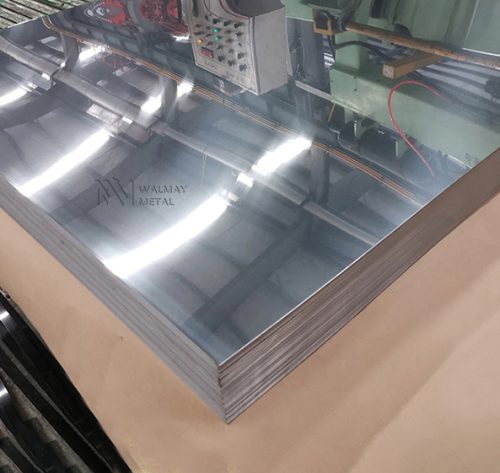
No.8 mirror Progressively polished to a reflective surface Feature walls, signage, decorative columns
Matte / bead blast Uniform low-gloss texture Anti-glare surfaces and facades
Embossed Rolled pattern in relief Anti-slip flooring, lift interiors, panels

Polished finishes — No.4 brushed, HL hairline and No.8 mirror — are supplied on 201, 304/304L and 316L in the dedicated polished line at 0.5–3.0 mm (mirror / polished, brushed / hairline). Confirm heavier polish, and a finish/Ra report when needed, on the quotation request.

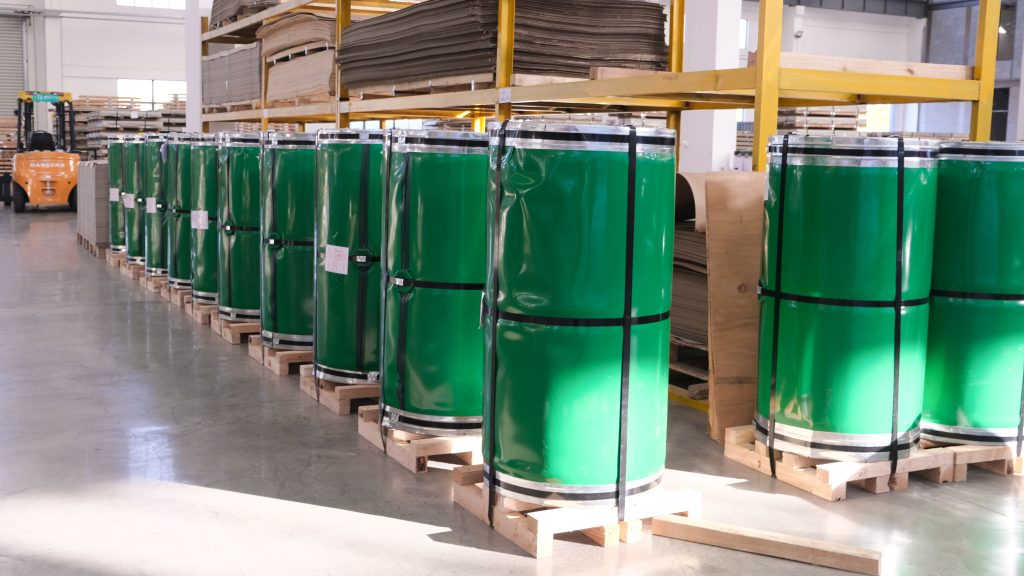
Banded stainless steel sheets stacked and shrink-wrapped on a pallet, ready for export shipment

Cut to Size, Slitting and Fabrication

Our own facility processes the material before it ships, which removes handling steps and scrap from your side. Full details are on our stainless steel sheet metal fabrication page.

  • Cutting to your drawing by shear, plasma, laser or waterjet, at plus or minus 0.5 mm on length
  • Slitting coil to narrow width and recoiling or cutting to sheet
  • Levelling and tension levelling to 0.1 mm per square metre for architectural panels
  • Bending, stamping, welding and edge finishing on request
  • Protective PVC film, plus interleaved paper on mirror and BA finishes
Get a Quote

Standards, Certification and Traceability

Region Standard Scope
USA ASTM A240 / ASME SA240 Chromium and chromium-nickel plate, sheet and strip for pressure vessels
USA ASTM A480 General requirements for flat-rolled stainless
Europe EN 10088-2 Technical delivery conditions for corrosion-resisting flat products
Europe EN 10029 / EN ISO 9445 Plate and cold-rolled tolerances
Japan JIS G4304 / G4305 Hot and cold rolled stainless plate and sheet
China GB/T 4237 / GB/T 3280 Hot and cold rolled stainless plate and sheet

Material ships with an EN 10204 3.1 mill test certificate showing heat number, chemical analysis and mechanical results. Inventory is drawn from long-standing supply relationships with POSCO and Tsingshan, and SGS or other third-party inspection can be arranged before loading. Salt-spray testing on our coastal-service material exceeds 1,500 hours.

When comparing mill test certificates from suppliers, match each certificate to the purchase order before release:

  • Confirm grade, product form, standard edition, thickness and delivery condition against the PO — not a sister grade or the wrong product form.
  • Confirm certificate type (Walmay ships EN 10204 3.1; 3.2 or SGS can be named on the RFQ) and that the heat number on the certificate matches the packing list and the marking on the delivered sheets or plates.
  • Check reported chemistry and mechanical results against the limits in the named standard (ASTM A240, EN 10088-2 or JIS G4304/G4305). If fields or values do not match, quarantine that heat and request a corrected certificate or replacement before release.
Stainless steel sheet being cut on a laser cutting table in a fabrication shop
Gloved hand inspecting the clean cut edge of a finished stainless steel plate part

Applications by Industry

Field references from our own supply history include 10 mm sheet holding 10 percent acetic acid for over ten years without perforation in organic acid storage, and 8 mm sheet exceeding 8,000 hours of crevice corrosion resistance in seawater service.

Stainless Steel Sheets For Sale: Ordering and Lead Times

We quote FOB, CIF and DAP. Standard 4x8 ft sheets in 304, 316 and 430 ship from stock; other grades, thicknesses and finishes are rolled to order.

ItemDetail
Minimum order1 tonne for stock items, 3-5 tonnes for mill-rolled grades and finishes
Lead time from stock7-10 days to loading
Lead time mill-rolled25-40 days depending on grade and finish
Transit to Southeast Asia15-25 days from Wuxi
PackingWooden pallet or crate, edge protection, moisture barrier, PVC film

To quote accurately we need the grade, thickness, width and length, quantity, surface finish, tolerance requirement and destination port. Sheet pricing moves with the nickel, chromium and molybdenum alloy surcharge rather than sitting on a fixed list, so quotations are valid for a stated window; our stainless steel price commentary tracks those inputs.

Banded stainless steel sheets stacked and shrink-wrapped on a pallet, ready for export shipment

Supply to the Philippines and Southeast Asia

We ship regular containers to Manila, Cebu and other Philippine ports, as well as Thailand, Vietnam and Indonesia. For Philippine procurement teams we provide CIF and FOB pricing with full ASTM A240 mill certification, cut-to-size to match local fabrication practice, typical lead times of 15 to 25 days from Wuxi stock, and optional SGS third-party inspection.

Get a Quote
Stainless steel sheet being cut on a laser cutting table in a fabrication shop
Gloved hand inspecting the clean cut edge of a finished stainless steel plate part

Why Buyers Choose Walmay as Their Stainless Steel Sheet Supplier

Among stainless steel sheet suppliers we compete on processing and documentation rather than list price alone. Over eleven years of export experience, mill relationships that keep 304, 316L and duplex on the floor, in-house cutting and levelling, and complete certification make us a practical single source for buyers who need material that arrives ready to fabricate. More on the company is on our about Walmay page, and the full catalogue across every form sits under stainless steel products.

Other forms: tube and pipe, bar and rod, coil and strip, and profiles.

FAQs

How much does a 4x8 sheet of stainless steel weigh?
A 4x8 ft sheet measures 1,219 by 2,438 mm, an area of 2.97 square metres. In an austenitic grade at 8.0 g/cm3 the weight is about 23.8 kg per millimetre of thickness, so 16 ga at 1.59 mm weighs roughly 37.8 kg or 83 lb and 3 mm weighs about 71 kg or 157 lb. Ferritic grades such as 430 come out about 3 percent lighter.
How much does a sheet of stainless steel cost?
Price is driven by the alloy surcharge for nickel, chromium and molybdenum, then by thickness, width, surface finish, order quantity and Incoterm. Because those inputs move weekly there is no fixed list price; send the grade, dimensions, finish, quantity and destination port and we return a quotation valid for a stated period.
Which is stronger, 316 or 304 stainless steel?
Their mechanical properties are close, with a typical yield around 205 to 240 MPa and tensile strength around 515 to 620 MPa for both in the annealed condition. The real difference is corrosion resistance: the molybdenum in 316 gives markedly better performance against chlorides and reducing acids. If you need substantially higher strength rather than better corrosion resistance, 2205 duplex roughly doubles the yield strength of either.
What is the difference between stainless steel sheet and plate?
The distinction is thickness. Flat-rolled material below about 4.75 mm is sheet, which is normally cold rolled and specified by surface finish. Above that it is plate, normally hot rolled, pickled and annealed, and specified by mechanical properties and flatness. Some standards place the boundary at 3 mm or at 6 mm, so state the thickness in millimetres on your enquiry. Our guide to cold rolled steel plate and sheet works through the tolerances, finishes and cost difference between the two production routes.
What thickness of stainless steel sheeting do you supply?
From 0.3 mm in cold-rolled sheet up to 150 mm in hot-rolled plate, in widths up to 2,000 mm. Anything under 0.3 mm is supplied as strip from slit coil.
Can you cut stainless steel plate to size?
Yes. We cut to your drawing with a length tolerance of plus or minus 0.5 mm, and can also slit, level, bend and finish edges before packing. Sending us the cut list normally removes a shearing operation and the offcut from your own shop.
Is stainless steel sheet magnetic?
Austenitic grades such as 304, 316L and 321 are essentially non-magnetic in the annealed condition, although cold working the surface can raise a slight response. Ferritic grades such as 430 and 409 and martensitic grades such as 410 and 420 are magnetic, and duplex grades are partly magnetic because they contain ferrite.
Which finish should I specify for food contact?
2B is acceptable for most food equipment, but where cleanability is audited a BA or No.4 finish with a measured roughness below 0.8 micrometres Ra is normally requested. Our food processing hygiene guide sets out the grade and finish combinations that pass audit.
Do you provide mill test certificates?
Every shipment includes an EN 10204 3.1 certificate with heat number, chemical composition and mechanical test results traceable to the melt. SGS or other third-party inspection can be added before loading on request.
How do I compare mill test certificates for stainless sheet?
Match grade, product form, standard edition, thickness and delivery condition to the purchase order. Confirm EN 10204 3.1 (or 3.2/SGS if named), that the heat number matches the packing list and sheet marking, and that chemistry and mechanical results sit inside ASTM A240, EN 10088-2 or JIS limits. If documents or values do not match, quarantine the heat and request a corrected certificate or replacement before release.

Related applications

Our Recent Articles