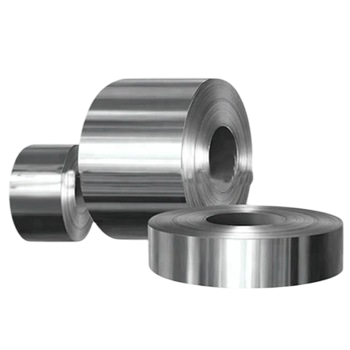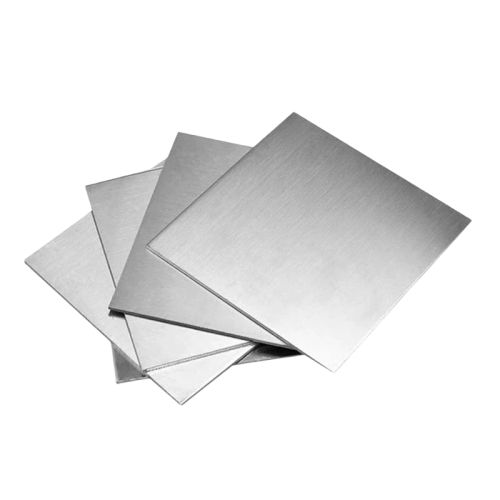
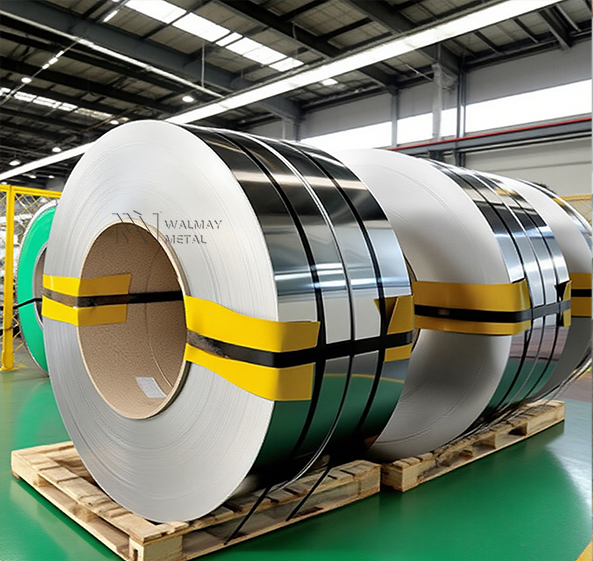
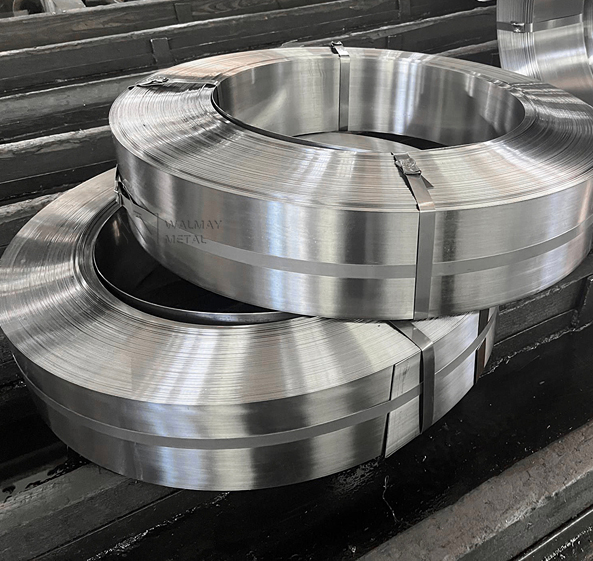
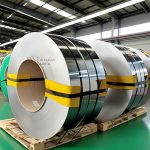
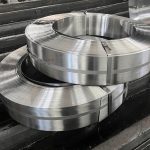
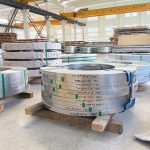
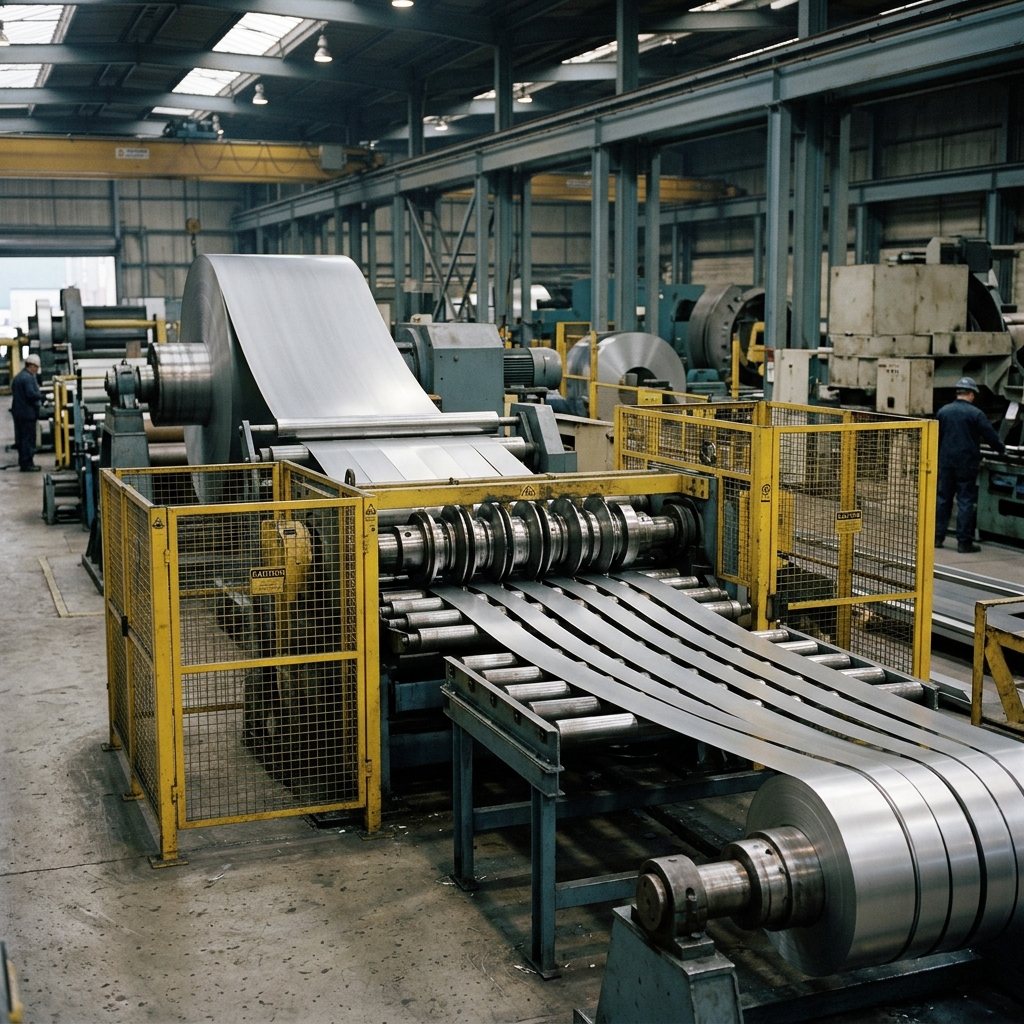
Stainless steel strip is narrow flat product slit from cold rolled coil, supplied from 0.05 mm to 3.0 mm thick and 4 mm to 600 mm wide. It is the feedstock for stamped parts, springs, clips, gaskets, tube making, banding and trim, and it is sold either as a coil, sometimes called a strip roll, or as cut lengths. Walmay slits to width from 304, 304L, 316L, 430, 201, 321 and 420 coil, with edges as slit, deburred, rolled or fully rounded, and tension levelling where flatness matters.

| Item | Detail |
|---|---|
| Grades | 304, 304L, 316, 316L, 301, 321, 430, 201, 420, and 2205 to order |
| Standards | ASTM A240 and A480 for chemistry and properties, ASTM A666 for strip, EN 10088-2, JIS G4313 for spring strip |
| Thickness | 0.05-3.0 mm |
| Width | 4-600 mm |
| Finish | 2B, BA, 2D, No.4, mirror, or as-rolled |
| Temper | Annealed, quarter hard, half hard, three quarter hard, full hard, spring |
| Edge | As slit, deburred, rolled round, square dressed |
| Form | Coil, traverse-wound coil, or cut lengths |
| Coil inner diameter | 200, 300, 400, 500 mm |
| Certification | EN 10204 3.1 |
| Thickness | Thickness tolerance | Width tolerance up to 100 mm | Width tolerance 100-600 mm |
|---|---|---|---|
| 0.05-0.10 mm | Plus or minus 0.005 mm | Plus or minus 0.05 mm | Plus or minus 0.10 mm |
| 0.10-0.25 mm | Plus or minus 0.01 mm | Plus or minus 0.05 mm | Plus or minus 0.10 mm |
| 0.25-0.50 mm | Plus or minus 0.015 mm | Plus or minus 0.08 mm | Plus or minus 0.15 mm |
| 0.50-1.00 mm | Plus or minus 0.025 mm | Plus or minus 0.10 mm | Plus or minus 0.20 mm |
| 1.00-2.00 mm | Plus or minus 0.04 mm | Plus or minus 0.15 mm | Plus or minus 0.25 mm |
| 2.00-3.00 mm | Plus or minus 0.06 mm | Plus or minus 0.20 mm | Plus or minus 0.30 mm |
Tighter tolerances are available on precision-rolled strip. For stamped parts the thickness tolerance is usually what governs die life and part consistency, so it is worth specifying rather than accepting the standard.
Cold rolling after annealing raises strength dramatically, and the temper you order should follow the forming the part needs.
| Temper | Tensile strength, 304 | Hardness | Formability | Typical use |
|---|---|---|---|---|
| Annealed | 515-750 MPa | Up to 92 HRB | Excellent, deep drawing | Deep-drawn parts, formed brackets |
| Quarter hard | 860 MPa min | 25-32 HRC | Moderate bends | Light formed parts, trim |
| Half hard | 1,035 MPa min | 32-37 HRC | Simple bends only | Clips, brackets, banding |
| Three quarter hard | 1,205 MPa min | 37-41 HRC | Very limited | Springs, retainers |
| Full hard | 1,275 MPa min | 41-45 HRC | Flat parts only | Spring clips, blades, shims |
| Spring temper | 1,300 MPa and above | 45 HRC and above | None | Springs, diaphragms |
301 rather than 304 is the usual choice for spring strip, because its slightly leaner nickel content makes it work harden faster and reach higher strength for the same rolling reduction.
| Edge | Description | Use |
|---|---|---|
| As slit | Square with a small burr from the slitting knives | Further processing, hidden parts |
| Deburred | Burr removed, corners left square | General fabrication, safe handling |
| Rolled round, No.1 edge | Fully rounded by rolling | Springs, parts under fatigue load, visible trim |
| Square dressed, No.3 edge | Machined or ground square | Precision fits, guides |
Edge condition matters more than it appears in fatigue applications. A slitting burr is a stress raiser, so springs and diaphragms should be ordered with a rolled edge, not simply deburred.
| Item | Detail |
|---|---|
| Minimum order | 500 kg from stock, 2 tonnes for a slit-to-order run |
| Lead time from stock | 7-12 days |
| Lead time slit to order | 15-25 days |
| Stock range | 0.3-2.0 mm in 304, 316L and 430, widths from 20 mm |
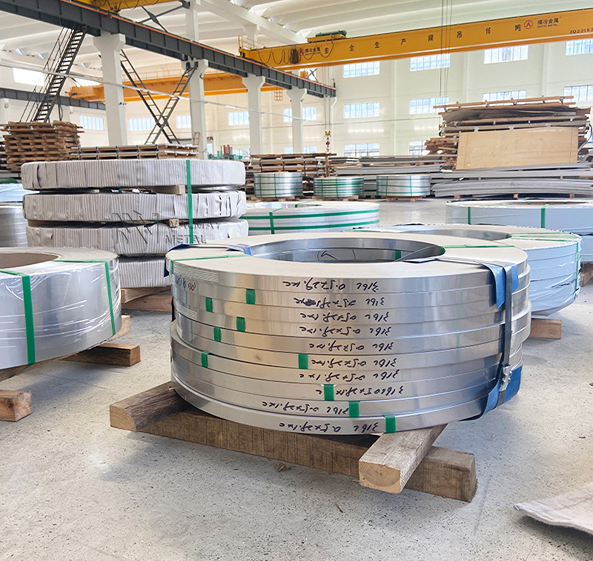
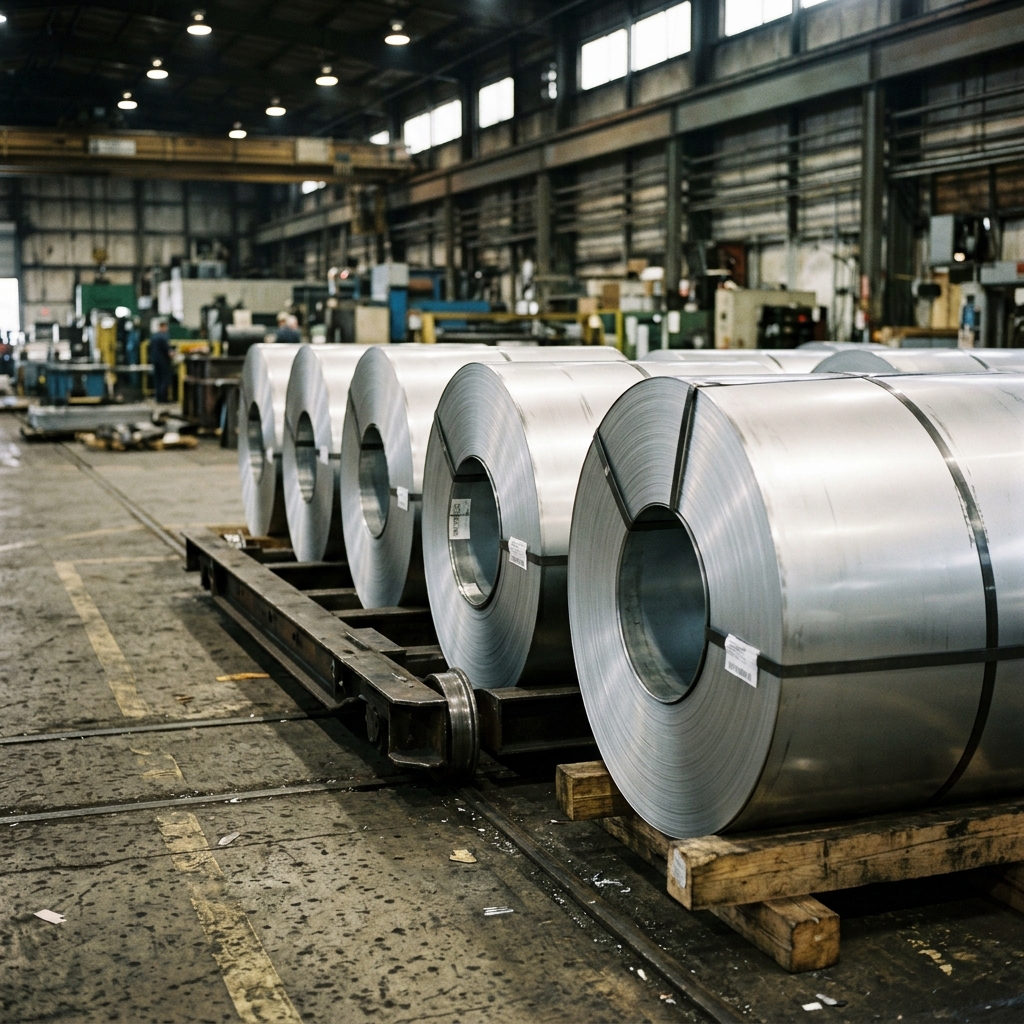
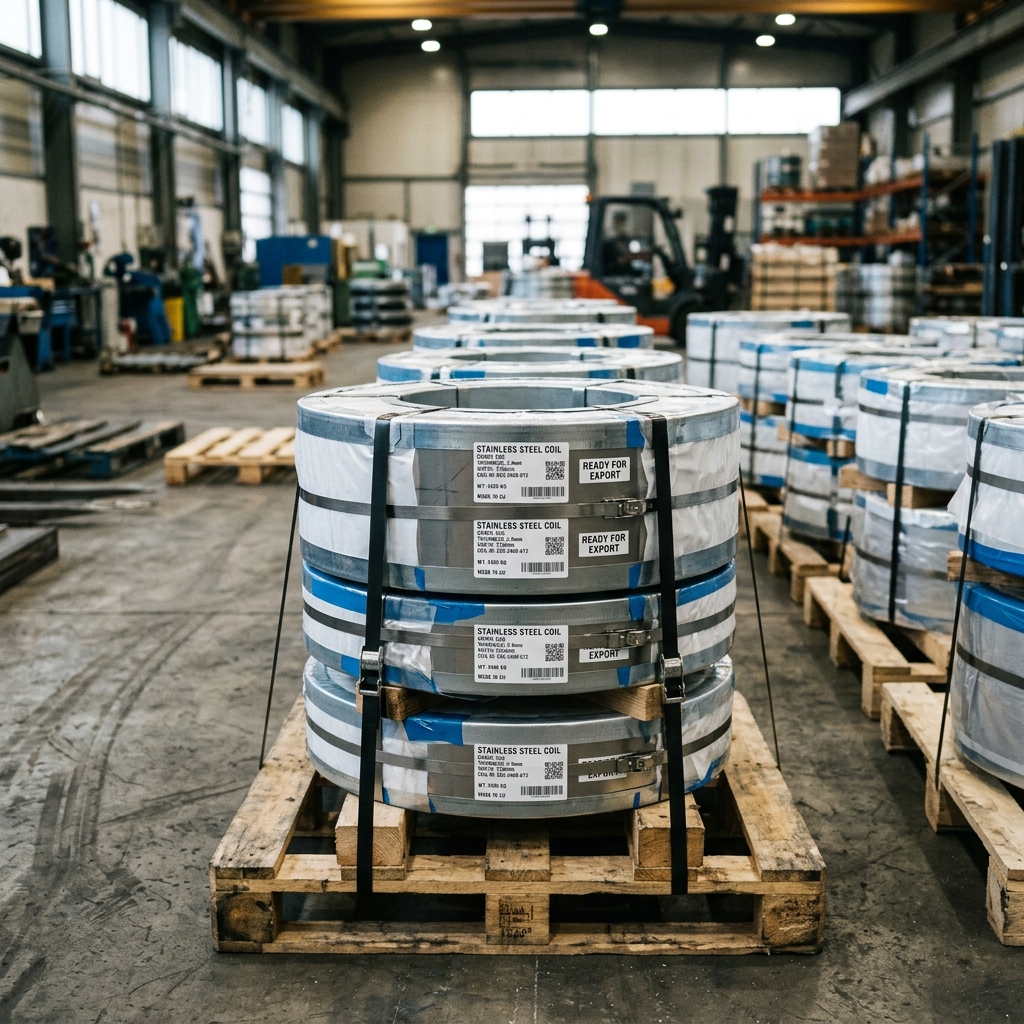
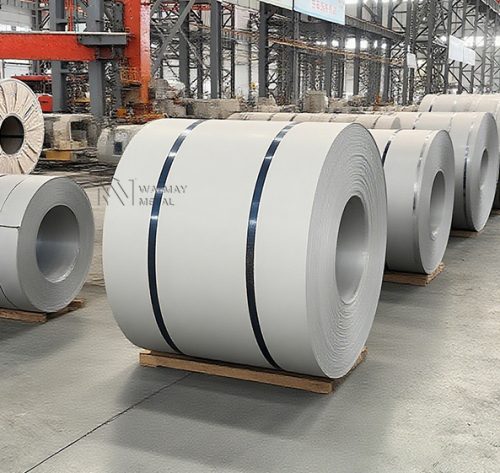
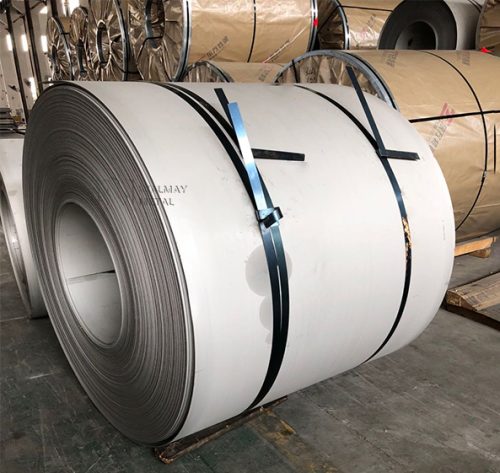
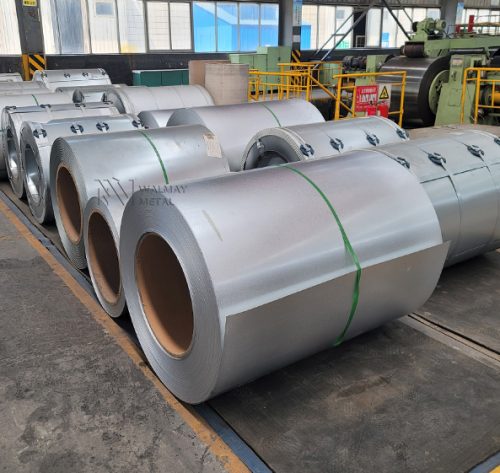
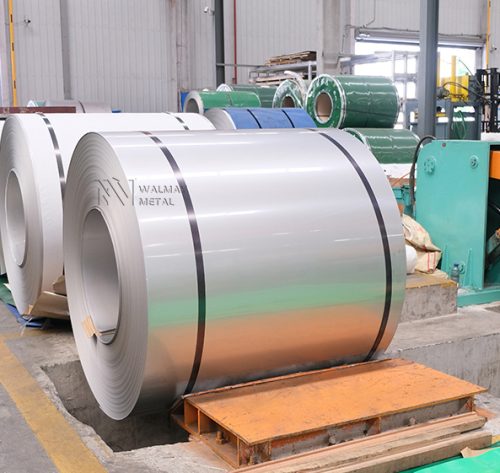
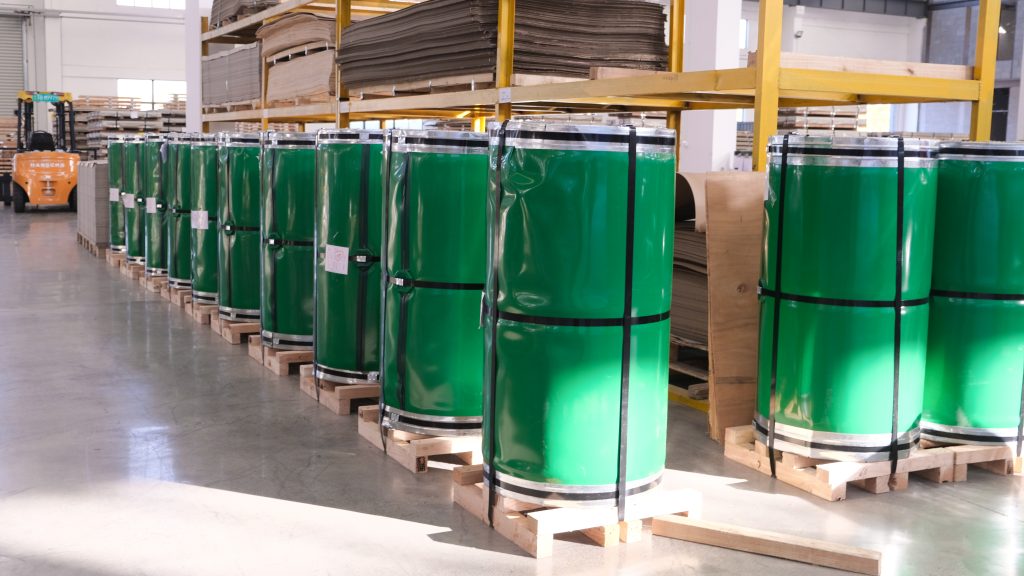
| Packing | Coils on pallets with PVC film and edge protection, cut strips crated |
| Incoterms | FOB, CIF, DAP |
Send thickness, width, grade, temper, edge condition, coil or cut length, and your coil inner diameter and maximum weight. Related products: 304 cold rolled coil, 316L BA mirror coil, 430 coil, 304 sheet, and the full coil and strip range.
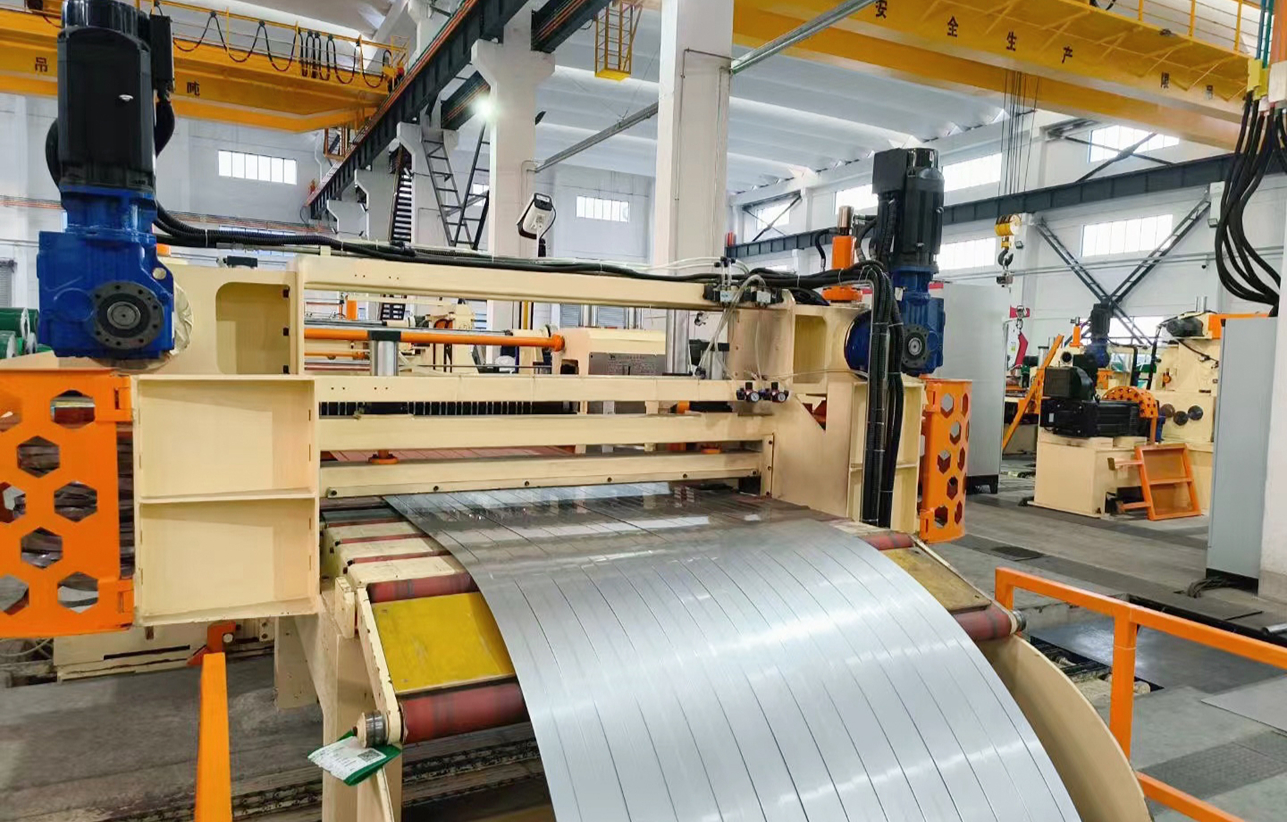
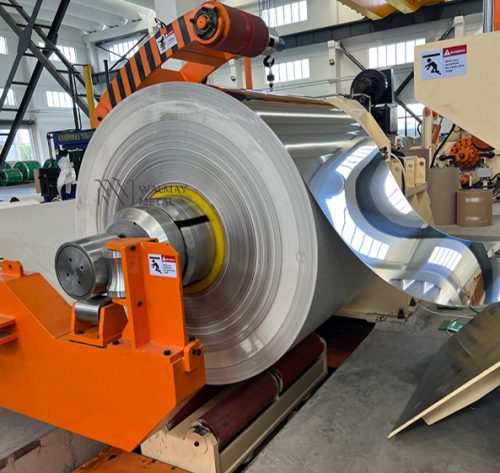
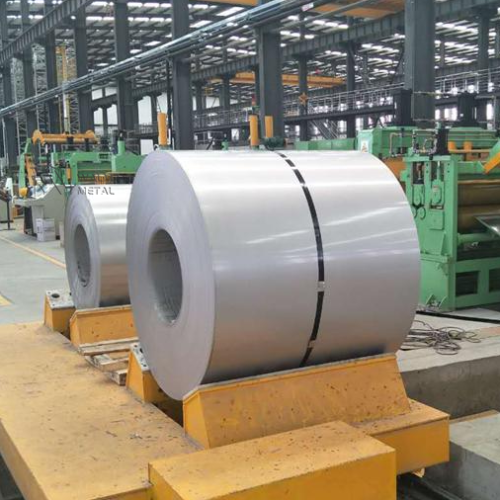
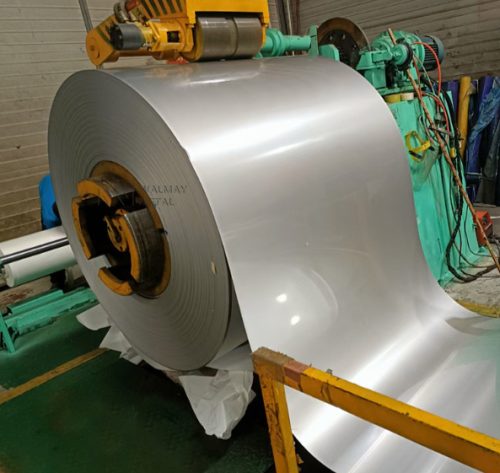
Coil Feeding into Processing Machine

Parallel Coil Processing Lines
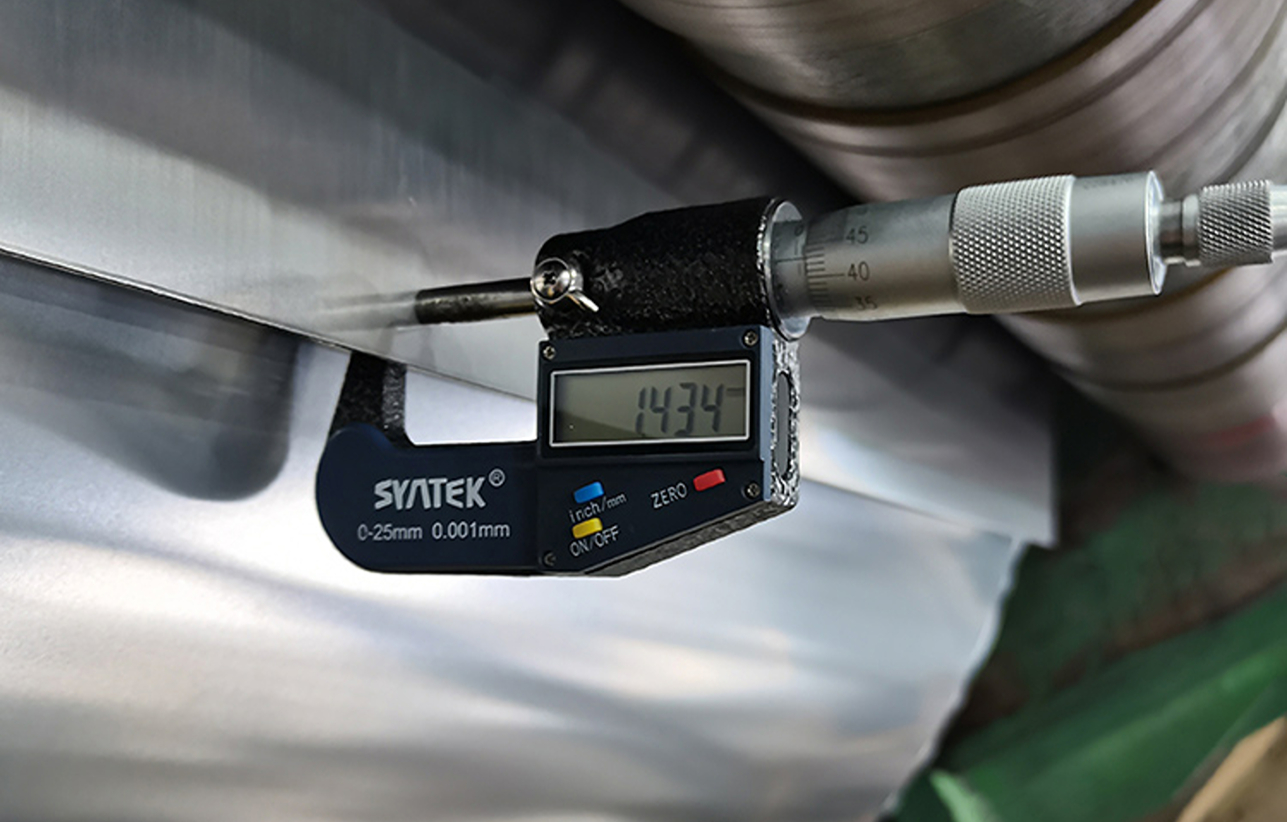
Coil Thickness Measurement
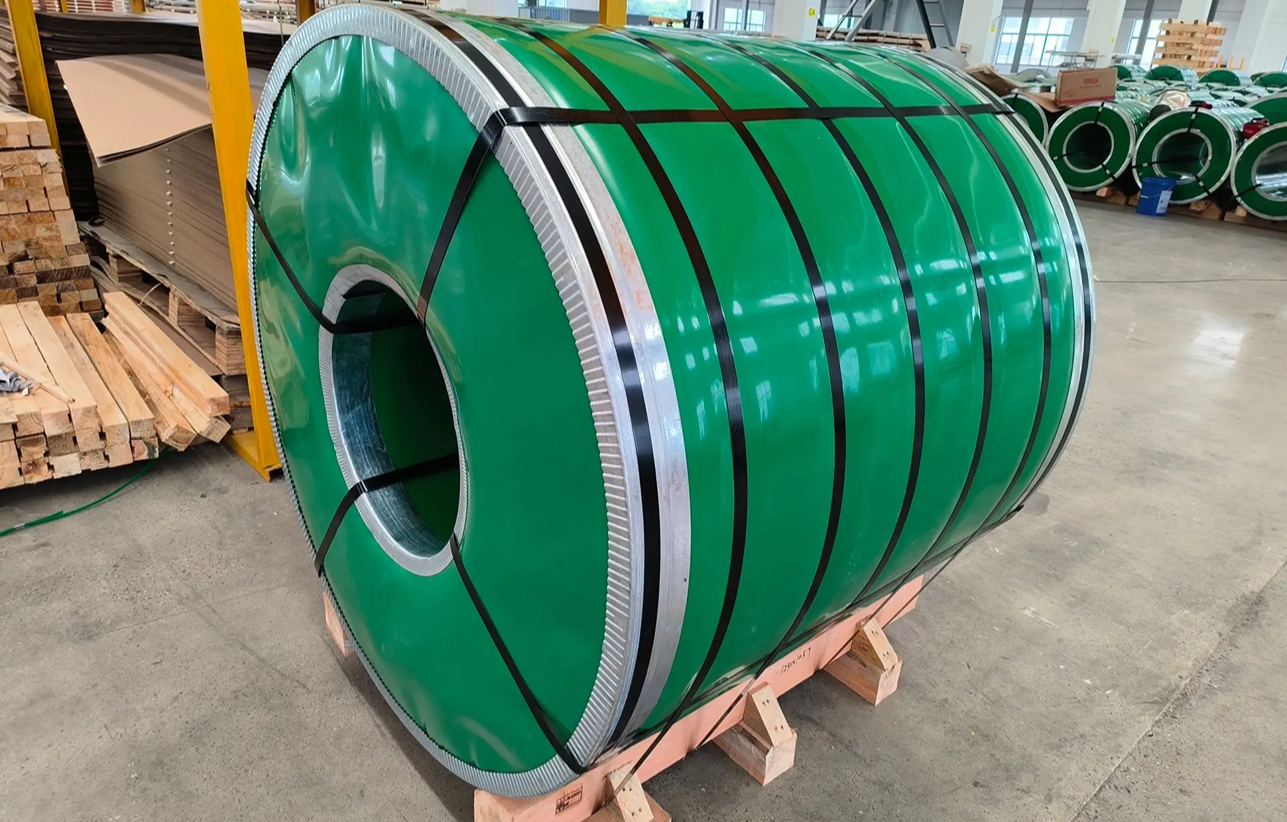
Single Coil Packaging
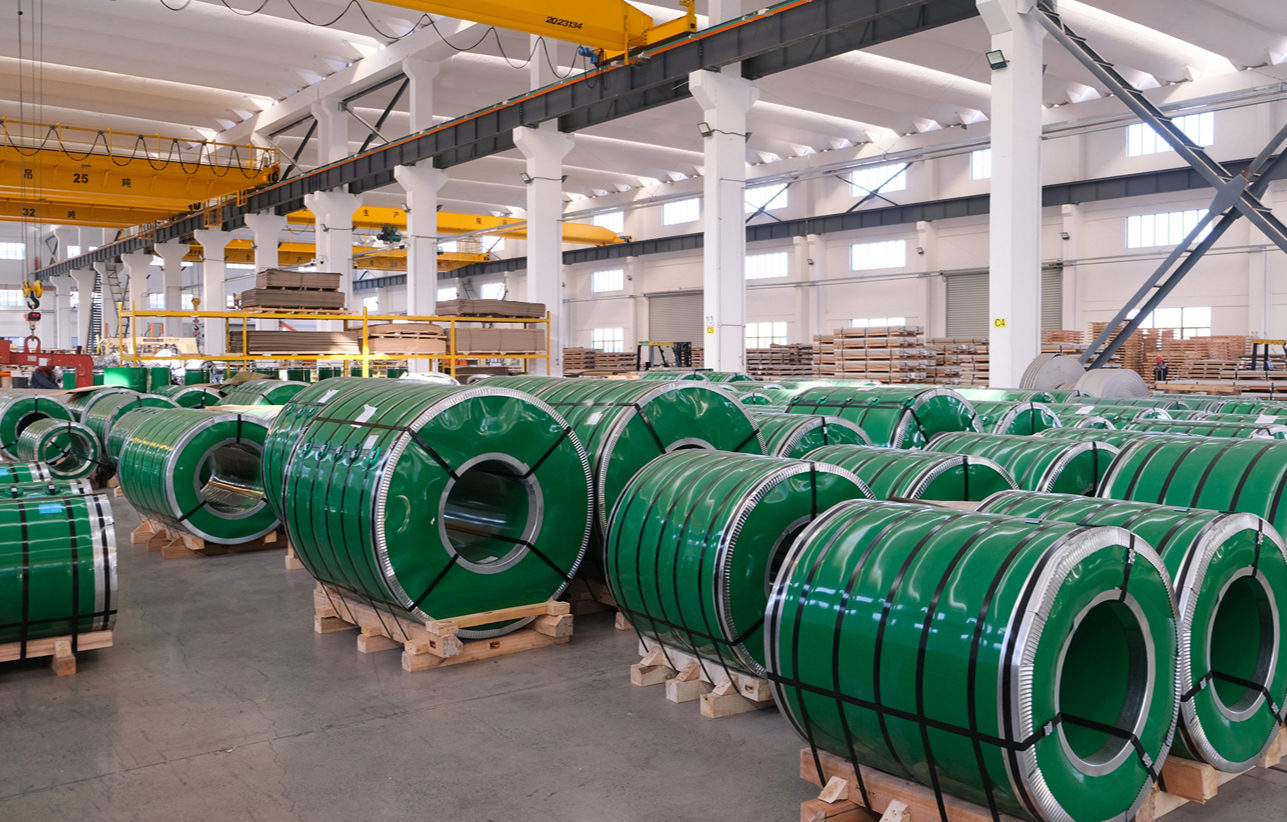
Factory Coil Storage
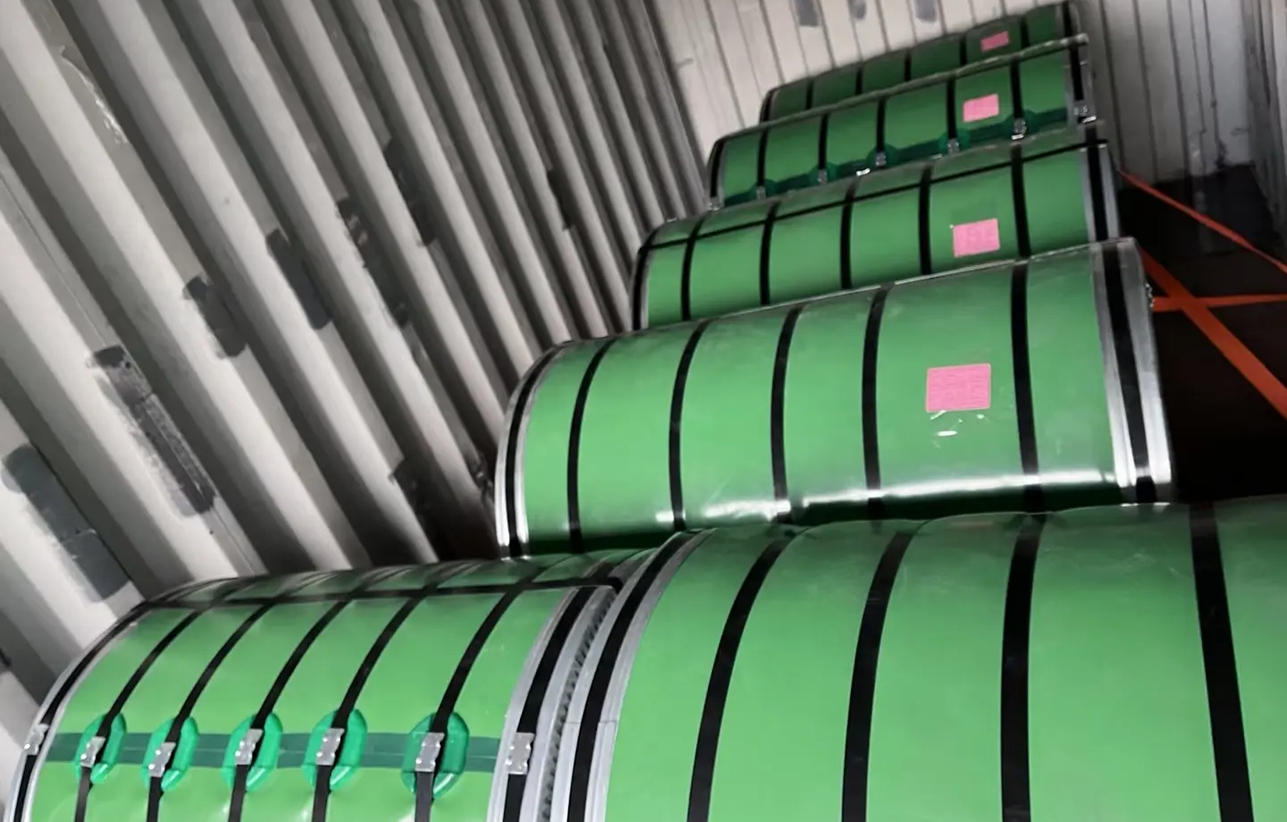
Truck Loading of Coils
Stainless steel strip is narrow flat product slit from cold rolled coil, supplied from 0.05 mm to 3.0 mm thick and 4 mm to 600 mm wide. It is the feedstock for stamped parts, springs, clips, gaskets, tube making, banding and trim, and it is sold either as a coil, sometimes called a strip roll, or as cut lengths. Walmay slits to width from 304, 304L, 316L, 430, 201, 321 and 420 coil, with edges as slit, deburred, rolled or fully rounded, and tension levelling where flatness matters.
The distinction is width, and it is a real product boundary rather than a naming convention.
| Product | Width | Supplied as | Sized by |
|---|---|---|---|
| Strip | Up to 600 mm | Coil or cut lengths | Slit width and thickness |
| Sheet | Above 600 mm, under 4.75 mm thick | Flat sheets | Sheet size and thickness |
| Coil | Above 600 mm | Coil | Coil width and thickness |
| Plate | Above 600 mm, above 4.75 mm thick | Flat plates | Plate size and thickness |
| Foil | Below 0.05 mm | Coil | Thickness in micrometres |
Two consequences matter commercially. Strip can be held to tighter thickness and width tolerances than sheet, because it is slit rather than sheared and often re-rolled to gauge. And strip is available in tempered conditions from annealed through to spring hard, which sheet generally is not, because narrow width makes controlled cold rolling practical.
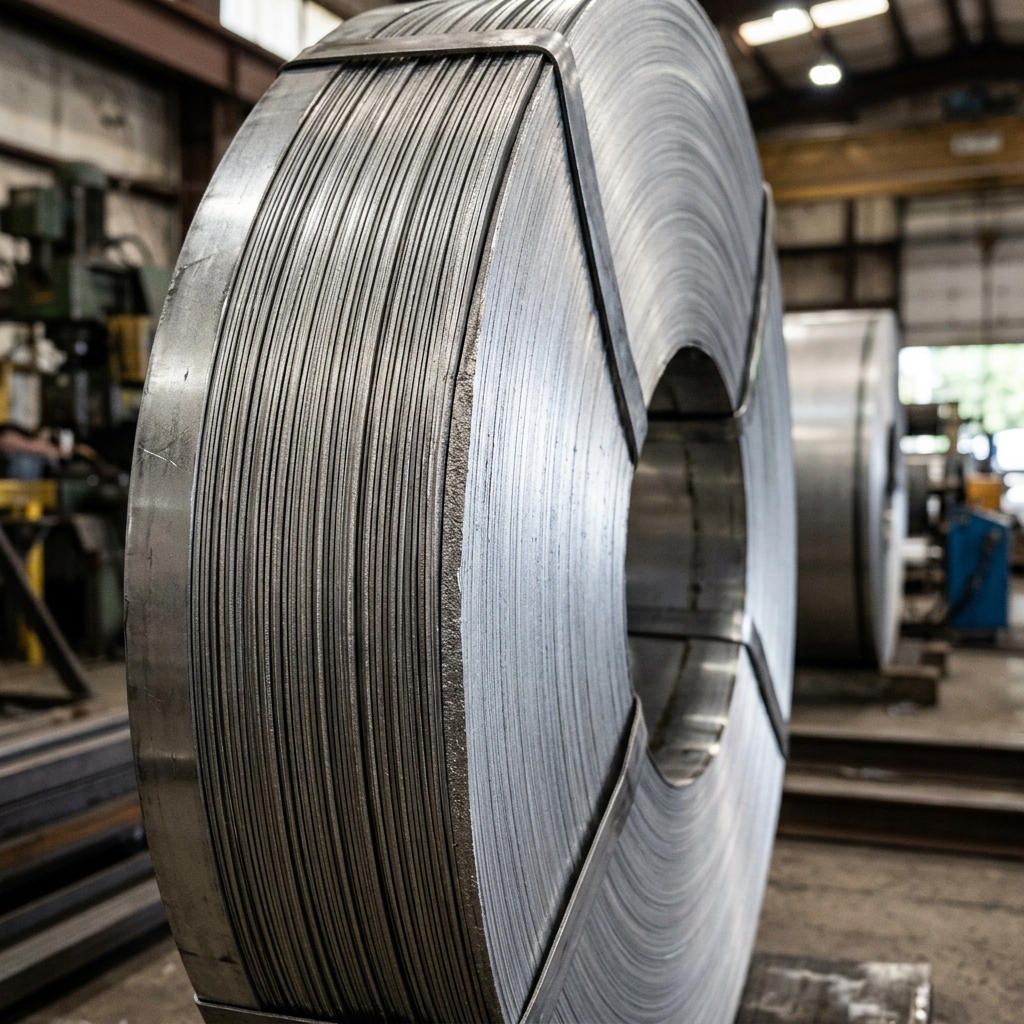
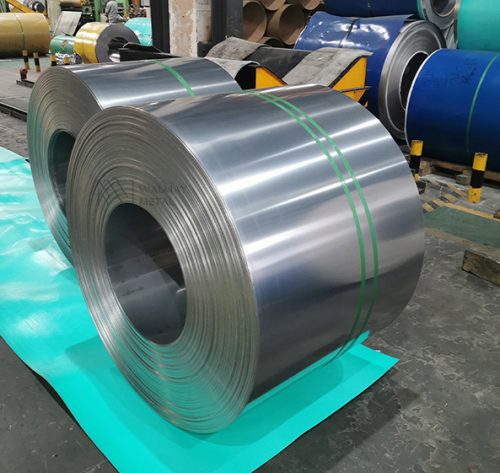
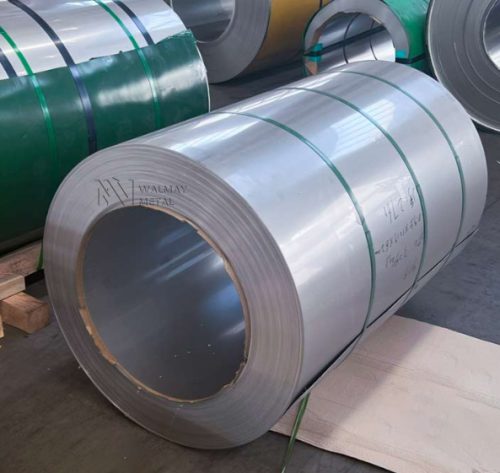
Strip is normally supplied as a coil, and how it is wound affects how it runs on your machine.
| Format | Description | Best for |
|---|---|---|
| Standard coil | Wound flat, single width, on a 200-500 mm inner diameter core | Press feeding, roll forming, tube mills |
| Traverse-wound coil | Wound back and forth like a spool of thread, giving very long continuous lengths | Long-run stamping with minimal coil changes |
| Oscillated coil | A variant of traverse winding | High-volume production |
| Ribbon coil | Narrow strip wound on a small core | Small parts, hand feeding |
| Cut lengths | Straightened and cut to length | Low-volume work, hand fabrication |
State the coil inner diameter, maximum outer diameter and maximum coil weight your equipment can handle. A coil that will not fit the decoiler is the most common avoidable delivery problem in strip supply.
Where volume does not justify coil handling, we supply flat cut strips: slit to width, levelled, cut to length and deburred. Common formats are 1, 2 and 3 metre lengths, and strips can be supplied edge dressed and polished for visible trim work. Cut strips are also the practical format for gaskets, shims, packers, banding and repair work, and for spring steel parts where the blank is short.
For trim and cover strips in visible positions, specify a polished finish and a rolled edge, since an as-slit edge is sharp and shows a witness line where it meets a surface.
Strip is normally processed on presses and roll formers rather than cut by hand, but hand cutting comes up often enough to be worth stating clearly.
| Method | Suitable thickness | Notes |
|---|---|---|
| Tin snips or aviation shears | Up to about 0.8 mm | Deforms the edge, fine for shims and gaskets |
| Guillotine or bench shear | Up to 3 mm | Clean straight cuts, no heat |
| Nibbler | Up to 1.5 mm | Curves and cutouts, leaves a rough edge |
| Angle grinder with a thin cutting disc | Any | Fast but heats the material and discolours it; use a stainless-only disc |
| Laser | Up to 3 mm | Clean, precise, best for profiles |
| Press blanking | Any | The production method, needs a die |
| Waterjet | Any | No heat, square edge, good for hardened tempers |
Two cautions. Never cut stainless with an abrasive disc that has been used on carbon steel, because embedded iron will rust on the cut edge. And on hard tempers, heat from grinding softens the material locally, so springs and blades should be cut cold by waterjet or shear.
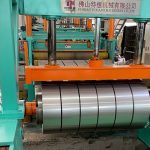
We slit, level, cut, deburr, polish and package strip in house, described on our slitting, levelling, cutting, edge finishing and packaging pages, with the full fabrication overview.
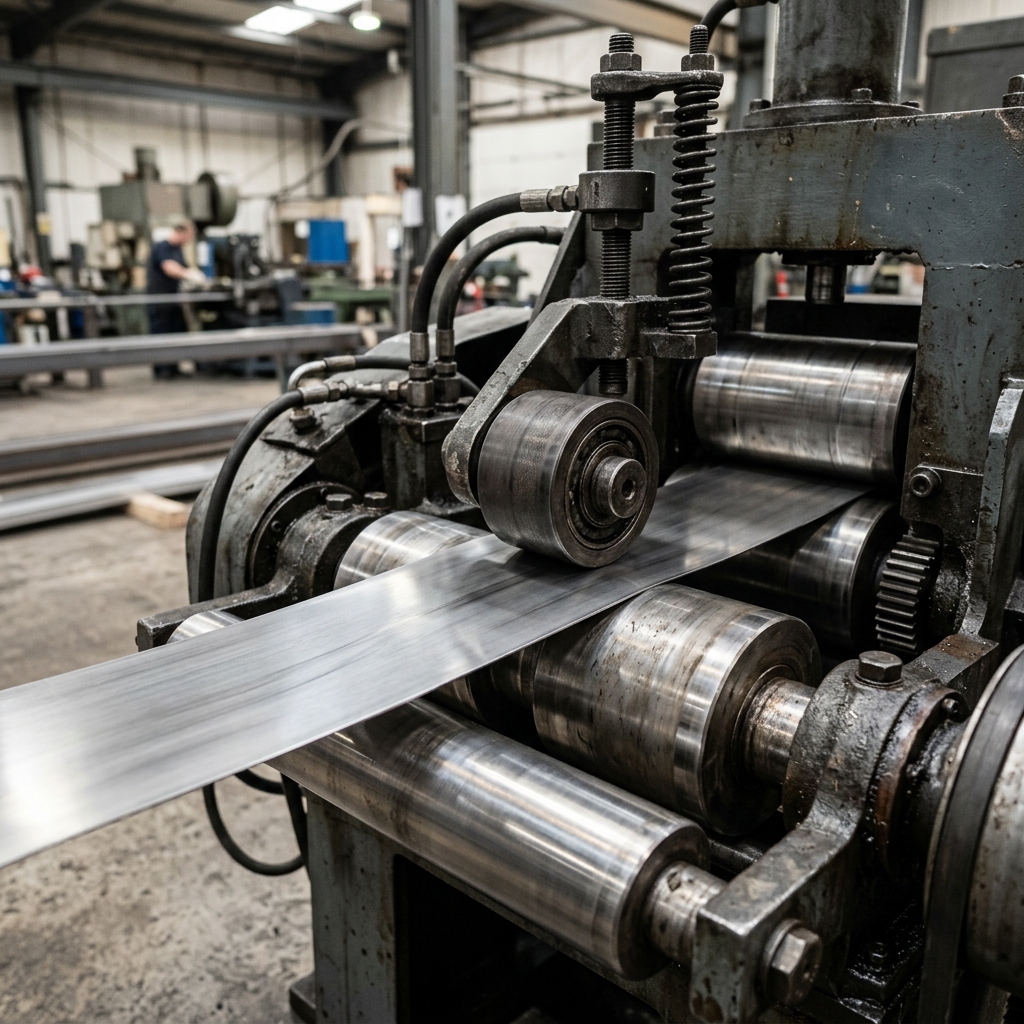
Strip is priced per tonne against live alloy surcharges, then adjusted for four processing factors. Thinner gauges cost more per tonne because they need more cold rolling passes and more careful handling; narrow widths cost more per tonne because each slitting pass yields less weight; harder tempers cost more because they require controlled rolling; and edge dressing, polishing and traverse winding each add a charge. Grade dominates: 430 sits well below 304, and 316L runs 25 to 40 percent above it.
To compare quotations, calculate the weight of what you actually need: width in millimetres multiplied by thickness in millimetres multiplied by 0.008 gives kilograms per metre of strip.
Walmay will help match the right stainless product form and specification for your application, confirm quantities and packing needs, and provide requested documents based on order requirements.
Loading form…