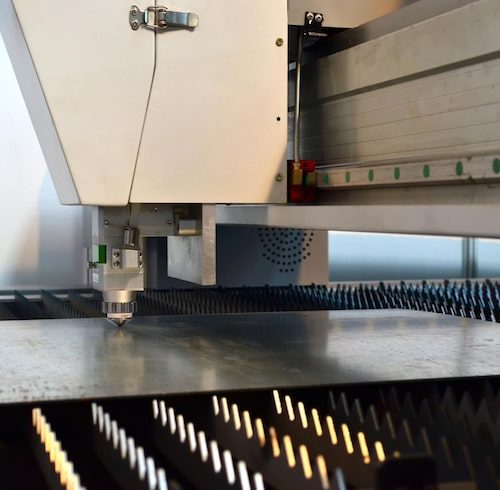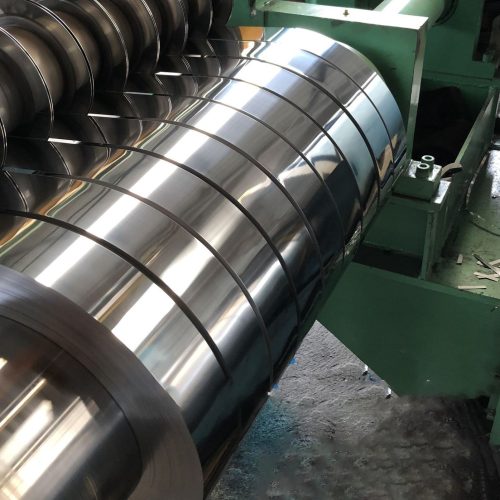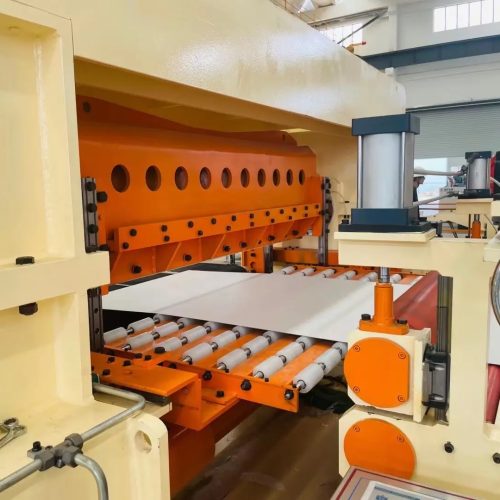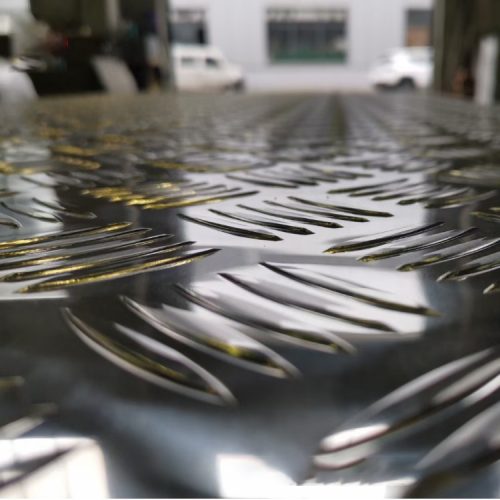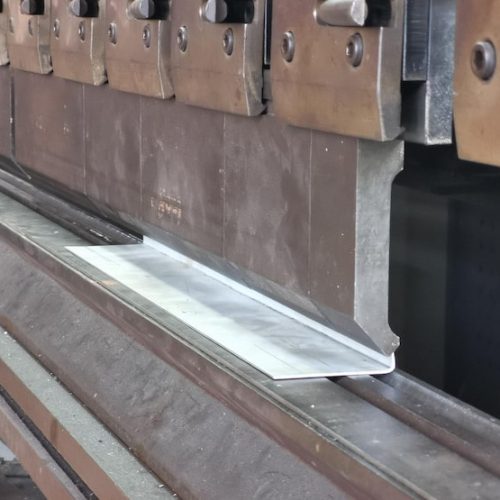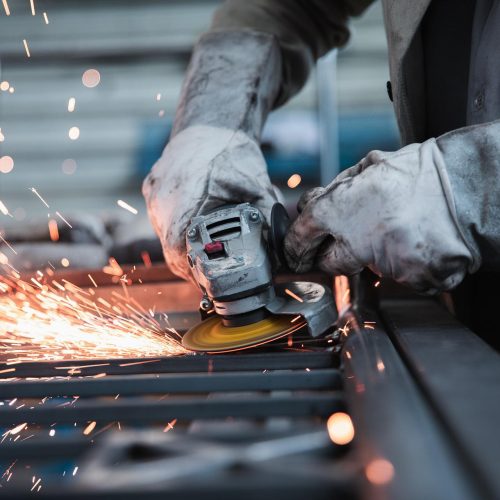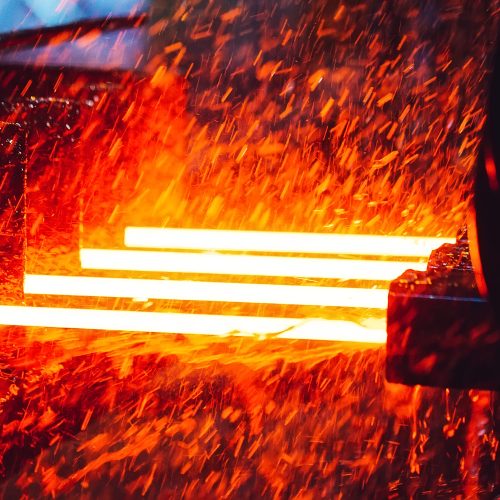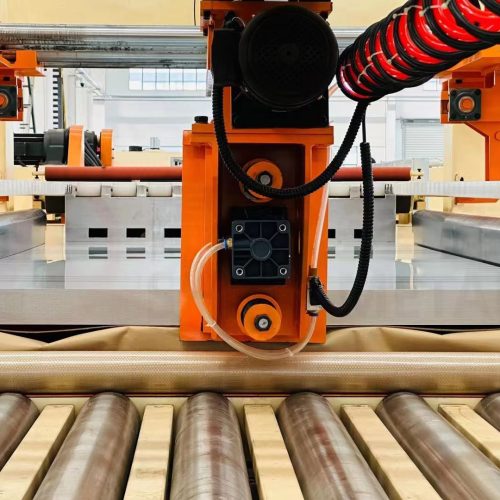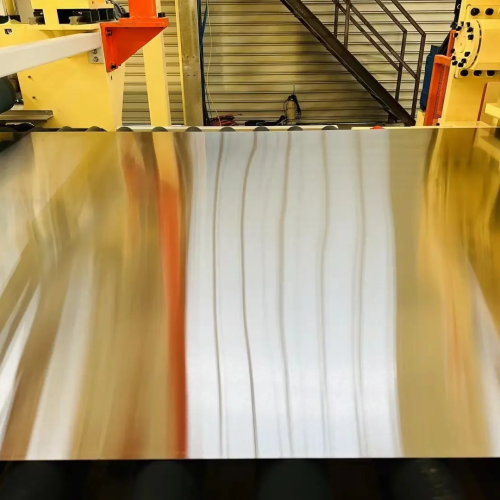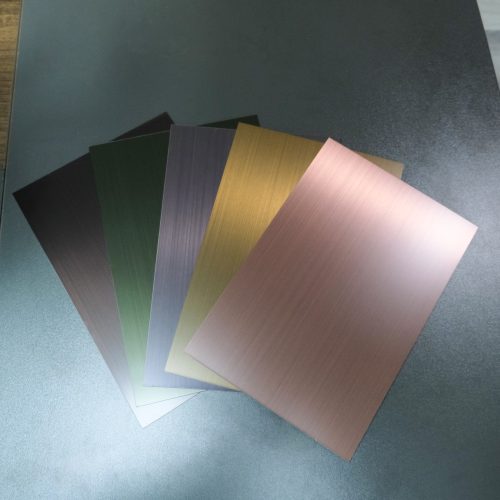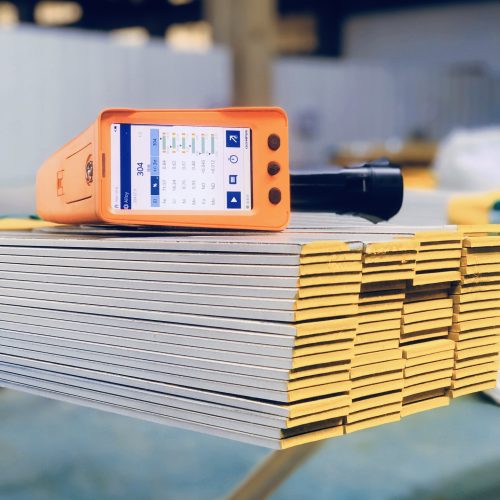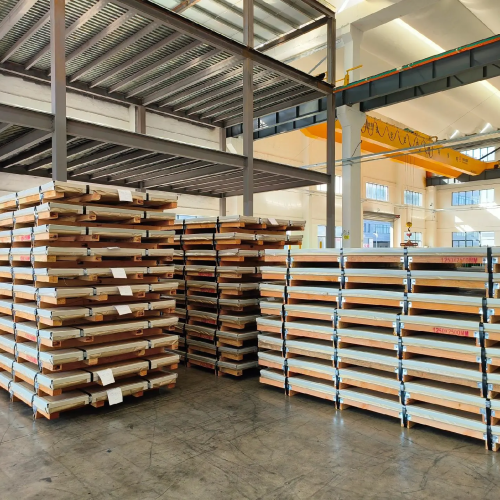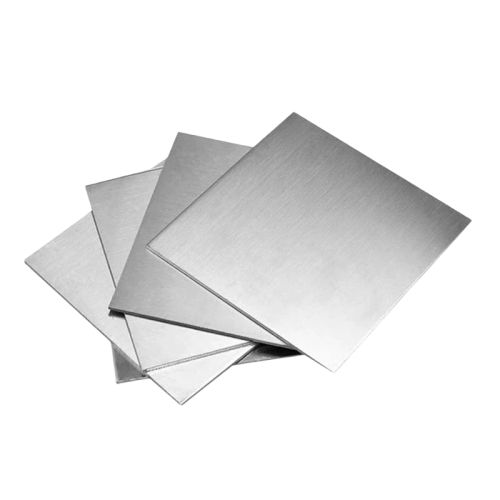
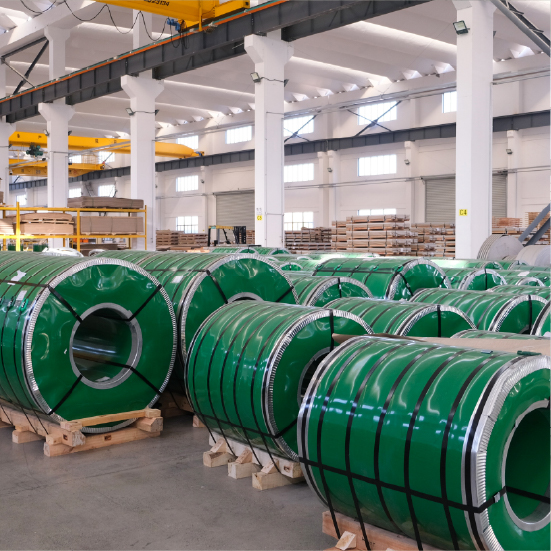

Walmay provides stainless steel sheet metal fabrication as part of supply rather than as a separate service, which means the material arrives at your dock already at final size, shape and finish. We cut, slit, level, bend, stamp, weld, polish, passivate and heat treat in our own facility in Wuxi, in 201, 304, 304L, 316, 316L, 321, 410, 420, 430, 904L and 2205 duplex, from 0.2 mm foil-gauge coil to 150 mm plate. Cutting holds plus or minus 0.5 mm on length as standard and plus or minus 0.05 mm on laser-cut precision work, and every part is traceable to the heat number on its mill certificate.
| Operation | Capability | Tolerance |
|---|---|---|
| Cutting | Shear to 12 mm, plasma to 60 mm, laser to 25 mm, waterjet to 150 mm | plus or minus 0.05 to 0.5 mm by process |
| Slitting | Coil slit from 20 mm width, single or multi-strand | plus or minus 0.2 mm on width |
| Levelling | Roller and tension levelling to 3.0 mm thick | 0.1 mm per square metre |
| Bending | Press brake to 6 m length, 12 mm in 304 | plus or minus 0.5 degrees on angle |
| Stamping | Blanking, piercing, forming and deep drawing | plus or minus 0.1 mm on feature position |
| Welding | TIG, MIG, spot and seam welding of assemblies | Visual and dye penetrant to specification |
| Polishing | 180, 320, 400 grit, satin, hairline, No.8 mirror | Roughness to 0.2 micrometres Ra |
| Surface treatment | Pickling, passivation, electropolishing, bead blasting | Passivation to ASTM A967 |
| Heat treatment | Solution anneal, stress relief, H900 to H1150 on 630 | Hardness verified per batch |
| Edge finishing | Deburring, radiusing, bevelling to 30 degrees | Burr-free to touch |
| Inspection | Dimensional, hardness, ultrasonic, dye penetrant, salt spray | Reported per batch |
| Packaging | PVC film, interleaved paper, crating, moisture barrier | Sea-freight rated |
The four cutting routes are not interchangeable. Each trades edge quality against thickness and cost.
| Process | Thickness | Edge quality | Heat affected zone | Best for |
|---|---|---|---|---|
| Shearing | To 12 mm | Slight burr, square | None | Straight cuts, rectangular blanks, lowest cost |
| Laser | To 25 mm | Clean, narrow kerf | Small | Profiles, holes, tight tolerance, no tooling |
| Plasma | To 60 mm | Rougher, slight bevel | Moderate | Heavy plate where edges will be machined or welded |
| Waterjet | To 150 mm | Clean, no heat | None | Thick plate, hardened grades, no metallurgical change |
Waterjet is the choice where the specification prohibits any heat input, for instance on 2205 duplex where excessive heat can upset the austenite to ferrite balance, or on plate that must not be sensitised at the edge. Laser is the default for anything with holes, slots or a profile. For plain rectangular blanks, shearing is faster and cheaper than either.
Most cost overruns on a fabricated stainless part trace back to the drawing rather than the shop. These are the rules our engineers apply when reviewing a job, using t for material thickness.
| Feature | Recommended minimum | Why |
|---|---|---|
| Inside bend radius | 1.0 t for annealed austenitic | Below this the outer fibre cracks, especially across the rolling direction |
| Flange length | 4 t plus the bend radius | Shorter flanges cannot be gripped by the tooling |
| Hole diameter | 1.2 t | Smaller holes deform and wear punches quickly |
| Hole to edge | 2 t | Closer and the edge bulges when punched |
| Hole to bend | 2.5 t plus the radius | Closer and the hole distorts into an oval |
| Slot width | 1.5 t | Narrower slots break punches |
| Notch depth | Not more than 5 times the width | Deeper notches tear at the root |
Two properties of stainless make it behave differently from mild steel on a press brake. It work hardens rapidly, so the same tooling produces more springback, typically 2 to 4 degrees more than mild steel at a 90 degree bend, which has to be over-bent to compensate. And its K-factor sits around 0.44 rather than 0.33, so a flat pattern developed for mild steel will come out short. Bending across the rolling direction rather than along it also improves the achievable radius noticeably.
Send us a STEP or DXF file with the material, thickness, finish and the critical dimensions marked, and we will confirm the flat pattern and the achievable tolerance before tooling.
| Grade family | Preferred process | Filler | Watch for |
|---|---|---|---|
| 304 / 304L | TIG or MIG | ER308L | Distortion from high thermal expansion, sensitisation above 6 mm in standard carbon grades |
| 316 / 316L | TIG or MIG | ER316L | Same as 304, plus preserving molybdenum in the weld pool |
| 321 | TIG | ER347 | Stabilised grade, keep heat input low |
| 2205 duplex | TIG or MIG | ER2209 | Ferrite balance, so control heat input and interpass temperature |
| 904L | TIG | ER385 or nickel alloy | Hot cracking, so low heat input and no weaving |
| 430 / 409L | TIG | ER430 or ER309L | Grain coarsening in the heat affected zone, limited ductility |
| 410 / 420 | TIG with preheat | ER410 | Preheat and post-weld temper required to avoid cracking |
Low-carbon L grades exist specifically so that welded sections above about 6 mm do not need a post-weld solution anneal. Specifying 304 instead of 304L on a welded pressure part is one of the most common and most expensive specification errors we see. Every weld we produce is followed by pickling and passivation, because the heat tint left along a weld is depleted in chromium and will be the first place the part corrodes.
| Treatment | What it does | When to specify |
|---|---|---|
| Mechanical polishing | Produces 180 to 400 grit, satin, hairline or mirror | Visible architectural and food equipment surfaces |
| Pickling | Acid removal of scale and heat tint | After welding, hot forming or heat treatment |
| Passivation | Restores the chromium oxide film, to ASTM A967 | All fabricated parts, mandatory for food and pharmaceutical duty |
| Electropolishing | Levels the surface at a microscopic scale, to 0.2 micrometres Ra | Sanitary process equipment, high-purity systems |
| Bead blasting | Uniform low-gloss matte texture | Anti-glare facades, non-directional finishes |
Fabrication is where corrosion resistance is most often lost. Cutting, grinding and welding all leave free iron and heat tint on the surface, and a part that leaves the shop unpassivated can develop rust spots within weeks even in 316L. That is why passivation is part of our standard route rather than an option, and why we keep stainless tooling and stainless workshop areas separate from carbon steel.
| If the part | Specify | Instead of |
|---|---|---|
| Is welded and over 6 mm | 304L or 316L | 304 or 316 |
| Is deep drawn | 304 in 2D finish | 430, which will tear |
| Is machined in volume and never welded | 303 | 304, which triples cycle time |
| Sees chlorides or seawater | 316L, or 2205 duplex above 200 ppm | 304 |
| Must carry high stress | 2205 duplex or 630 | Thicker 304 |
| Runs above 900 C | 310S or 321 | 304, which scales |
| Is indoor, visible and cost-driven | 201 or 430 with a No.4 finish | 316L |
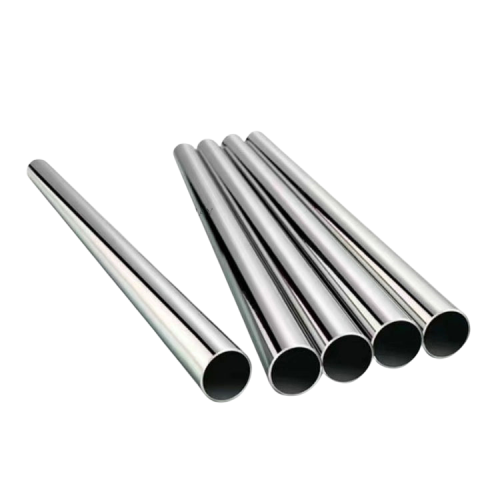
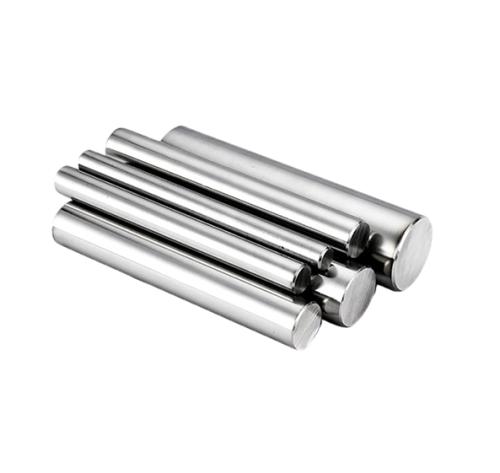
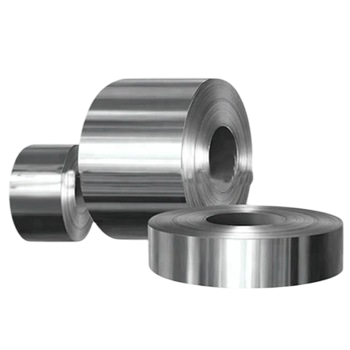
Material for every one of these grades is drawn from our own stock; see the sheet and plate range, along with coil and strip, pipe and tube and rod and bar. The comparison guides on 304 versus 316, 430 versus 304 and 201 versus 304 work through the trade-offs.

Quotations for the same drawing vary widely between shops because the cost is spread across five items that buyers rarely see broken out.
The practical lever is to send the drawing early. We routinely find a bend radius, a hole position or a nesting change that reduces cost without altering function.
| Standard | Applied to |
|---|---|
| ISO 9001 | Quality management system |
| EN 10204 3.1 | Mill test certificate with heat traceability |
| ASTM A967 | Passivation of stainless parts |
| ASTM A240 / A312 / A276 | Incoming material specification for flat, pipe and bar |
| ISO 2768 | General dimensional tolerances where not otherwise stated |
| ASME BPE | Sanitary surface finish requirements on request |
Every batch carries dimensional inspection, and hardness, ultrasonic, dye penetrant and salt-spray testing are added where the product warrants it. Salt-spray performance on our coastal-service material exceeds 1,500 hours. Third-party inspection by SGS, BV or TUV can be arranged before loading.

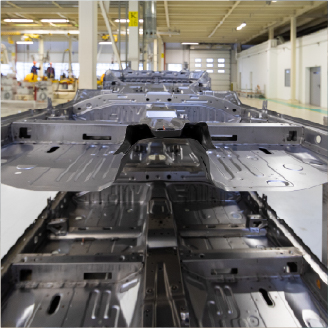
More background on the company and its supply chain is on our stainless steel manufacturing page, and the wider catalogue under stainless steel products.
Send a STEP, DXF or PDF drawing with the grade, thickness, finish, quantity, tolerance requirements and destination port through contact us. We return a quotation with the flat pattern confirmed, the achievable tolerance stated, and any design change we would recommend before tooling.
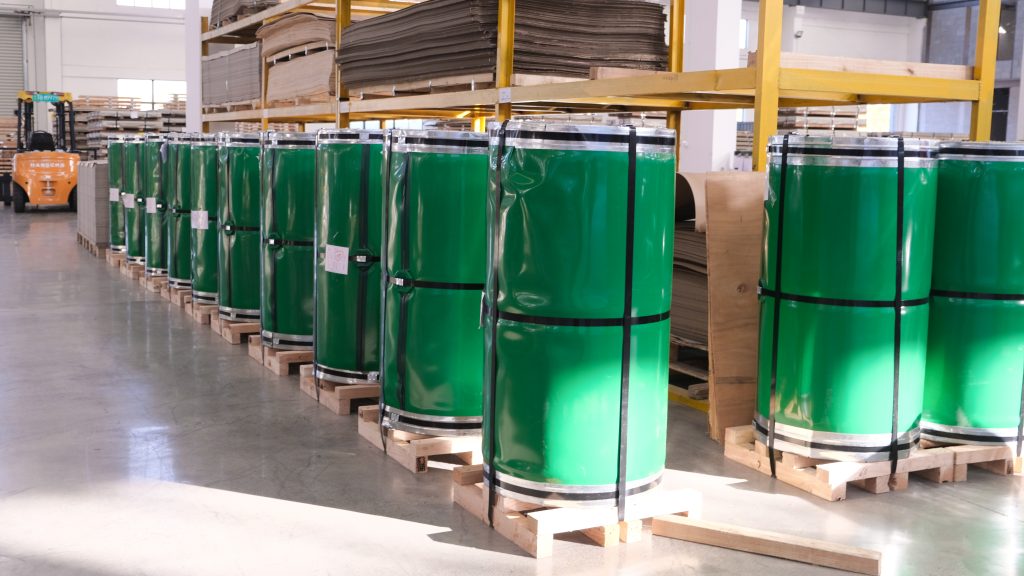
Walmay will help match the right stainless product form and specification for your application, confirm quantities and packing needs, and provide requested documents based on order requirements.
Loading form…