 By Walmay
 20 Jul, 2026
 7 Minutes Read
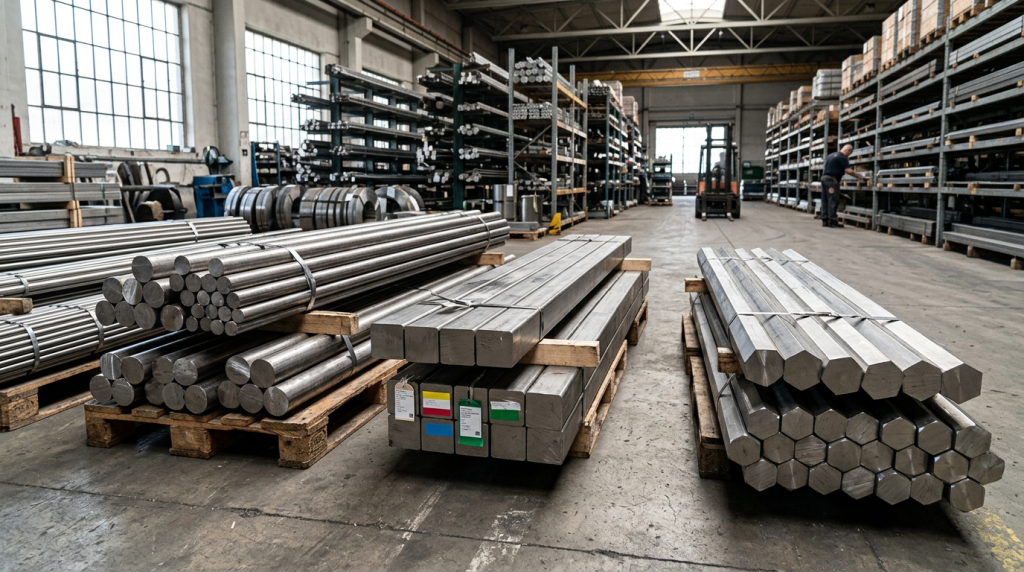
Round bar is the default choice for anything turned on a lathe — shafts, pins, bushings — because it’s already the shape you’re cutting toward and wastes the least material. Square bar earns its place when the finished part needs flat mating faces or gets milled rather than turned, while hex bar exists almost entirely for parts with a natural six-sided geometry, like fasteners and fittings. Picking wrong doesn’t just cost you scrap metal — it costs you machine time, tool wear, and sometimes a part that fails a tolerance check.
Here’s a mistake we see constantly: a buyer orders round bar because it’s the cheapest per kilo, then hands it to a shop that needs to mill flats on four sides. That’s four extra setups, more spindle time, and a pile of chips that used to be billable material. Profile selection should start with the finished part geometry, not the price list.
If your part is rotationally symmetric — a shaft, a pin, a bushing, a valve stem — round bar is almost always correct. The lathe removes material radially and round stock minimizes what gets cut away. If your part has flat faces, slots, or needs to sit square in a fixture, square or rectangular bar saves you from milling a round blank into a box shape, which burns tool life fast on stainless due to work hardening.
For background on how different stainless product forms serve different fabrication needs, our complete engineering and procurement guide to stainless steel types is a useful primer before you commit to a bar profile.
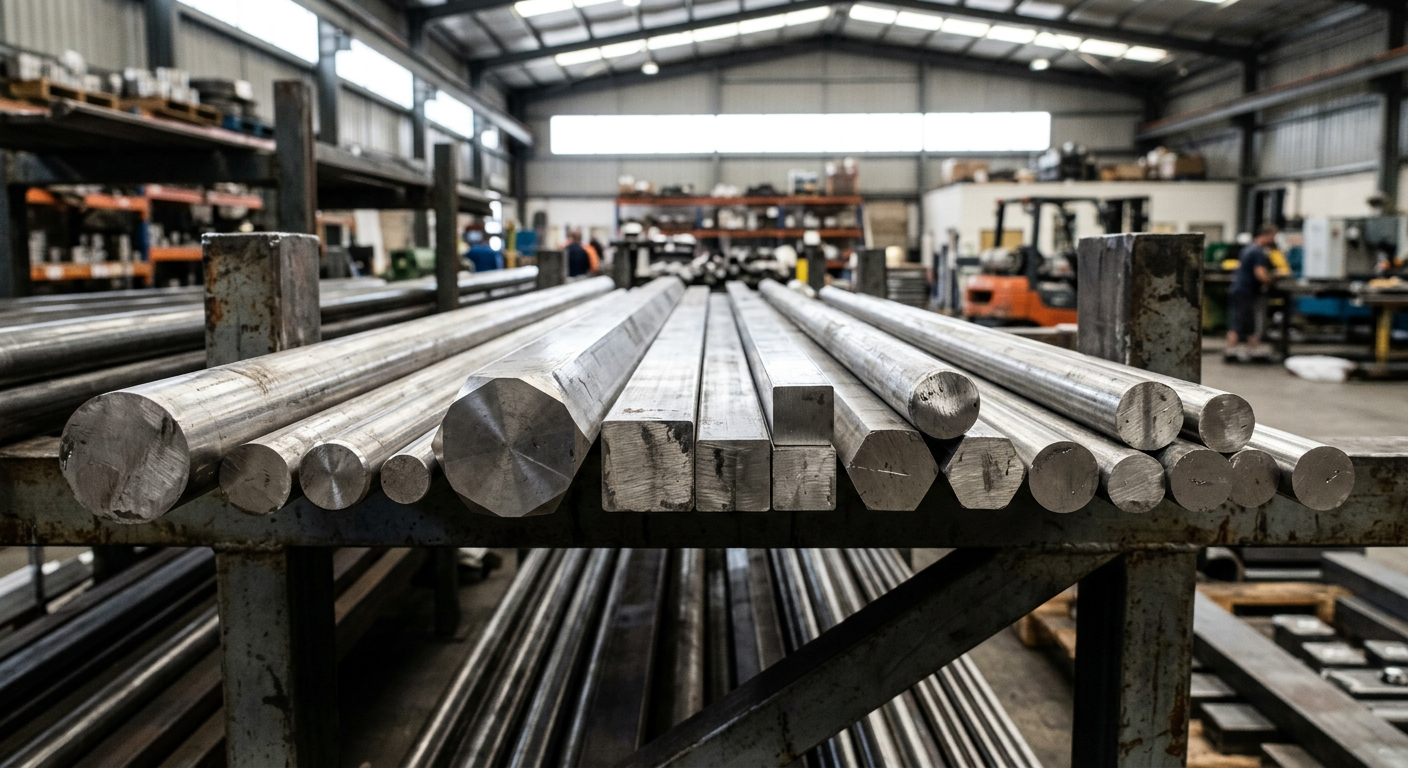
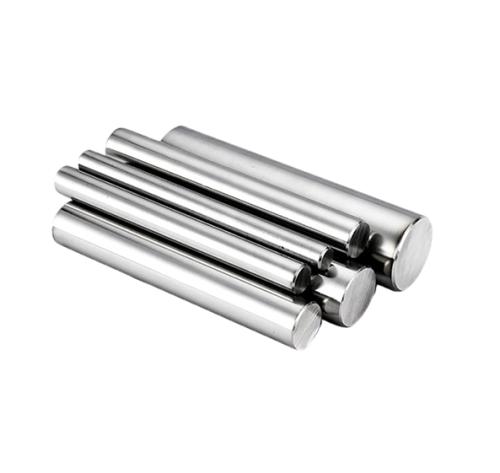
Round bar dominates CNC turning centers and automatic screw machines for one simple reason: it’s already the right shape. A shop turning shafts, spindles, or hydraulic pins starts with round bar and removes only what’s necessary to hit final diameter and surface finish.
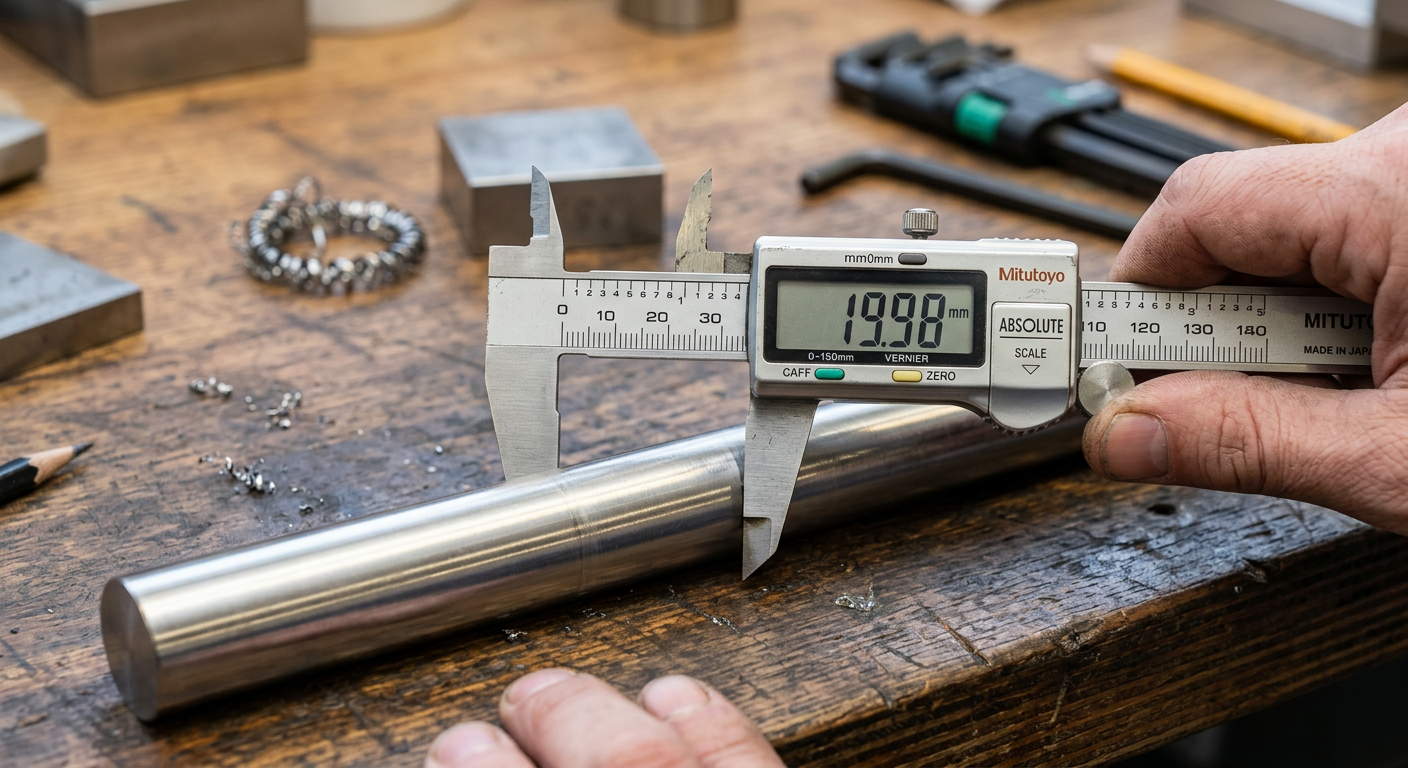
Cold drawn round bar typically holds tolerances around h9 to h11 (roughly ±0.1–0.2mm depending on diameter) and comes with a smoother surface than hot rolled stock, but it’s not precision enough for tight-fit applications straight off the mill. Centerless ground round bar tightens that to h6 or better — critical when the bar itself becomes a bearing surface or shaft without further OD machining.
For instance, a pump manufacturer machining 316 stainless shafts for a marine application might specify centerless ground bar specifically to skip a finishing pass on the OD, saving a machining step on every single unit across a production run of several thousand shafts.
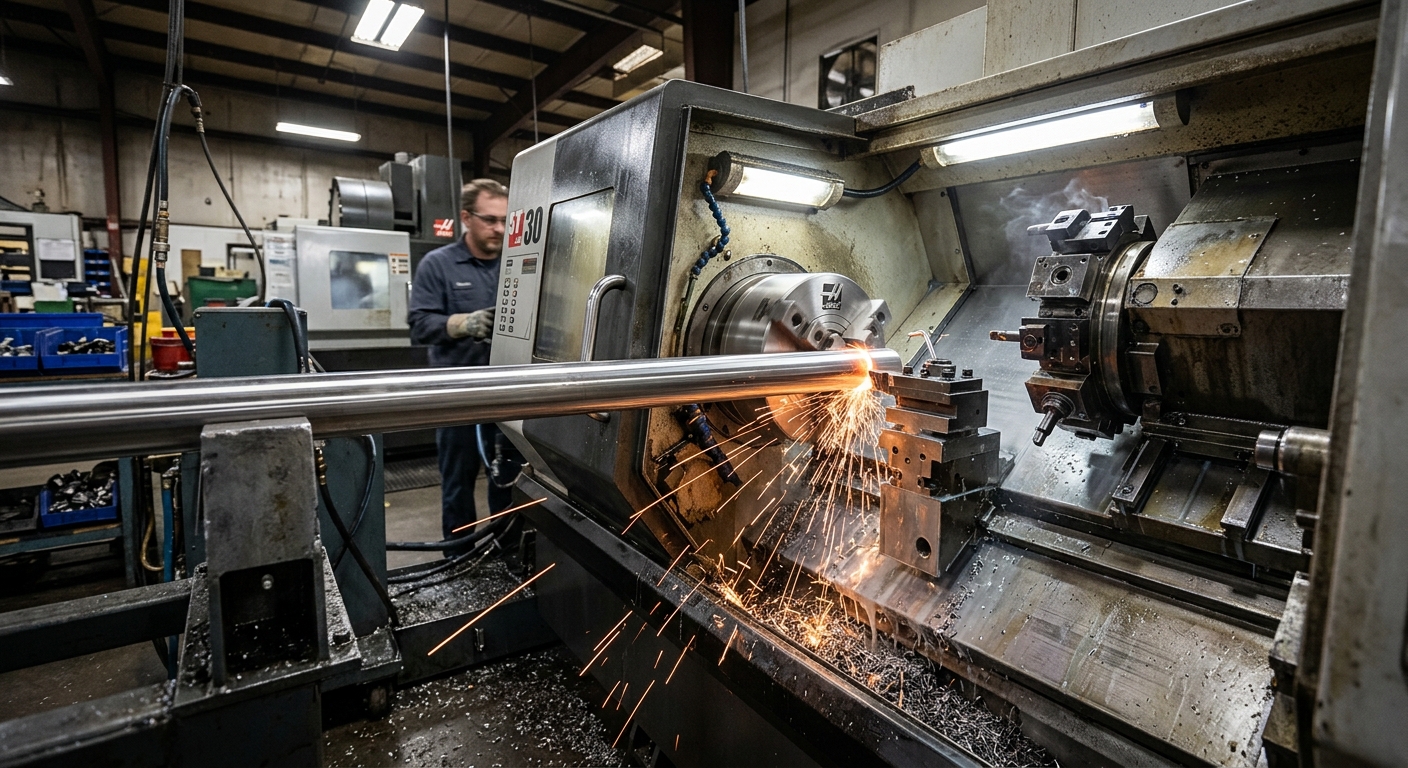
Square bar isn’t chosen for aesthetics — it’s chosen because milling a flat face from round stock is slower and wastes more material than starting flat. Brackets, mounting frames, keyed shaft ends, and structural components that bolt to flat surfaces all benefit from square starting stock.
The trade-off is tooling wear during actual machining. Square bar presents interrupted cuts at every corner when it’s turned or faced, which is harder on carbide inserts than the continuous cut you get on round stock. If a part genuinely needs a square cross-section throughout, though, starting square is still faster overall than starting round and milling four sides down.
Tolerance-wise, cold drawn square bar commonly runs ±0.05 to ±0.10mm across the flats — tight enough for most structural fabrication but worth specifying explicitly on your purchase order, since mill defaults vary by supplier.
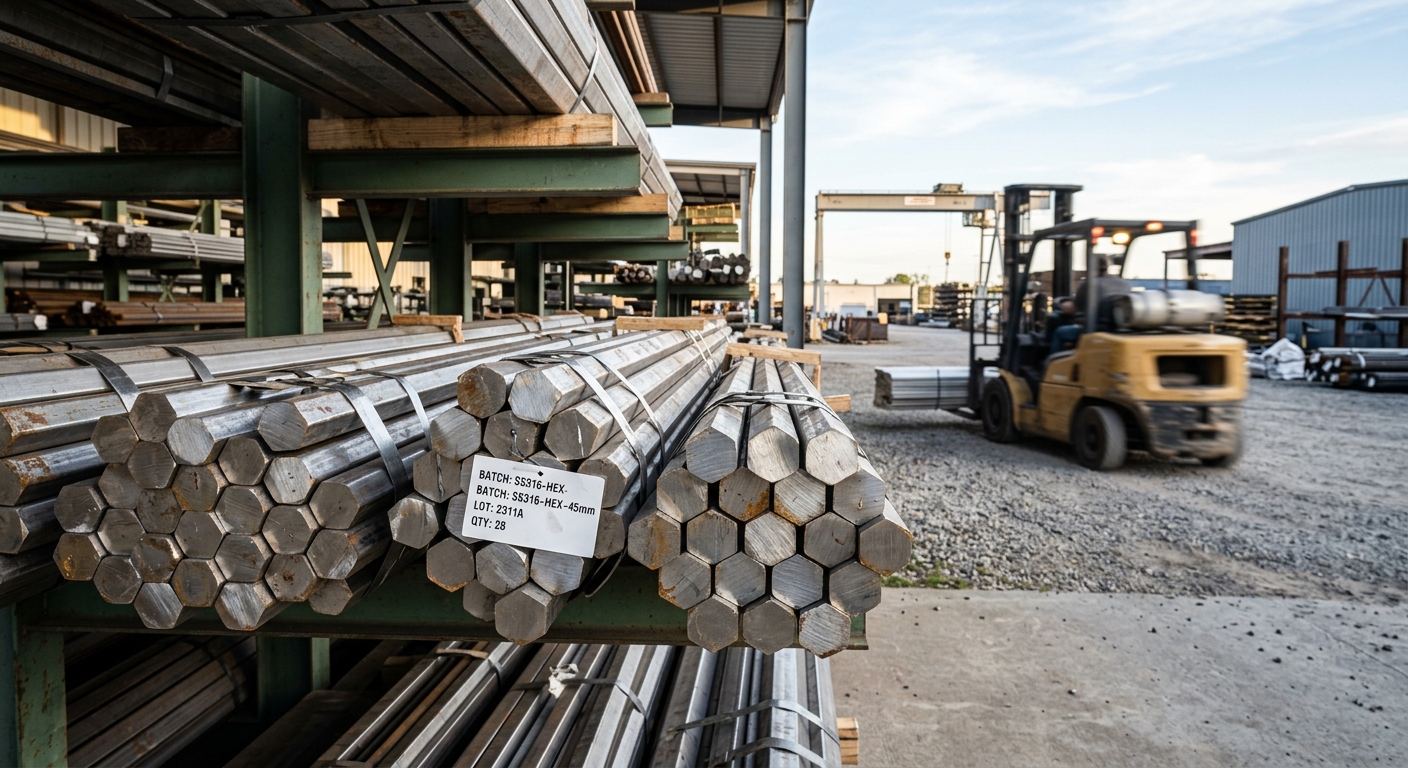
Hex bar has one job it does better than anything else: producing parts with a natural hexagonal drive surface — bolt heads, nuts, standoffs, and fittings meant for a wrench or socket. Outside that use case, it’s rarely the right call.
Automatic screw machine shops love 303 stainless hex bar specifically because 303’s added sulfur content improves machinability dramatically compared to 304 — shorter chips, less tool wear, faster cycle times. If your part doesn’t need free-machining properties, standard 304 or 316 hex bar works, but expect slower cutting speeds and more frequent tool changes.
A fastener manufacturer supplying food processing equipment ordered 316 hex bar instead of 303 because the application demanded better corrosion resistance near washdown areas. They accepted a roughly 20% increase in machining time on their screw machines as the cost of getting the corrosion performance they actually needed — a reasonable trade for parts operating in a wet, chloride-exposed environment. That kind of application context matters; see our coverage of grade and finish requirements for food processing environments for more on how hygiene standards drive material choice.
A common misconception: buyers assume grade selection and profile selection are separate decisions. They’re related. The same 304 chemistry behaves differently on a lathe depending on whether you’re cutting round stock continuously or hitting interrupted corners on square or hex bar.
303 stainless remains the go-to free-machining grade across all three profiles when corrosion resistance requirements are modest — its sulfur addition cuts machining time significantly versus 304. But 303 sacrifices corrosion resistance, so it’s a poor choice for anything seeing moisture or chemical exposure. For those environments, 316 or 316L is worth the machining trade-off. Our comparison of 304 vs 316 stainless steel breaks down exactly where that line sits.
If magnetic response matters for your application — sorting equipment, sensor housings, or magnetic fixturing during machining — note that cold working during bar drawing can induce slight magnetism even in austenitic grades like 304. We cover this in detail in our piece on magnetic behavior in stainless steel.
Ordering ’round bar, 304, 20mm’ without specifying tolerance class is how shops end up with stock that doesn’t fit their collets or fixtures. Cold drawn bar, hot rolled bar, and precision ground bar all carry different dimensional tolerances even at the same nominal size.
Square and hex bar follow similar logic but tolerances are usually quoted across the flats rather than diameter. Always confirm this on your quote request — it prevents a costly mismatch discovered after the material’s already on your shop floor.
Beyond profile and grade, three practical factors determine whether bar stock runs smoothly through your equipment: standard mill length (typically 3m or 6m, though custom cut lengths are available), straightness tolerance (critical for long round bar fed through bar feeders on automatic lathes), and surface condition (black hot rolled, pickled, or bright cold drawn).
A shop running a bar feeder on a Swiss-type lathe needs straightness within tight limits — a warped bar jams the feeder and stops production. If that’s your setup, specify straightness explicitly rather than assuming standard mill practice covers it.
 Industry Knowledge
 Industry Knowledge
 Industry Knowledge
Walmay will help match the right stainless product form and specification for your application, confirm quantities and packing needs, and provide requested documents based on order requirements.