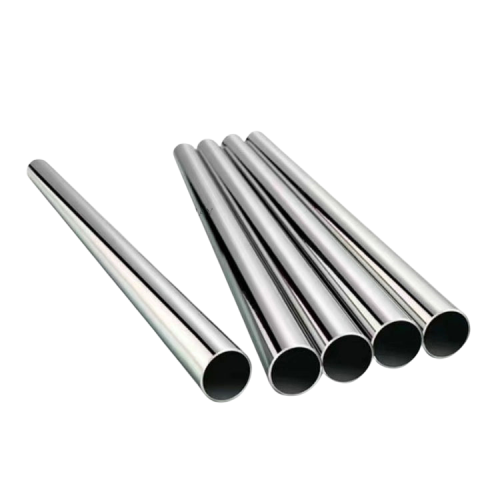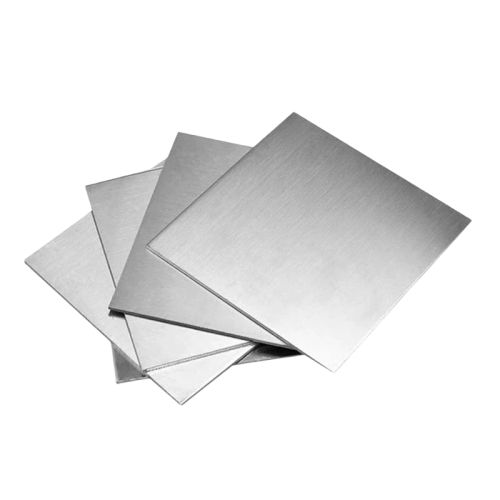
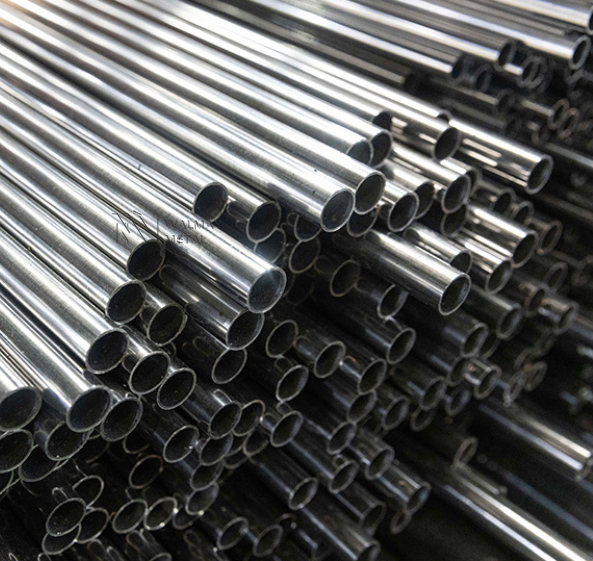
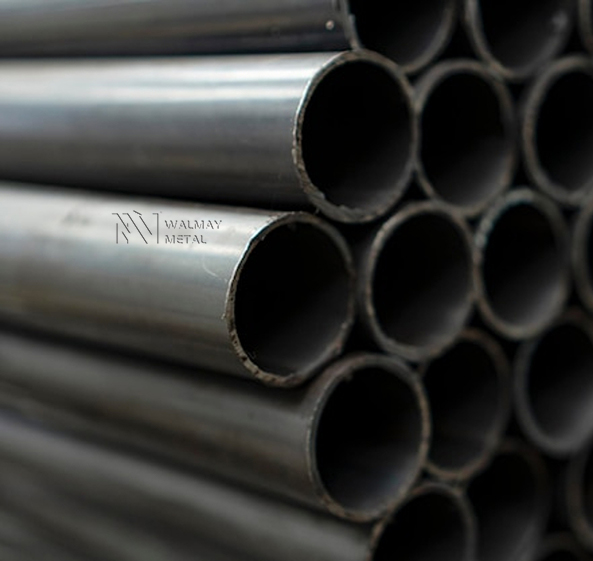
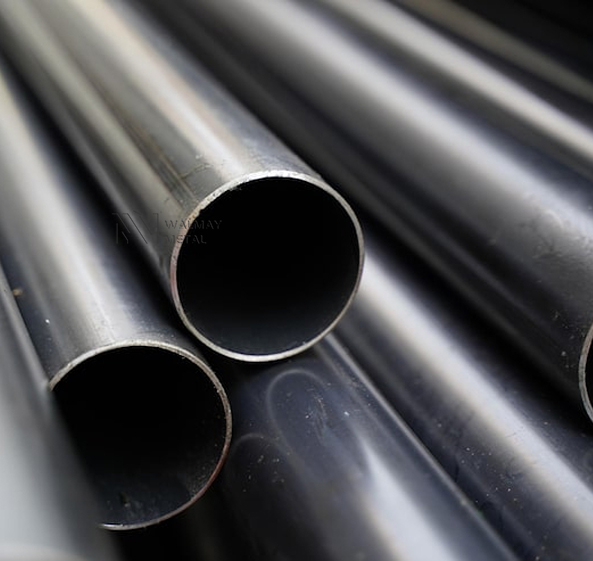
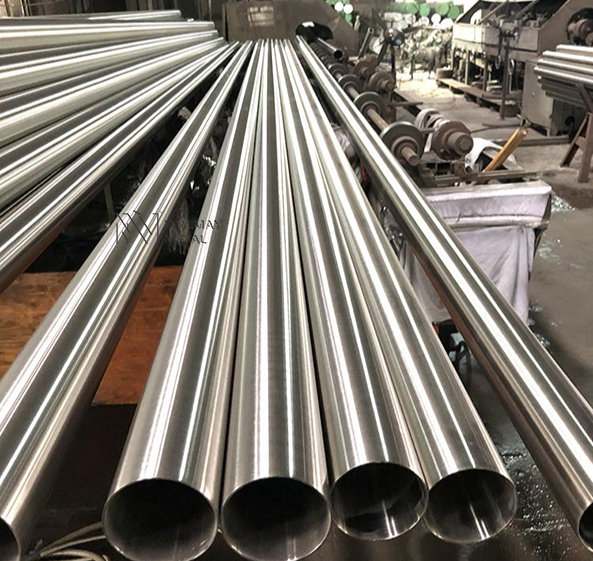
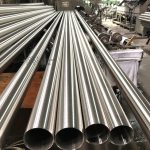
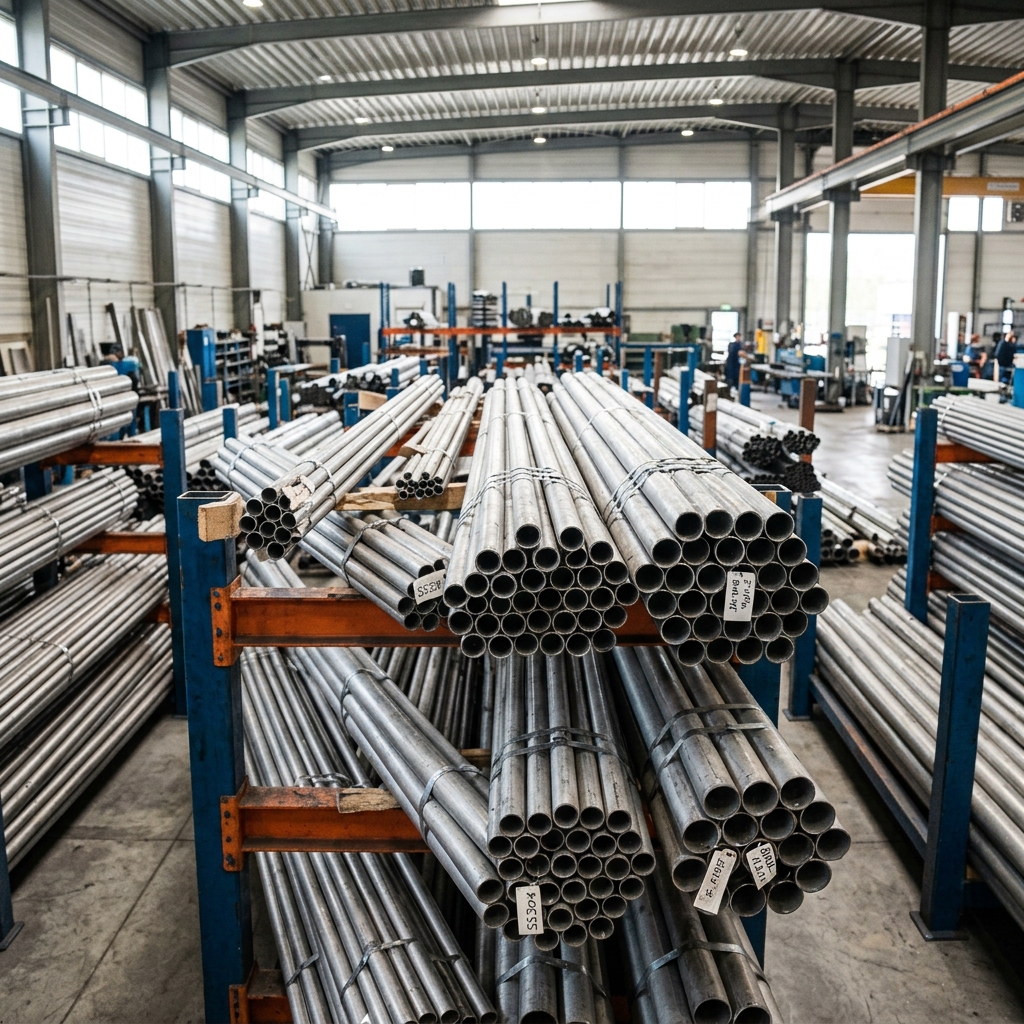
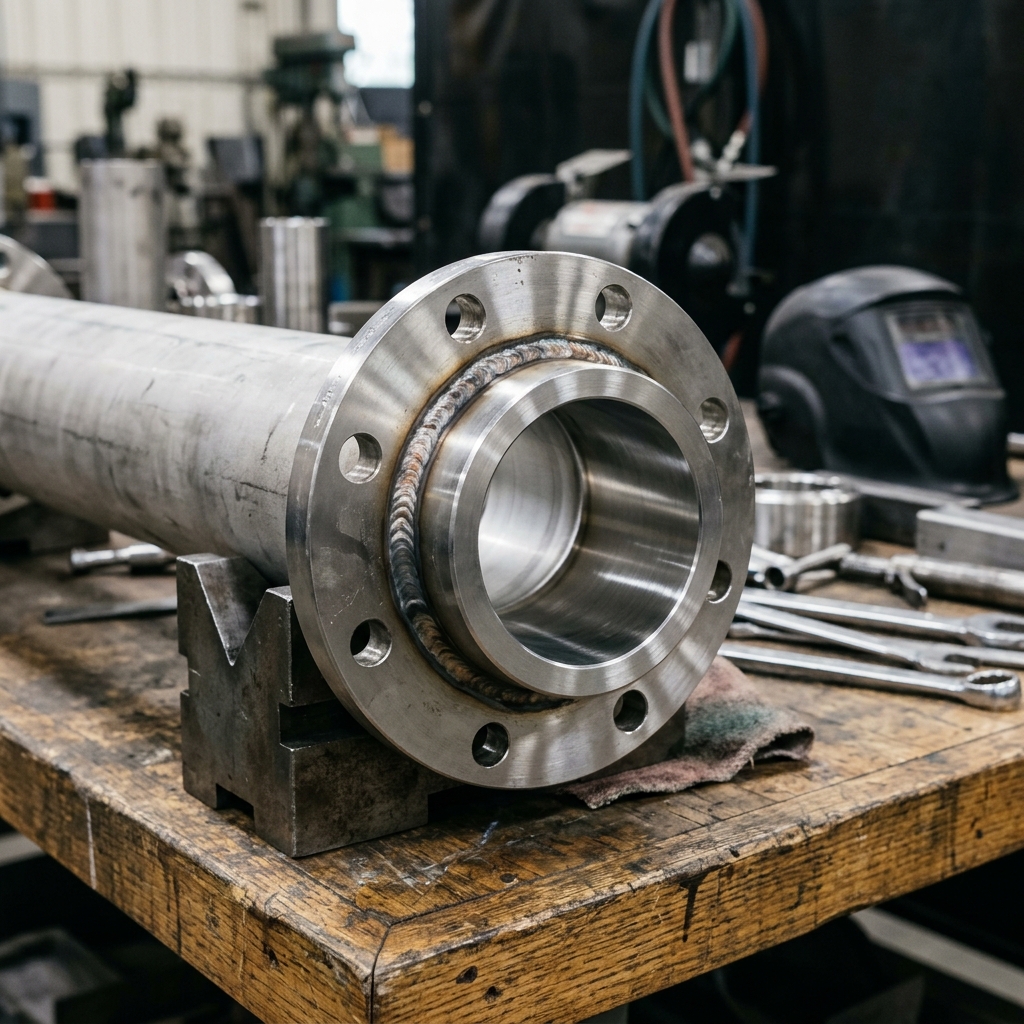
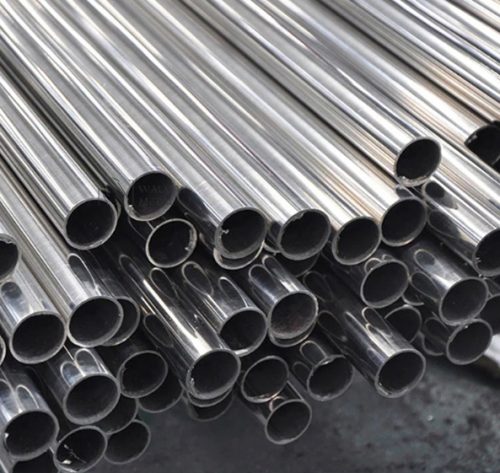
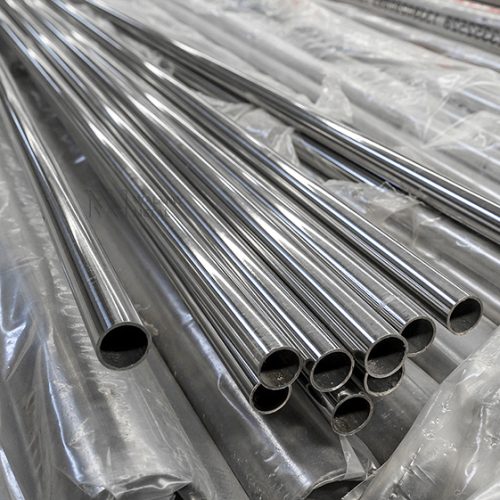
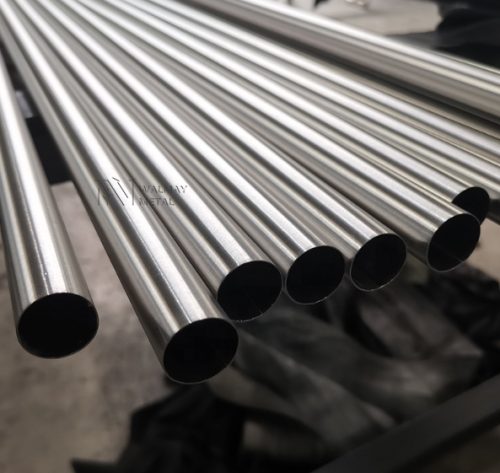
316L stainless steel pipe is the low-carbon version of 316, restricted to 0.035 percent carbon by ASTM A312 against 0.08 percent for the standard grade. That single change makes the pipe reliable as welded, without a post-weld solution anneal, which is why 316L rather than 316 is the specification on almost all fabricated process pipework. Walmay supplies it seamless and welded from 1/8 inch to 24 inch NPS in schedules 5S to 80S, plus hygienic tube to ASTM A270 with a stated internal roughness, and most of our stock is dual certified to both 316 and 316L.
| Item | Detail |
|---|---|
| Grade | 316L, UNS S31603, EN 1.4404, JIS SUS 316L |
| Pipe standards | ASTM A312 / SA312, ASTM A358 for welded large diameter, ASTM A778 unannealed welded |
| Tube standards | ASTM A269 instrumentation, ASTM A213 heat exchanger, ASTM A270 hygienic |
| Size range, pipe | 1/8 in to 24 in NPS, DN 6 to DN 600 |
| Size range, tube | 6-168 mm OD, 0.5-6.0 mm wall |
| Schedules | 5S, 10S, 20, 40S, 80S |
| Carbon | 0.035 percent max per A312 |
| Molybdenum | 2.00-3.00 percent |
| Condition | Solution annealed and pickled |
| Certification | EN 10204 3.1, hydrostatic or eddy current test, PMI and ferrite check on request |
| Property | Value |
|---|---|
| Yield strength minimum | 170 MPa |
| Tensile strength minimum | 485 MPa |
| Elongation | 35 percent |
| Density | 8.0 g/cm3 |
| Modulus of elasticity | 193 GPa |
| Thermal expansion | 16.0 um/m/K |
| PREN | About 25 |
| ASME B31.3 allowable stress at 20 C | About 115 MPa |
| ASME B31.3 allowable stress at 200 C | About 96 MPa |
| ASME B31.3 allowable stress at 400 C | About 85 MPa |
| Practical code temperature ceiling | 425 C, above which carbide precipitation limits long-term service |
The lower yield strength against standard 316, 170 against 205 MPa, is the price of the low carbon. In a pressure calculation that difference can push a line up one schedule, which is worth checking before specifying: on a long thin-wall run it can cost more than the post-weld anneal would have.
| NPS | OD | Sch 10S wall | Sch 10S kg/m | Sch 40S wall | Sch 40S kg/m |
|---|---|---|---|---|---|
| 1/2 in | 21.3 mm | 2.11 mm | 1.02 | 2.77 mm | 1.27 |
| 1 in | 33.4 mm | 2.77 mm | 2.10 | 3.38 mm | 2.55 |
| 1 1/2 in | 48.3 mm | 2.77 mm | 3.17 | 3.68 mm | 4.13 |
| 2 in | 60.3 mm | 2.77 mm | 3.99 | 3.91 mm | 5.54 |
| 3 in | 88.9 mm | 3.05 mm | 6.57 | 5.49 mm | 11.51 |
| 4 in | 114.3 mm | 3.05 mm | 8.51 | 6.02 mm | 16.37 |
| 6 in | 168.3 mm | 3.40 mm | 14.09 | 7.11 mm | 28.75 |
| 8 in | 219.1 mm | 3.76 mm | 20.32 | 8.18 mm | 43.25 |
Full schedule tables across all sizes, plus the seamless and welded comparison, are on our 316 pipe page, which covers the grade family and the dimensional system in detail.
| Parameter | Practice |
|---|---|
| Filler | ER316L or ER316LSi for TIG and MIG, E316L for stick |
| Back purge | Argon on every joint that will contain product, until at least three passes are complete |
| Interpass temperature | Keep below 150 C to limit total time at temperature |
| Heat input | As low as practical, stringer beads rather than wide weaves |
| Ferrite in the weld | Target 3 to 10 FN; too little risks hot cracking, too much reduces corrosion resistance and toughness |
| Post-weld | Pickle and passivate to remove heat tint, or dress mechanically then passivate |
| What to avoid | 308L filler, which leaves a weld bead with no molybdenum in a molybdenum-alloyed system |
Heat tint is not cosmetic. The straw, blue and grey oxides that form on an unpurged weld are chromium depleted, and in chloride service they are where pitting starts. On product-contact lines the requirement is normally no visible tint, achieved by purging, or full removal by pickling.
| Item | Detail |
|---|---|
| Minimum order | 500 kg from stock, 3 tonnes for a mill run |
| Lead time from stock | 7-12 days |
| Lead time mill run | 35-50 days |
| Stock range | 1/2 in to 8 in NPS in Sch 10S and 40S, dual certified 316/316L |
| Testing | Hydrostatic or eddy current per A312, PMI, ferrite check, dye penetrant |
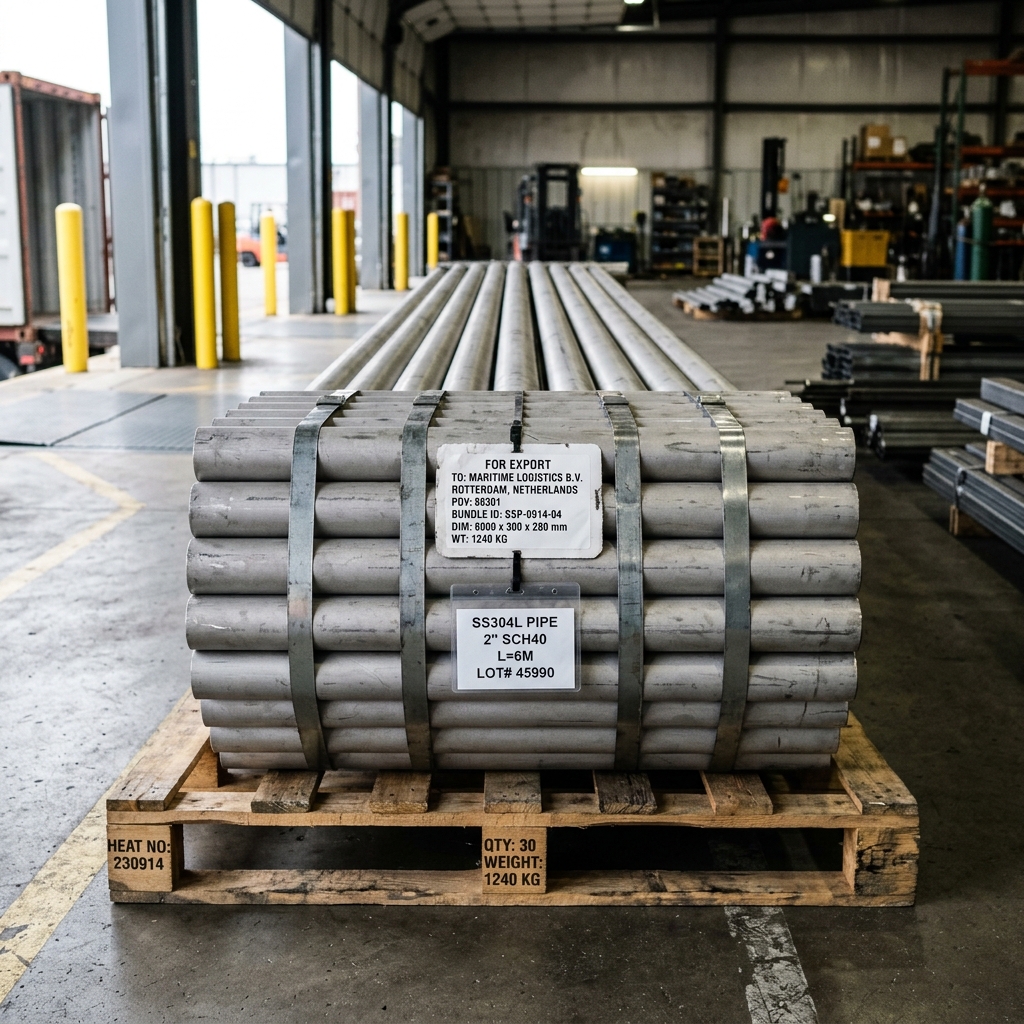
| Packing | Hexagonal bundles, end caps, crated for small sizes and hygienic tube |
| Incoterms | FOB, CIF, DAP |
Send NPS or OD, schedule or wall, seamless or welded, standard, any internal Ra requirement, length, end preparation and quantity. Related products: 316 pipe and tube, 304L pipe, 316Ti pipe, seamless pipe, 316 and 316L sheet, and the full pipe and tube range.
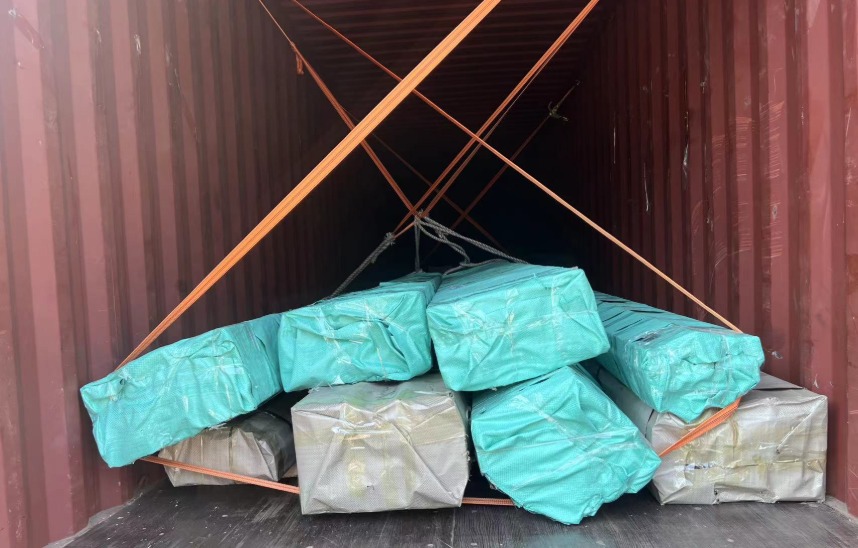
Stainless Steel Tubes Packed in Truck

Wooden Crate Packaging in Factory
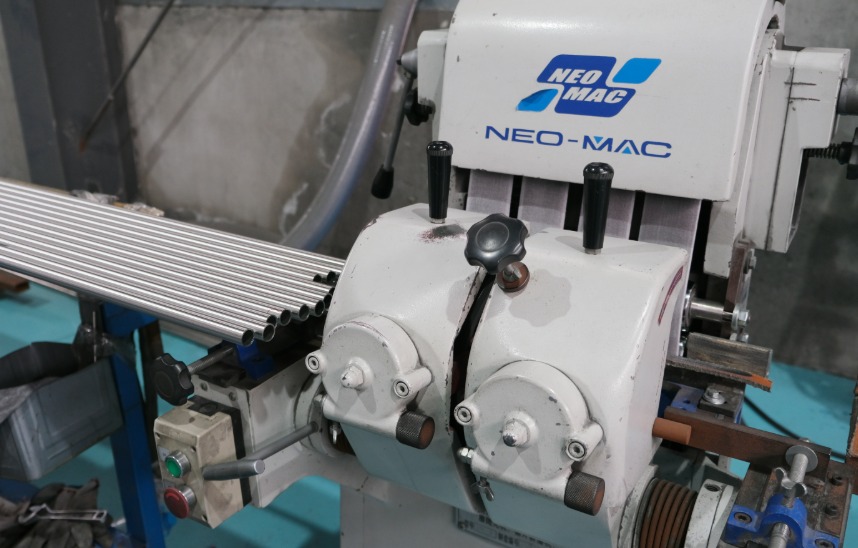
Neo-Mac Machine with Stainless Steel Tubes

Factory Tube Packaging Process

Industrial Manufacturing Equipment
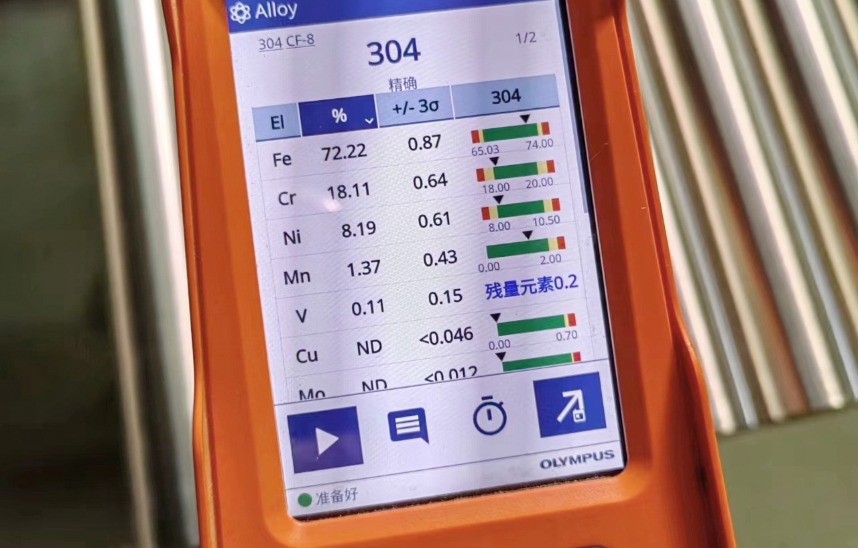
Stainless Steel Composition Analyzer
316L stainless steel pipe is the low-carbon version of 316, restricted to 0.035 percent carbon by ASTM A312 against 0.08 percent for the standard grade. That single change makes the pipe reliable as welded, without a post-weld solution anneal, which is why 316L rather than 316 is the specification on almost all fabricated process pipework. Walmay supplies it seamless and welded from 1/8 inch to 24 inch NPS in schedules 5S to 80S, plus hygienic tube to ASTM A270 with a stated internal roughness, and most of our stock is dual certified to both 316 and 316L.
When an austenitic stainless steel is held between roughly 425 and 815 C, carbon diffuses to the grain boundaries and combines with chromium to form chromium carbides. The metal immediately either side of those boundaries is left with less chromium than it needs to stay passive, and the material becomes vulnerable to intergranular corrosion. This is sensitisation, and welding puts a band of every joint through exactly that temperature range.
There are two ways to prevent it. Solution anneal the whole assembly at 1,040 C and quench, which is impossible on installed pipework, or limit carbon so there is not enough of it to form a continuous carbide network. 316L takes the second route. The practical consequence: a welded 316L line keeps full corrosion resistance at the joint, while a welded heavy-wall 316 line may not.
| Wall thickness | Standard 316, as welded | 316L, as welded |
|---|---|---|
| Under 3 mm | Usually acceptable, fast cooling | Acceptable |
| 3-6 mm | Marginal, depends on heat input | Acceptable |
| Above 6 mm | Sensitisation likely without anneal | Acceptable |
| Multi-pass welds | Sensitisation likely | Acceptable |
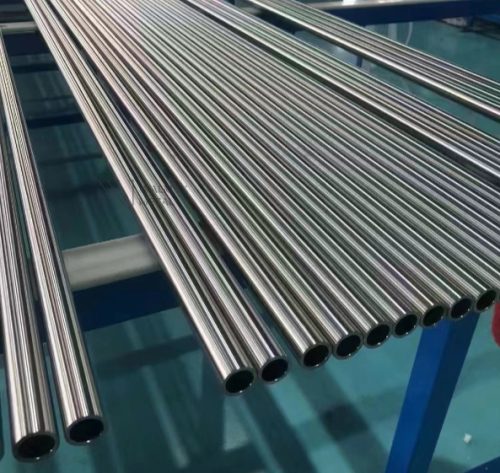
316L is the standard grade for food, dairy, brewing, biotech and pharmaceutical product piping, specified to ASTM A270 or DIN 11850 rather than to A312.
| Requirement | Typical specification |
|---|---|
| Internal surface | Ra 0.8 um mechanically polished, or Ra 0.4 um and below electropolished |
| Ends | Tri-clamp, orbital weld prep, or extended for welding |
| Welding | Orbital, fully documented, with weld coupons |
| Delta ferrite | Controlled, often under 3 percent for high-purity work |
| Documentation | Heat traceability, surface finish report, weld log, material declaration |
| Drainability | Slope and support design so lines drain fully |
For these lines the grade is the easy part; the specification lives in the internal finish, the weld documentation and the fittings. Send the applicable standard and Ra limit at enquiry stage. The pharmaceutical and food production page covers the wider material selection for these facilities, and the food processing guide works through grade and finish together.


Walmay will help match the right stainless product form and specification for your application, confirm quantities and packing needs, and provide requested documents based on order requirements.
Loading form…