304 stainless steel angle is L-section profile used for frames, supports, edge protection, bracing and trim wherever corrosion resistance is needed. Walmay supplies equal-leg angle from 20x20x3 mm to 200x200x20 mm and unequal-leg angle from 30x20x3 mm to 200x100x12 mm, hot rolled to ASTM A276 or laser fused for tighter dimensions and sharper corners, in 6 metre lengths or cut to size with an EN 10204 3.1 certificate. 316L is available across the same range for coastal and chemical service.
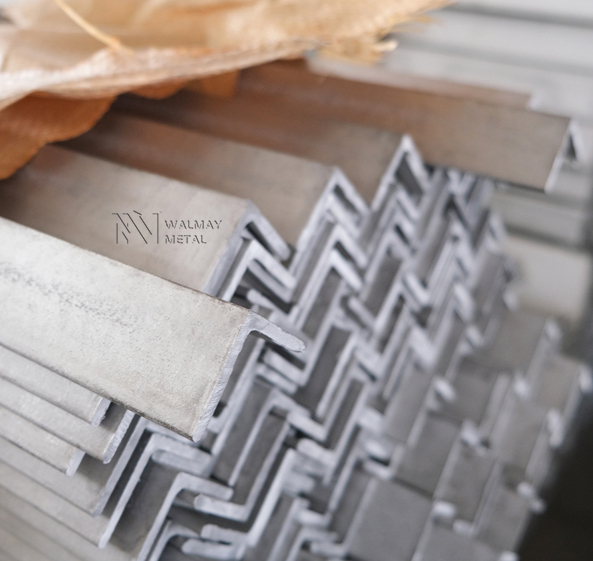
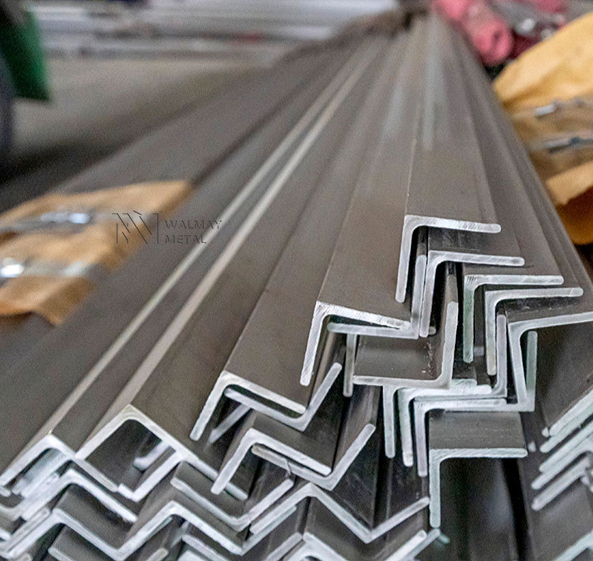
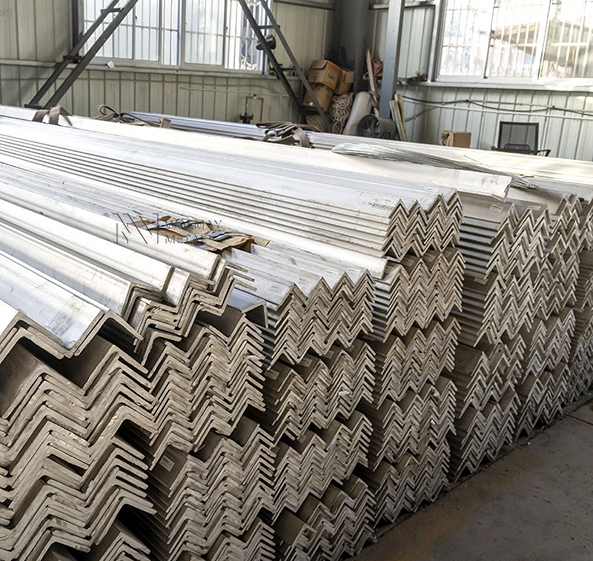
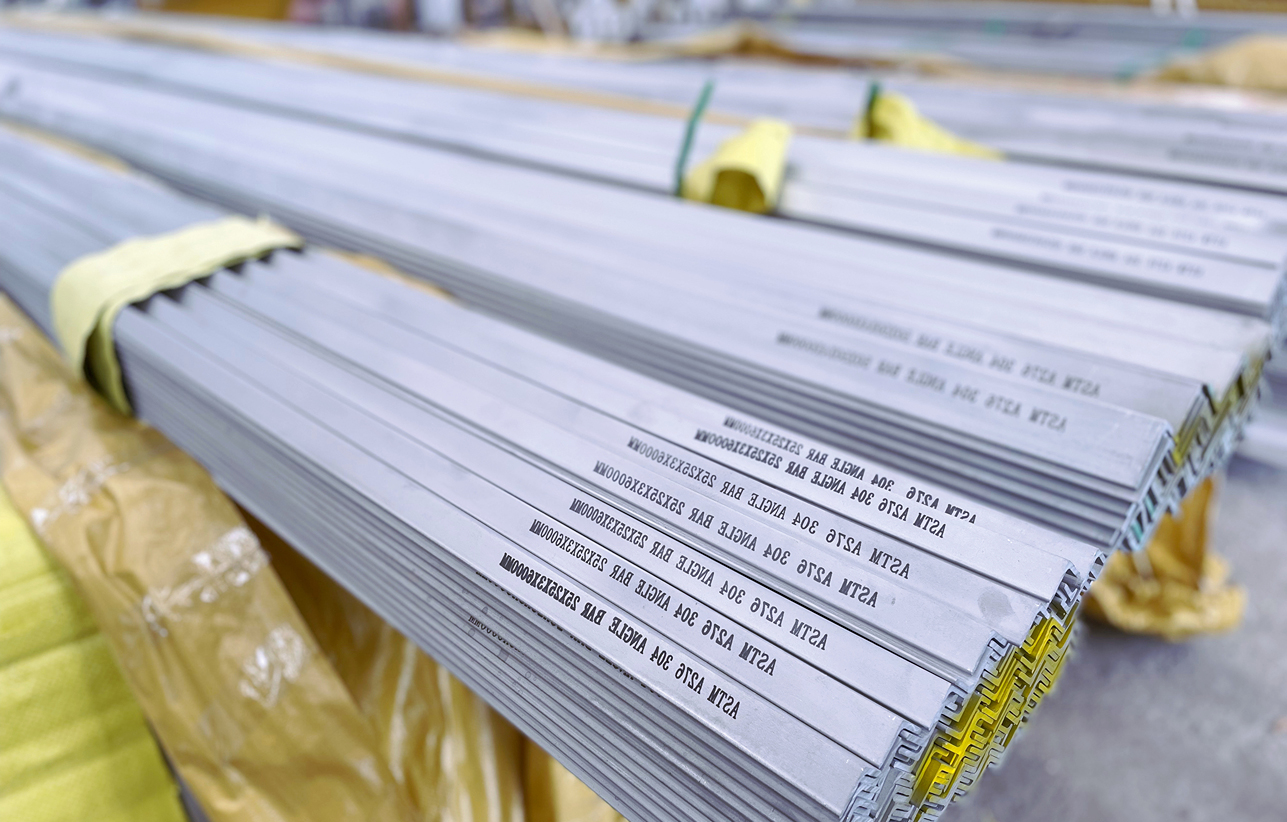
Weight calculated for 304 at 8.0 g/cm3. Section area for an equal angle is approximately thickness multiplied by (2 times leg minus thickness).
| Section | Weight per metre | Weight per 6 m |
|---|---|---|
| 20x20x3 mm | 0.88 kg | 5.3 kg |
| 25x25x3 mm | 1.13 kg | 6.8 kg |
| 25x25x4 mm | 1.47 kg | 8.8 kg |
| 30x30x3 mm | 1.37 kg | 8.2 kg |
| 30x30x4 mm | 1.79 kg | 10.8 kg |
| 40x40x4 mm | 2.43 kg | 14.6 kg |
| 40x40x5 mm | 3.00 kg | 18.0 kg |
| 50x50x4 mm | 3.07 kg | 18.4 kg |
| 50x50x5 mm | 3.80 kg | 22.8 kg |
| 50x50x6 mm | 4.51 kg | 27.1 kg |
| 60x60x6 mm | 5.47 kg | 32.8 kg |
| 65x65x8 mm | 7.81 kg | 46.9 kg |
| 75x75x6 mm | 6.91 kg | 41.5 kg |
| 75x75x8 mm | 9.09 kg | 54.5 kg |
| 80x80x8 mm | 9.73 kg | 58.4 kg |
| 100x100x8 mm | 12.29 kg | 73.7 kg |
| 100x100x10 mm | 15.20 kg | 91.2 kg |
| 100x100x12 mm | 18.05 kg | 108.3 kg |
| 120x120x12 mm | 21.89 kg | 131.3 kg |
| 150x150x12 mm | 27.65 kg | 165.9 kg |
| 150x150x15 mm | 34.20 kg | 205.2 kg |
| 200x200x20 mm | 60.80 kg | 364.8 kg |
| Section | Weight per metre | Weight per 6 m |
|---|---|---|
| 30x20x3 mm | 1.13 kg | 6.8 kg |
| 40x25x4 mm | 1.98 kg | 11.9 kg |
| 50x30x5 mm | 3.00 kg | 18.0 kg |
| 60x40x5 mm | 3.80 kg | 22.8 kg |
| 75x50x6 mm | 5.71 kg | 34.3 kg |
| 100x50x8 mm | 11.01 kg | 66.1 kg |
| 100x75x8 mm | 13.09 kg | 78.5 kg |
| 150x75x10 mm | 17.20 kg | 103.2 kg |
| 150x90x12 mm | 21.89 kg | 131.3 kg |
| 200x100x12 mm | 34.13 kg | 204.8 kg |
Unequal angle is chosen where the load acts mainly in one direction, or where one leg has to reach a fixing line, and it is normally a mill-run item rather than stock.
| Item | Detail |
|---|---|
| Grades | 304, 304L, 316L, and 2205 duplex to order |
| Standards | ASTM A276, ASTM A479, EN 10088-3, EN 10056 for dimensions |
| Equal-leg range | 20x20x3 mm to 200x200x20 mm |
| Unequal-leg range | 30x20x3 mm to 200x100x12 mm |
| Length | 6 m standard, 3 m, or cut to length plus or minus 1 mm |
| Condition | Hot rolled annealed and pickled, or laser fused |
| Surface options | Pickled, 2B, No.4 brushed, mirror polished |
| Certification | EN 10204 3.1 with analysis and mechanical results |
| Property | 304 | 304L | 316L |
|---|---|---|---|
| Yield strength minimum | 205 MPa | 170 MPa | 170 MPa |
| Tensile strength minimum | 515 MPa | 485 MPa | 485 MPa |
| Elongation | 40 percent | 40 percent | 40 percent |
| Density | 8.0 g/cm3 | 8.0 g/cm3 | 8.0 g/cm3 |
| Maximum continuous service | About 870 C | About 870 C | About 870 C |
Note that stainless angle is not a substitute for structural carbon steel angle on a like-for-like basis. Carbon steel S275 has a yield strength of 275 MPa against 205 MPa for annealed 304, so a stainless section carrying the same load may need to be heavier. Where a stainless structure is genuinely load bearing and weight matters, 2205 duplex at 450 MPa yield is the efficient answer.
| Limitation | Consequence |
|---|---|
| Yield strength of 205 MPa | Heavier sections than carbon steel for the same load |
| Pits in chlorides | Not for coastal, de-iced or pool environments; use 316L |
| High thermal expansion, 16 um/m/K | Welded frames distort more than carbon steel, so tack and balance heat |
| Work hardens | Machining and repeated bending are harder than on carbon steel |
| Galls | Bolted stainless-to-stainless joints seize without anti-seize compound |
| Price exposed to nickel | Alloy surcharge moves the price between quotations |
| Crevice corrosion at bolted faces | An angle bolted flat against another surface creates the worst crevice geometry |
That last point deserves attention in angle work specifically. Two 304 angles bolted back to back in a damp environment will corrode at the mating faces long before either exposed surface shows anything, because chloride concentrates where oxygen cannot reach. Either seal the interface, use 316L, or design the joint with a gap.
| Item | Detail |
|---|---|
| Minimum order | 500 kg from stock, 2 tonnes for mill sizes |
| Lead time from stock | 7-14 days |
| Lead time mill run | 30-50 days |
| Stock range | 25x25x3 to 100x100x10 mm equal-leg in 304 and 316L |
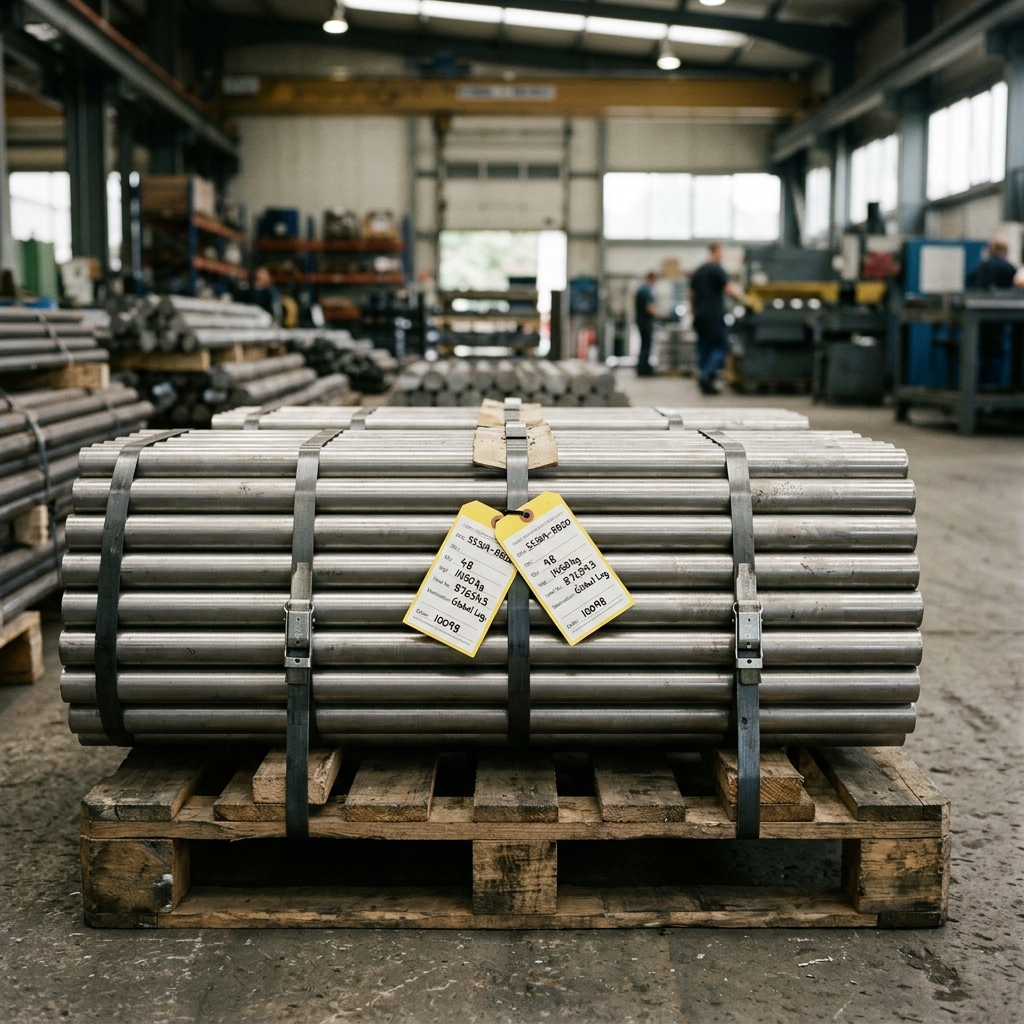
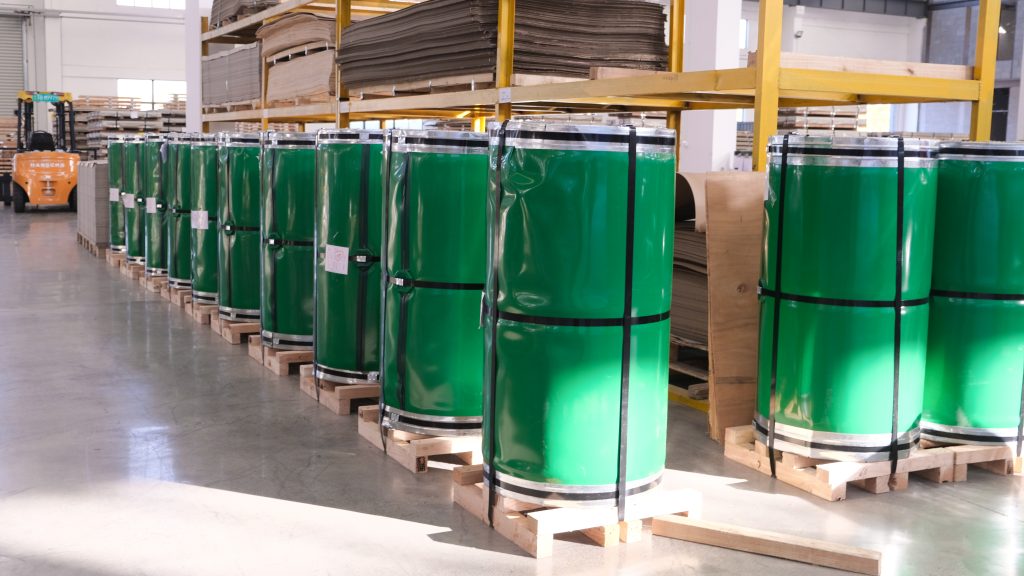
| Packing | Bundled and strapped on timber bearers, film on polished sections |
| Incoterms | FOB, CIF, DAP |
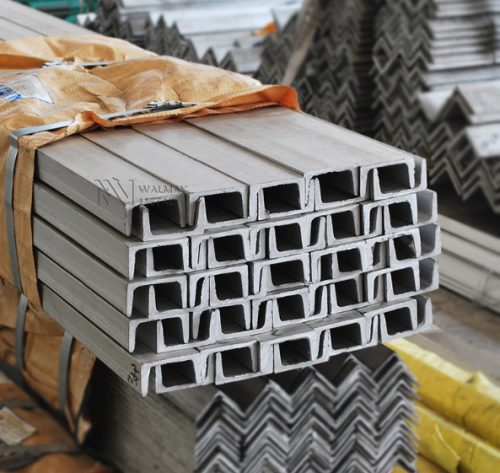
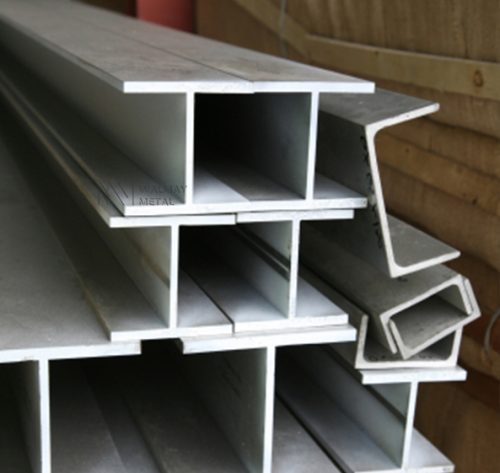
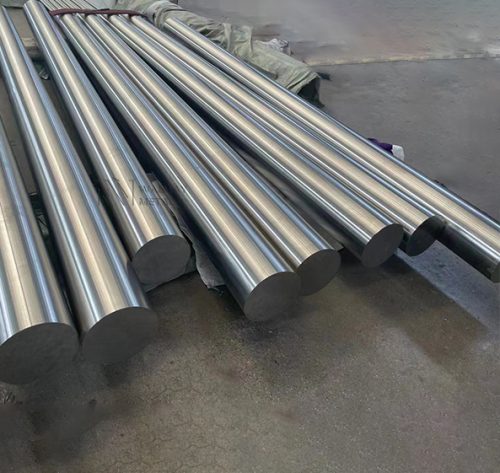
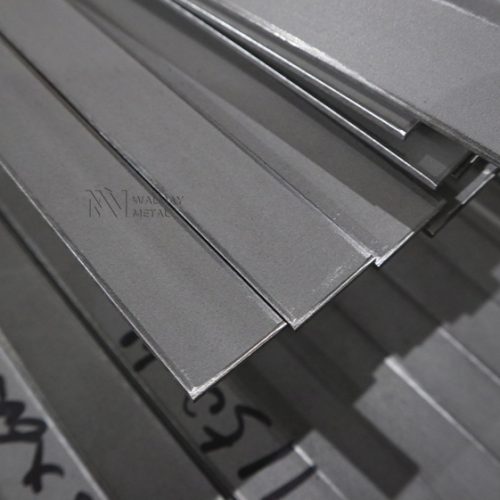
Send the section, grade, hot rolled or laser fused, length or cut list, and any drilling, mitring or finish requirement. Related products: channel, flat bar, square tube, 2205 duplex I beam, 304 round profile, and the full profiles range.
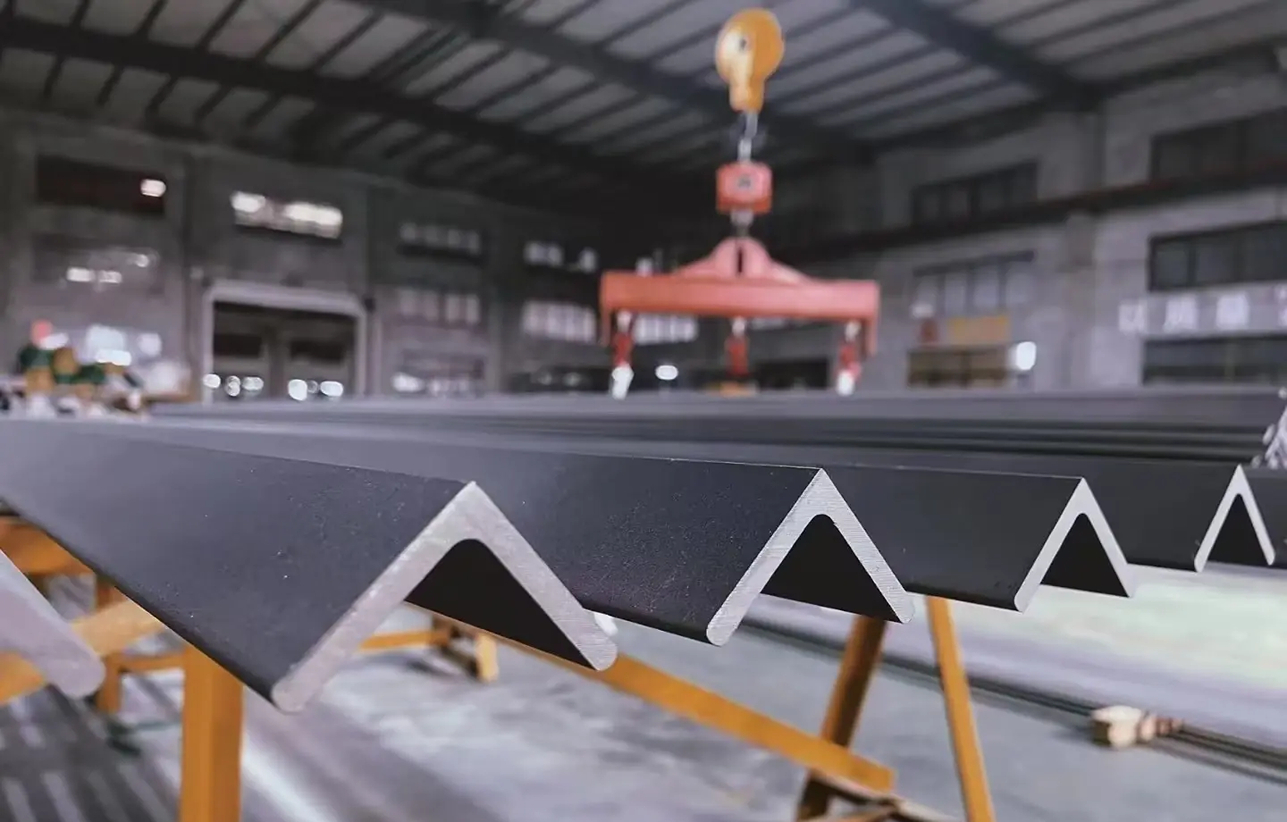
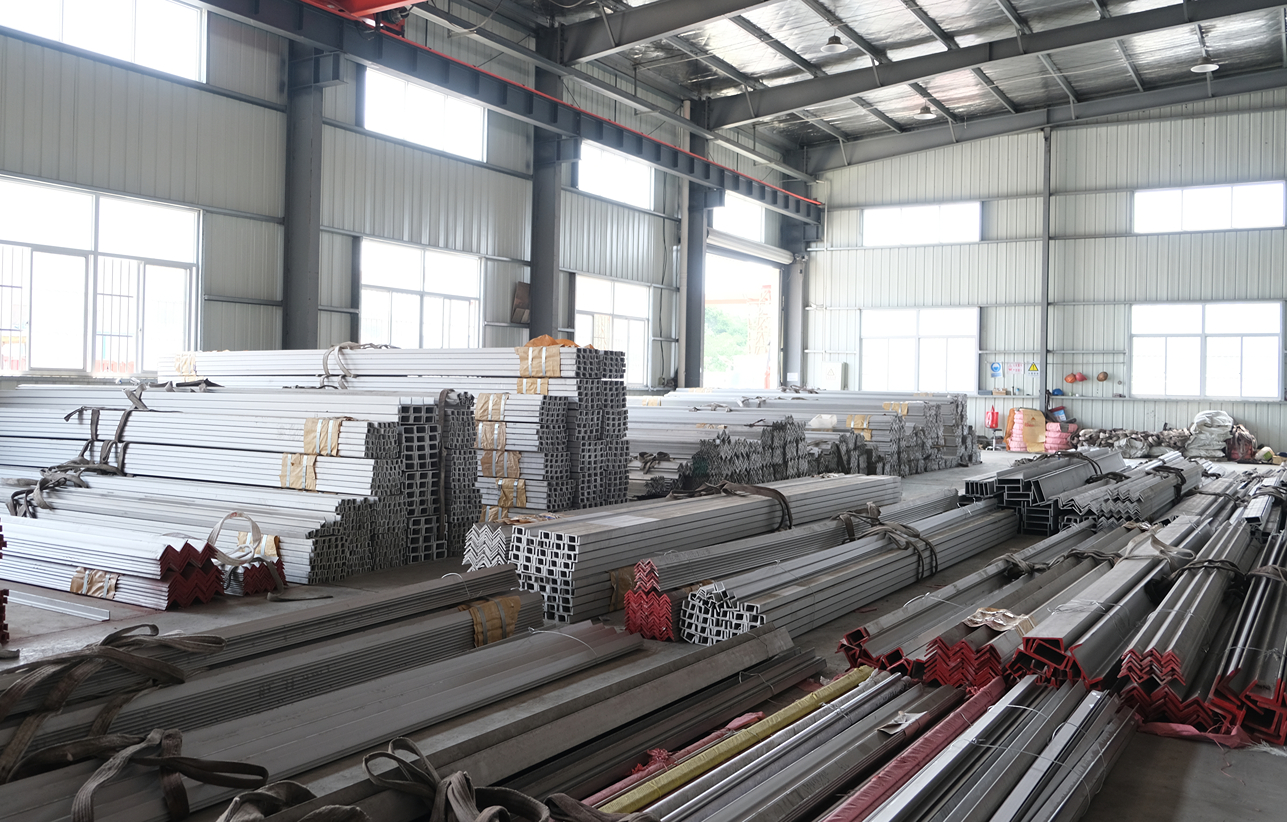
Stainless Steel Profiles on Storage Racks
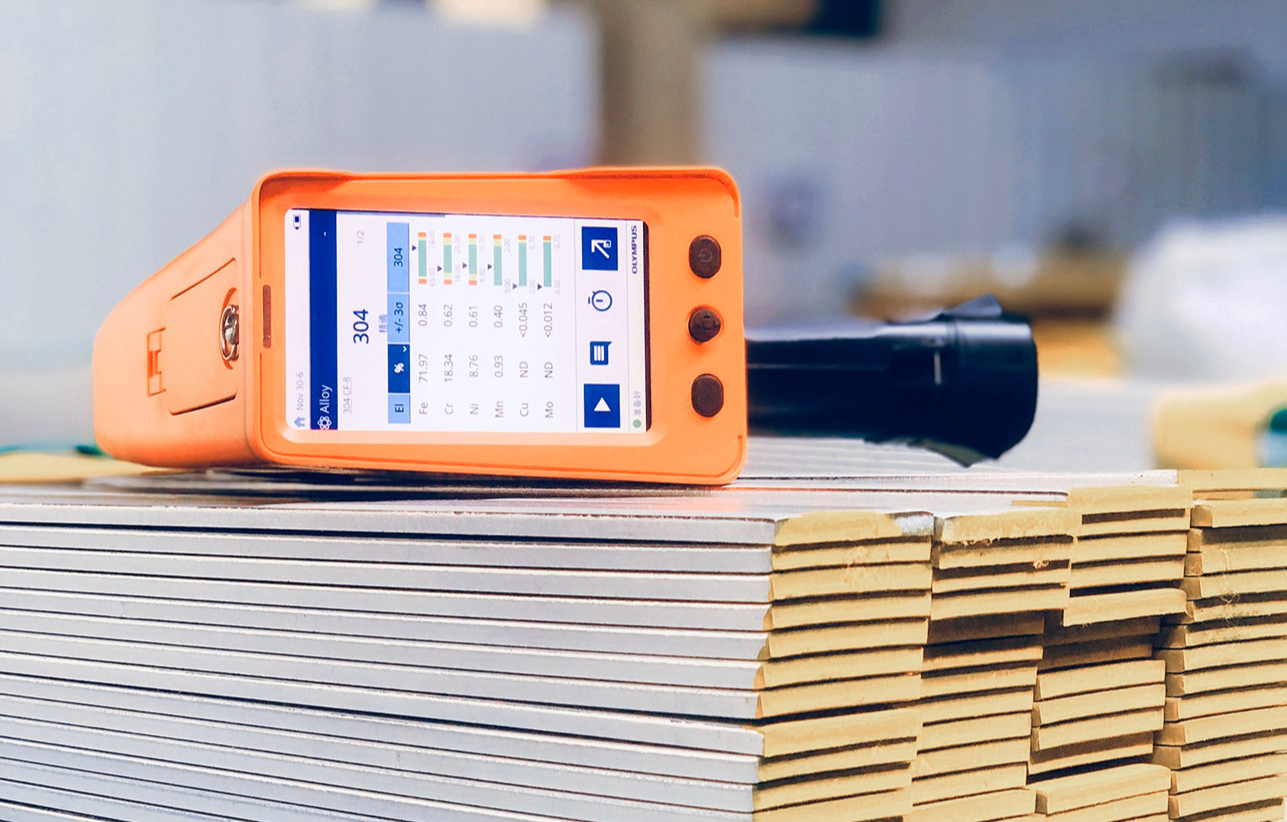
Spectrometer for Alloy Composition Analysis
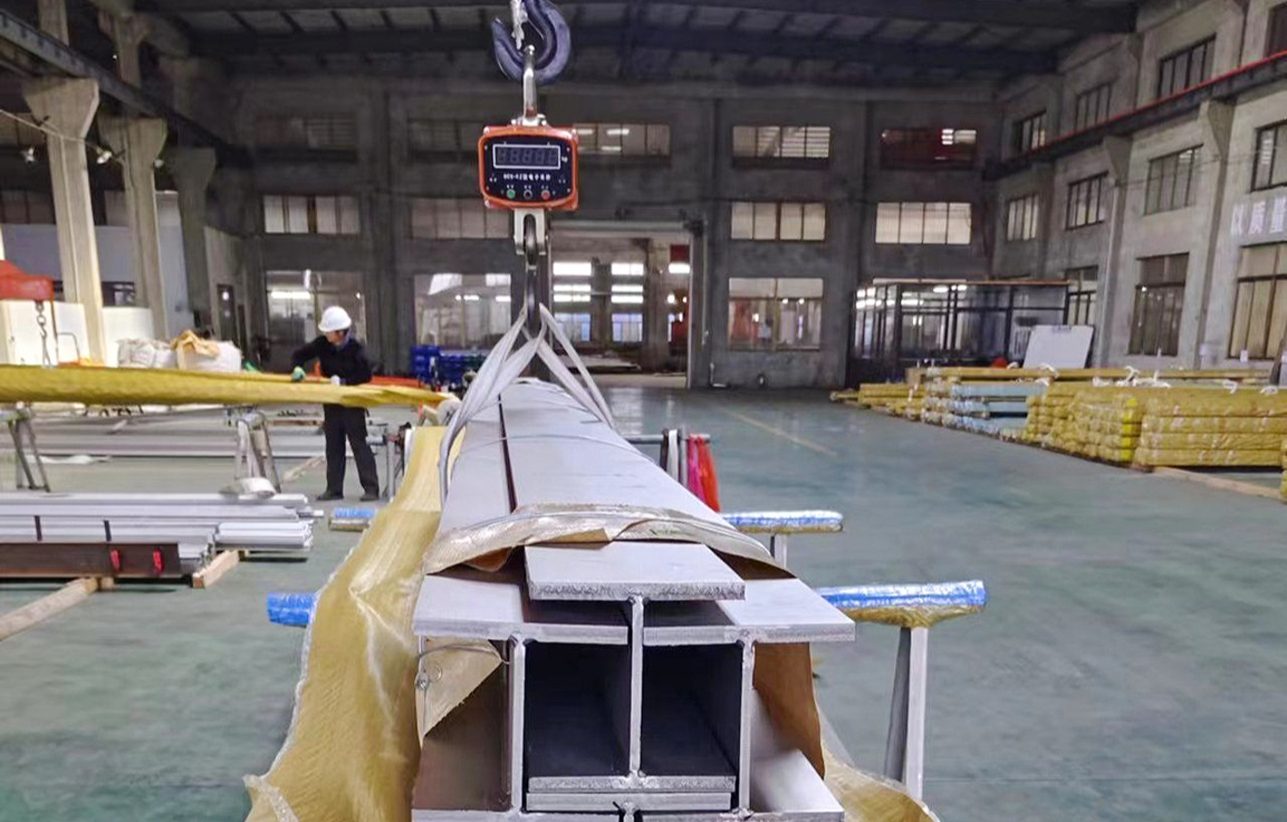
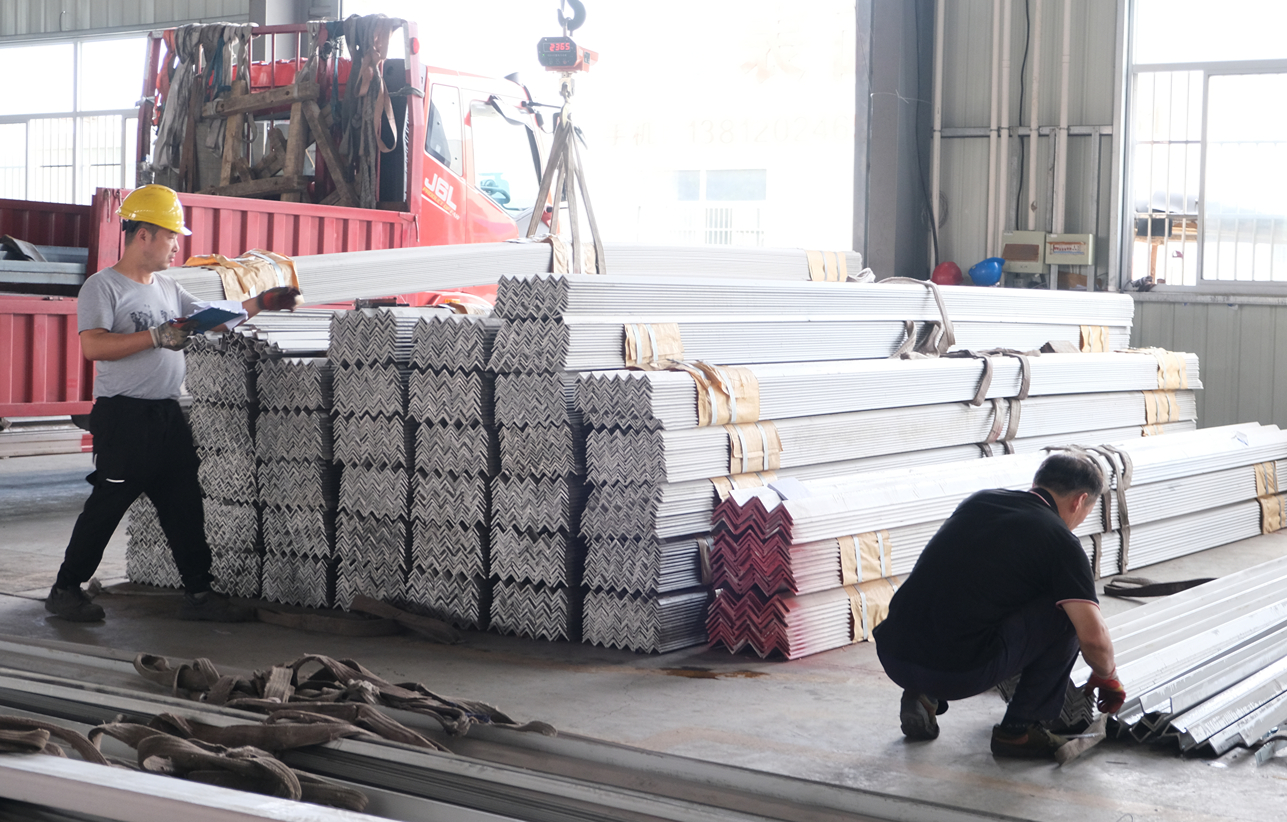
Profile Weighing with Crane Scale
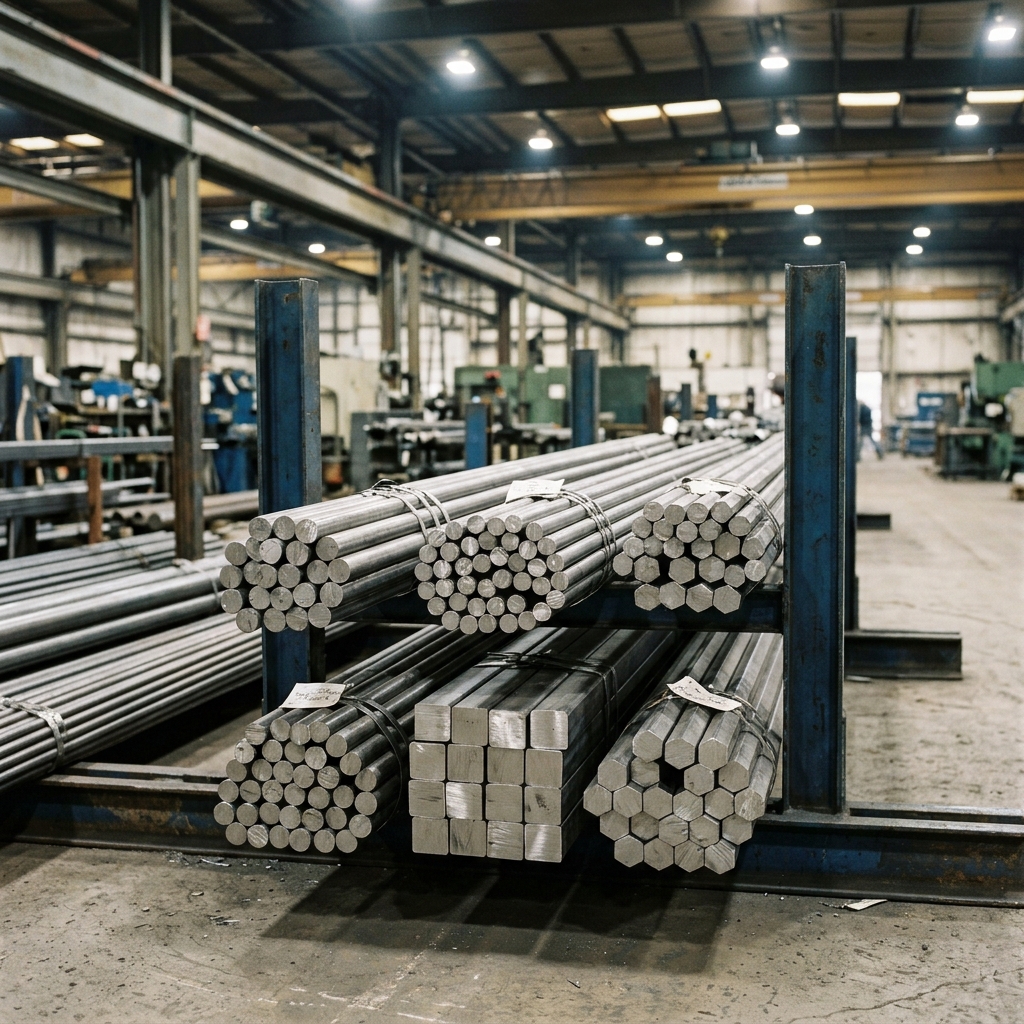
Factory Stacking of Stainless Steel Profiles
Packaged Stainless Steel Profiles for Shipment
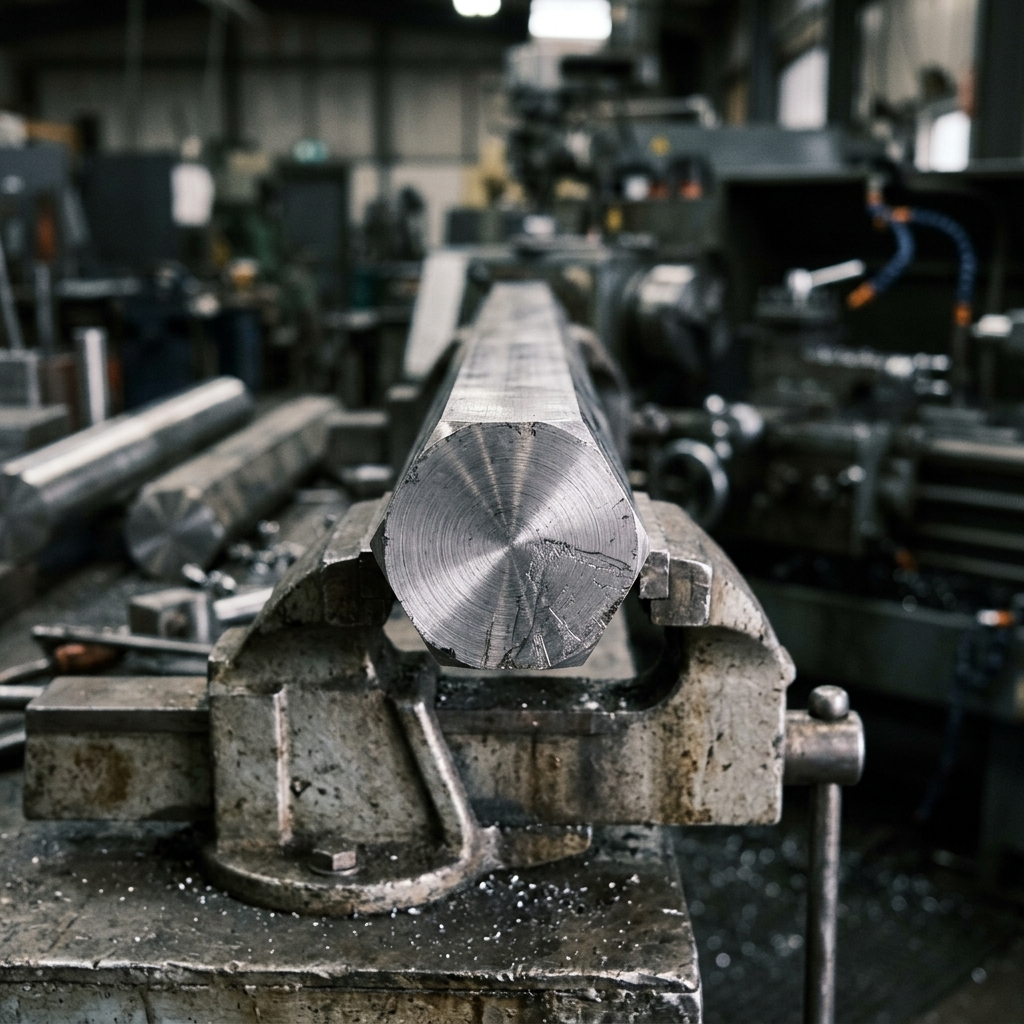
Worker Loading Profiles onto Truck
304 stainless steel angle is L-section profile used for frames, supports, edge protection, bracing and trim wherever corrosion resistance is needed. Walmay supplies equal-leg angle from 20x20x3 mm to 200x200x20 mm and unequal-leg angle from 30x20x3 mm to 200x100x12 mm, hot rolled to ASTM A276 or laser fused for tighter dimensions and sharper corners, in 6 metre lengths or cut to size with an EN 10204 3.1 certificate. 316L is available across the same range for coastal and chemical service.
Stainless angle is produced two ways, and the difference is visible and dimensional.
| Aspect | Hot rolled | Laser fused |
|---|---|---|
| Manufacture | Rolled from billet | Two flat strips joined by a laser weld at the root |
| Root and toe geometry | Radiused root, tapered legs | Sharp internal root, parallel legs |
| Dimensional tolerance | Plus or minus 1 to 2 mm on leg, plus or minus 0.5 mm on thickness | Plus or minus 0.5 mm on leg, plus or minus 0.2 mm on thickness |
| Surface | Pickled, matte | Mill 2B or brushed, can be polished |
| Straightness | 3 mm per metre | Under 1 mm per metre |
| Availability of thin sections | Limited below 3 mm | Down to 1.5 mm |
| Cost | Baseline | 20-40 percent higher |
| Best for | Structural frames, welded fabrication | Visible architectural work, precise assemblies, thin sections |
For a welded support frame that will be painted or hidden, hot rolled is the economical choice. For an exposed architectural edge trim or a mitred frame that must close tightly, laser fused is worth the premium, because the sharp root and parallel legs let mitres meet without gaps.
304 angle bends, but not in the way flat material does, and the constraint is which leg goes where.
| Operation | Practicality |
|---|---|
| Bending the leg itself, across the section | Straightforward in a press with a suitable die, radius at least 2 times thickness |
| Bending the section the easy way, legs out | Practical on a section roller, minimum radius about 15 times leg depth |
| Bending the section the hard way, leg in compression | Difficult; the free leg buckles or wrinkles and needs a roller with support rolls or induction bending |
| Mitre and weld instead of bending | Usually cheaper and dimensionally better for corners |
| Hot bending | Above about 950 C for heavy sections, followed by solution annealing |
304 itself is highly formable as a material: 40 percent elongation means it takes severe deformation without cracking, and it bends more readily than carbon steel of the same strength. What makes angle harder to bend than sheet is geometry, not metallurgy. Springback is greater than mild steel, typically 2 to 4 degrees more at a 90 degree bend, so overbend accordingly, and remember that the bend zone work hardens, which is why re-bending the same spot cracks.
We carry out bending, cutting, drilling, welding, edge finishing and polishing, described on the fabrication page.
Walmay will help match the right stainless product form and specification for your application, confirm quantities and packing needs, and provide requested documents based on order requirements.
Loading form…