 By Walmay
 06 Jul, 2026
 8 Minutes Read
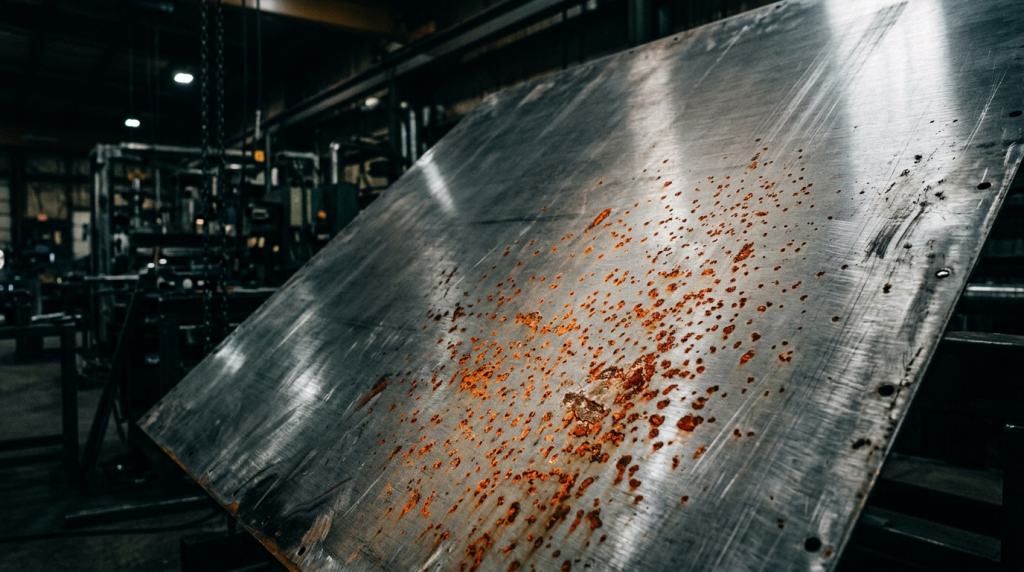
Here’s the blunt truth: when stainless steel sheets rust, the steel itself is almost never defective. In the vast majority of field failures, the real cause is surface contamination from carbon steel tools, chloride exposure the grade wasn’t designed to handle, or a fabrication mistake that damaged the passive chromium oxide layer. Fix those three things and rust complaints essentially disappear.
Below, we’ll walk through exactly what’s happening on the surface of your sheets, why it looks like the steel failed when it didn’t, and how to stop it from happening on your next project.
Every piece of stainless steel protects itself with a microscopic chromium oxide film, roughly 2–3 nanometers thick. That film is invisible, self-healing in the presence of oxygen, and the only reason stainless is “stainless” in the first place.
Break that film and leave it broken, and you’ve got a piece of steel that rusts like any other. The film gets broken three ways: mechanical damage (scratches, grinding), chemical attack (chlorides especially), and contamination (foreign iron particles embedded in the surface). In most rust complaints we investigate, the steel chemistry is perfectly in spec — the surface just never had a chance to repassivate.
This is why stainless steel can absolutely rust in water under the wrong conditions, even though it’s marketed as corrosion-resistant. The marketing isn’t wrong; it just assumes the passive layer is intact.
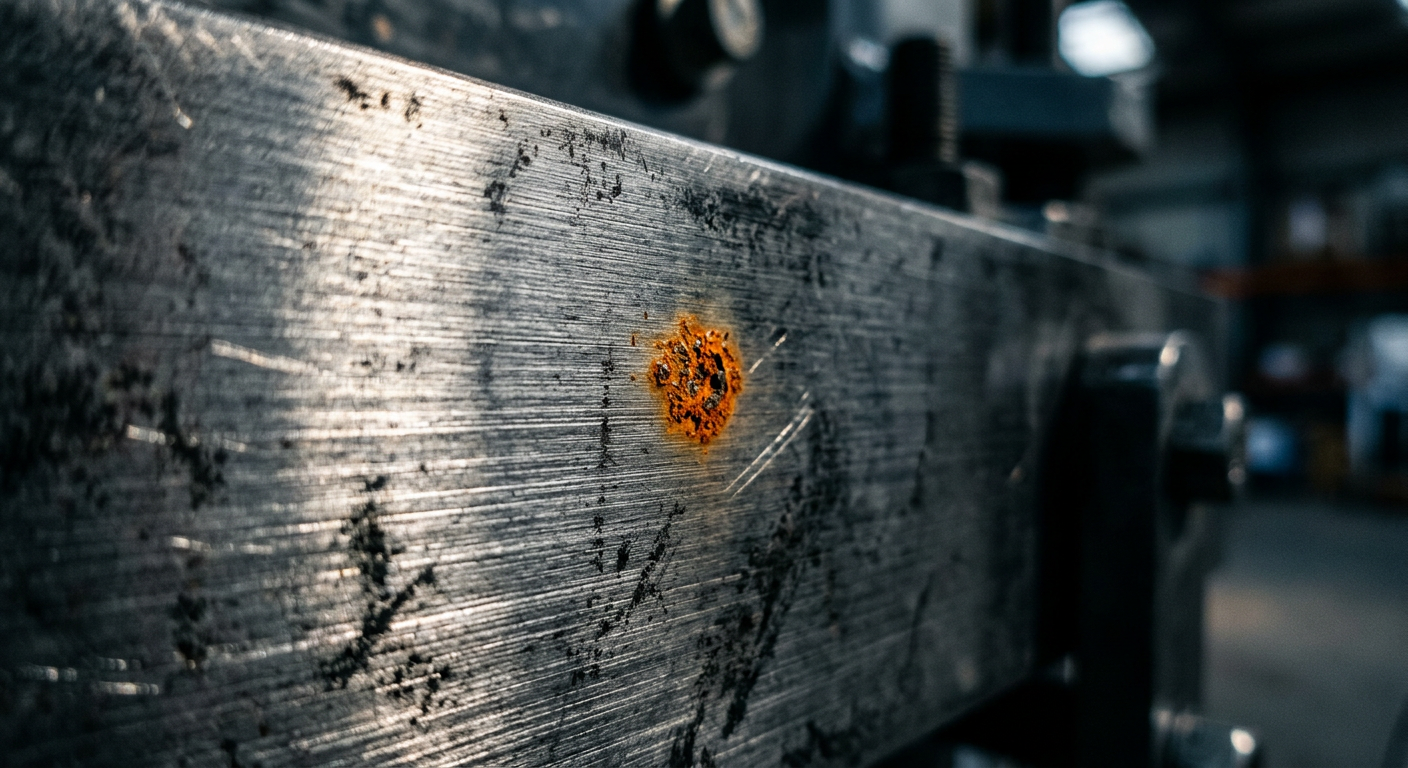
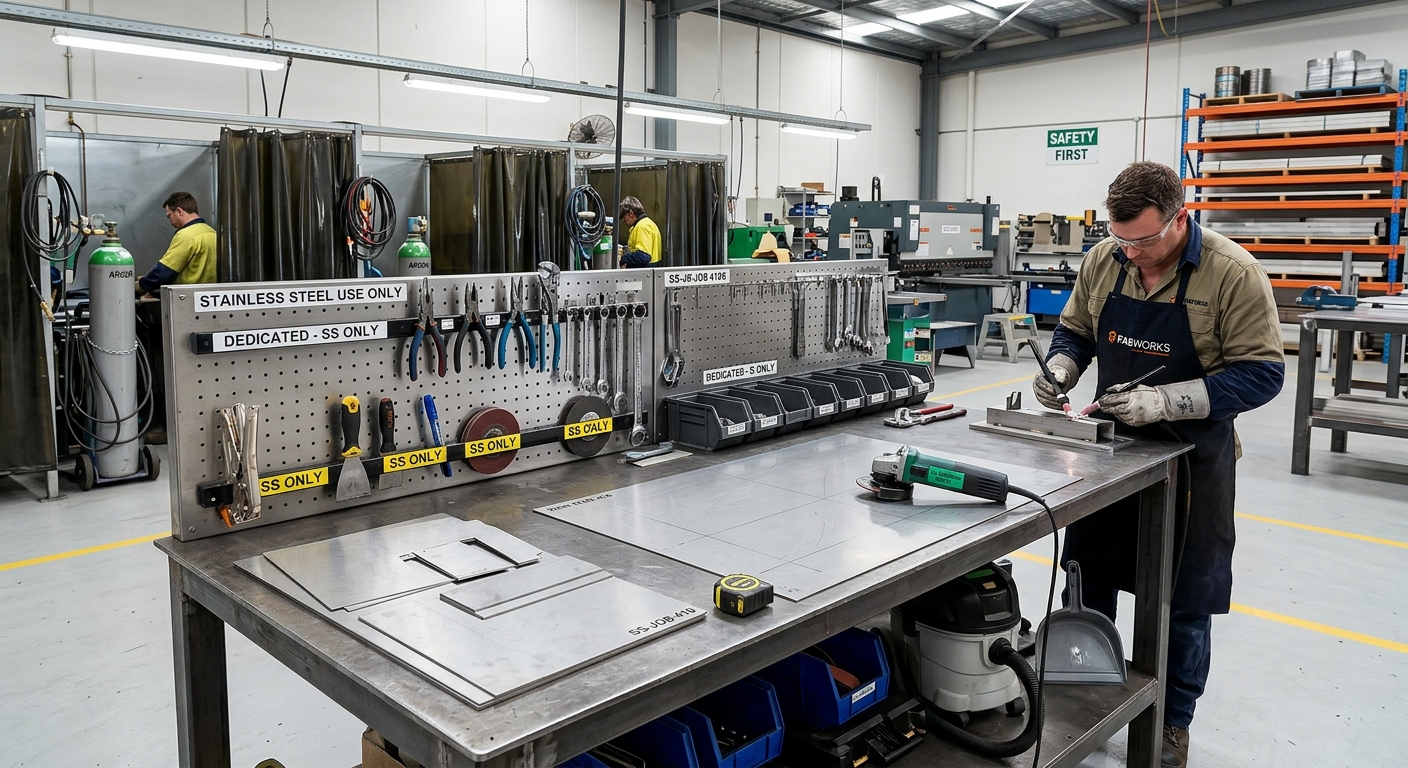
This is the number one cause of “my new stainless is rusting” calls. And it’s embarrassingly simple.
If a fabricator uses the same grinder, wire brush, or work table for carbon steel and stainless, microscopic iron particles embed themselves in the stainless surface. Those particles rust within days of exposure to humidity. The rust you see isn’t the stainless — it’s the carbon steel dust sitting on top of it, bleeding orange.
A kitchen equipment fabricator orders 304 sheet, cuts it on a plasma table that was used for mild steel an hour earlier, and ships the finished hood to a restaurant. Three weeks later the client sends photos of rust spots along every edge. The 304 chemistry tests perfect. The problem? Embedded iron from the cutting bed.
Chlorides are stainless steel’s kryptonite. Chloride ions physically pry apart the passive oxide layer and attack the underlying metal, causing pitting corrosion that looks like small dark spots or craters.
Where do chlorides come from? More places than most buyers realize:
304 stainless has almost no tolerance for chlorides above a few hundred ppm. 316 with its 2–3% molybdenum handles them much better but isn’t immune either. For seawater and heavy chloride service, you need to think about proper grade selection for seawater environments — sometimes duplex or super-austenitic is the only right answer.
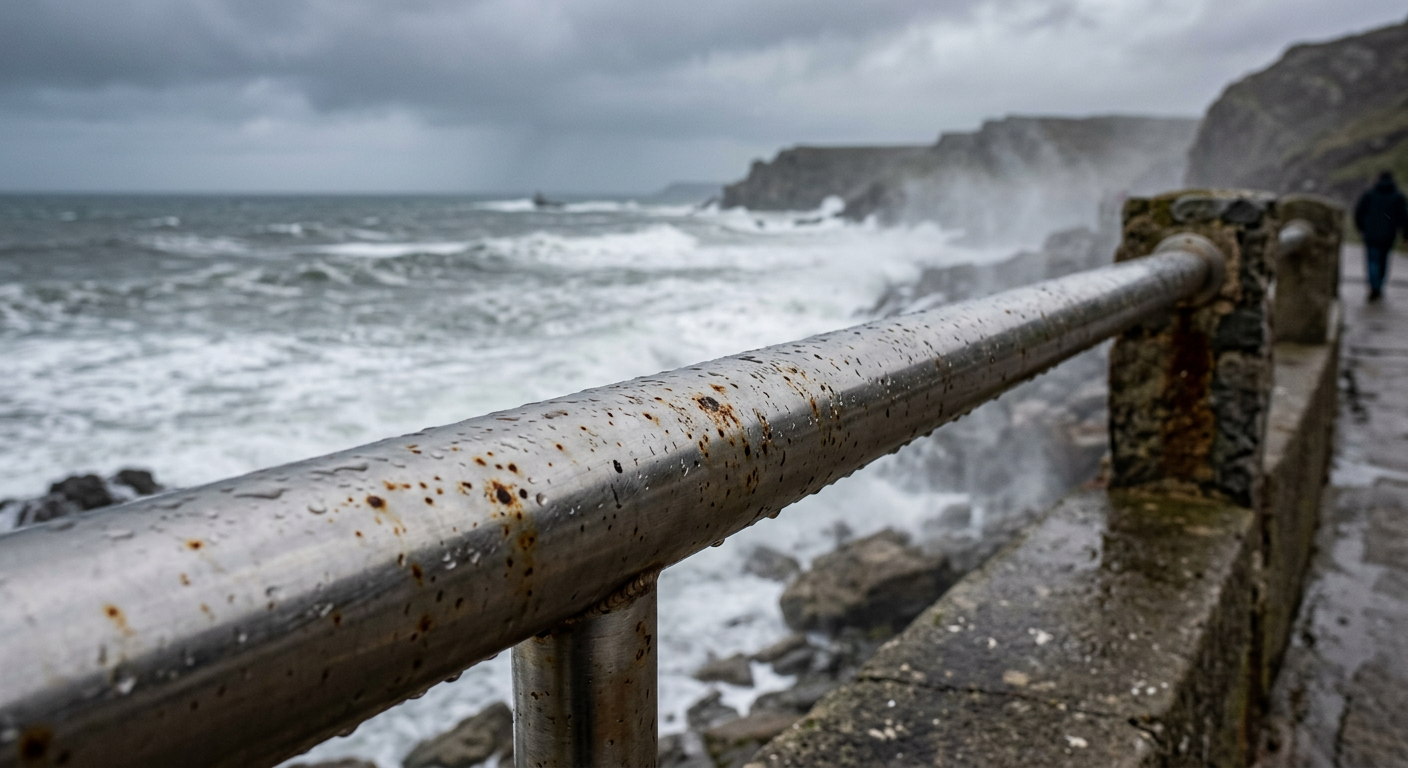
This is harder to swallow because it means the rust is a spec failure, not a material failure. 304 is the default choice for most buyers because it’s cheaper and widely available. But 304 is genuinely unsuitable for:
In these environments, 316/316L should be the minimum, and sometimes duplex 2205 or 2507 is warranted. The cost difference between 304 and 316 is usually 20–30% — trivial compared to replacing a corroded installation.
If you’re not sure which grade you actually need, our guide to different stainless steel types and the grade-by-application breakdown will save you a spec mistake.
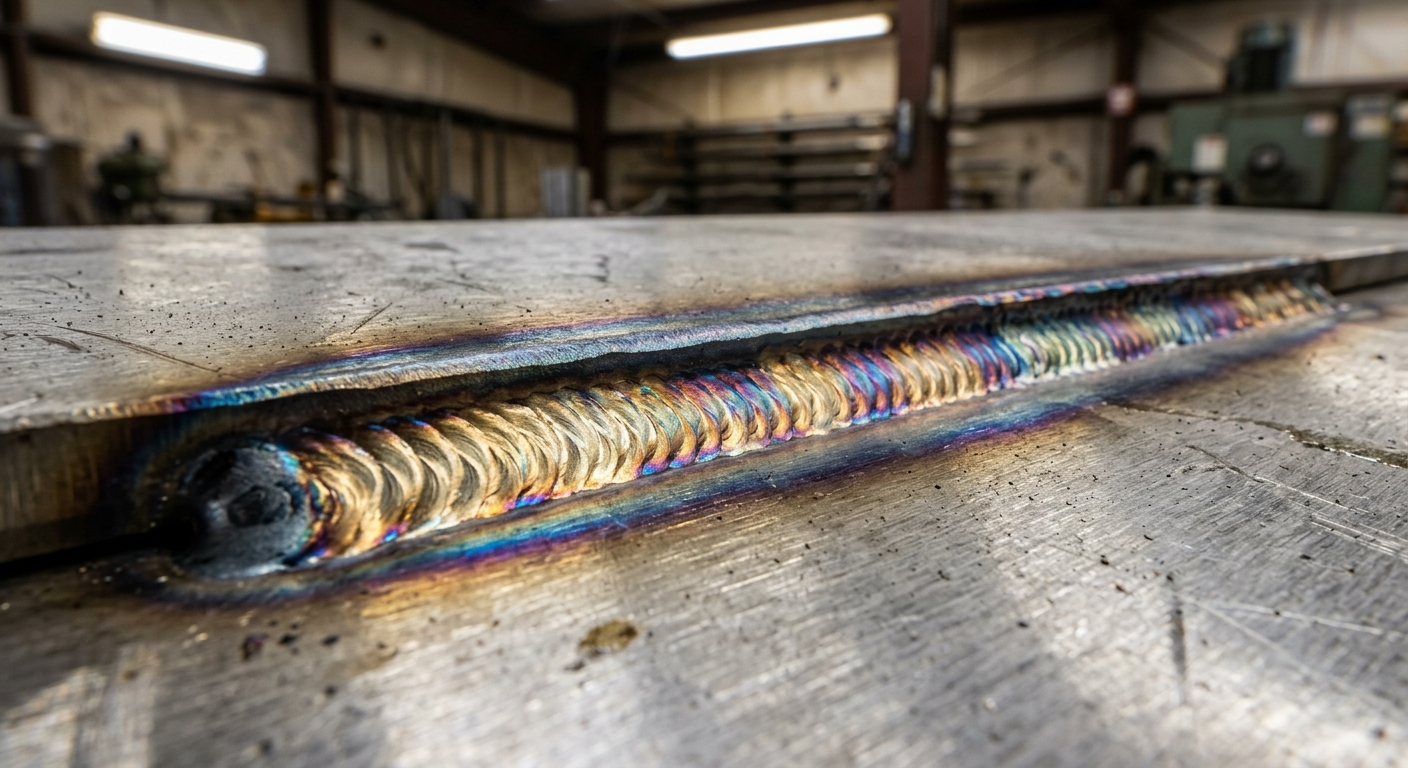
Walk up to any stainless weld and you’ll see colored bands near the bead — straw yellow, purple, blue, sometimes black. That’s heat tint, and it’s the third most common rust cause we diagnose.
Heat tint looks like a cosmetic issue. It’s not. The discoloration is chromium-depleted oxide, and underneath it the chromium content has dropped below the ~10.5% threshold needed to form a real passive layer. Leave heat tint in place and rust will appear along every weld within months — faster in humid or coastal environments.
Pickling paste or electrochemical cleaning after welding. Mechanical brushing alone doesn’t restore the chromium — it just hides the color while leaving the weak zone intact. For critical applications, pickle then passivate.
Surface finish matters more than most buyers appreciate. A polished 2B or BA finish has fewer micro-crevices where contaminants can collect and fewer stress points where corrosion can initiate. A rougher No. 1 or mill finish — or worse, a surface scratched up from rough handling — traps moisture, salt, and dirt.
Laser-cut and sheared edges are particularly vulnerable. The cut zone has a heat-affected layer, and the edge itself is often jagged at a microscopic level. In chloride service, rust will start at the edge every single time unless it’s deburred and passivated.
This is one reason the distinction between hot-rolled and cold-rolled matters for stainless too: cold-rolled sheet with a 2B finish is smoother, cleaner, and more corrosion-resistant out of the box than hot-rolled pickled material — even though both are the “same” grade.
Sometimes the damage is done before the sheet ever gets to the job site. Stainless stored flat on a concrete floor, covered in a tarp that traps humidity, or stacked against carbon steel racking will pick up contamination and surface attack without anyone noticing.
For instance, a solar mounting manufacturer we worked with had a recurring rust issue on brand-new brackets. The chemistry was fine. The problem was sheets stored outside under a tarp that held saltwater condensation against the surface for weeks before fabrication.
Diagnosis saves money. Before replacing sheets or blaming the mill, look closely:
A simple test: wipe a rust spot with a clean cloth and a mild phosphoric acid cleaner. If it wipes off and doesn’t return, it was surface contamination. If it returns or leaves a pit, you have real corrosion and likely a grade or environment problem.
If you take one thing from this article, take this checklist:
At Walmay, we supply mill-certified 304, 316, 316L, duplex, and super-austenitic sheet with the surface finish and passivation treatment matched to your application — not just whatever’s on the shelf. If you’ve been burned by rusting stainless and want a second opinion on grade selection or finishing, talk to our team about proper material selection before you buy again. The right sheet, sourced correctly, simply doesn’t rust.
 Industry Knowledge
 Industry Knowledge
 Industry Knowledge
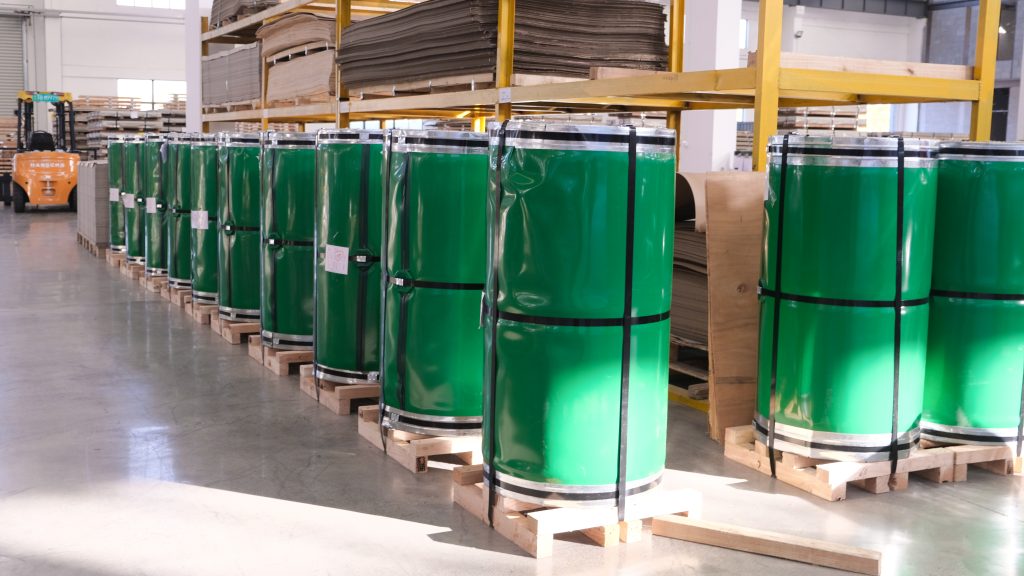
Walmay will help match the right stainless product form and specification for your application, confirm quantities and packing needs, and provide requested documents based on order requirements.
Loading form…