 By Walmay
 15 Sep, 2026
 7 Minutes Read
For warm, chloride-heavy seawater service, duplex 2205 beats 316L almost every time — higher pitting resistance (PREN ~35 vs ~25), roughly 2x the yield strength, and far better resistance to chloride stress corrosion cracking. But 316L is not obsolete: on topside structures, low-temperature splash-zone fittings, and jobs where welding speed and fabrication cost matter more than ultimate corrosion performance, 316L still earns its place. The honest answer is that the right grade depends on temperature, chloride exposure, load, and who is doing the welding.
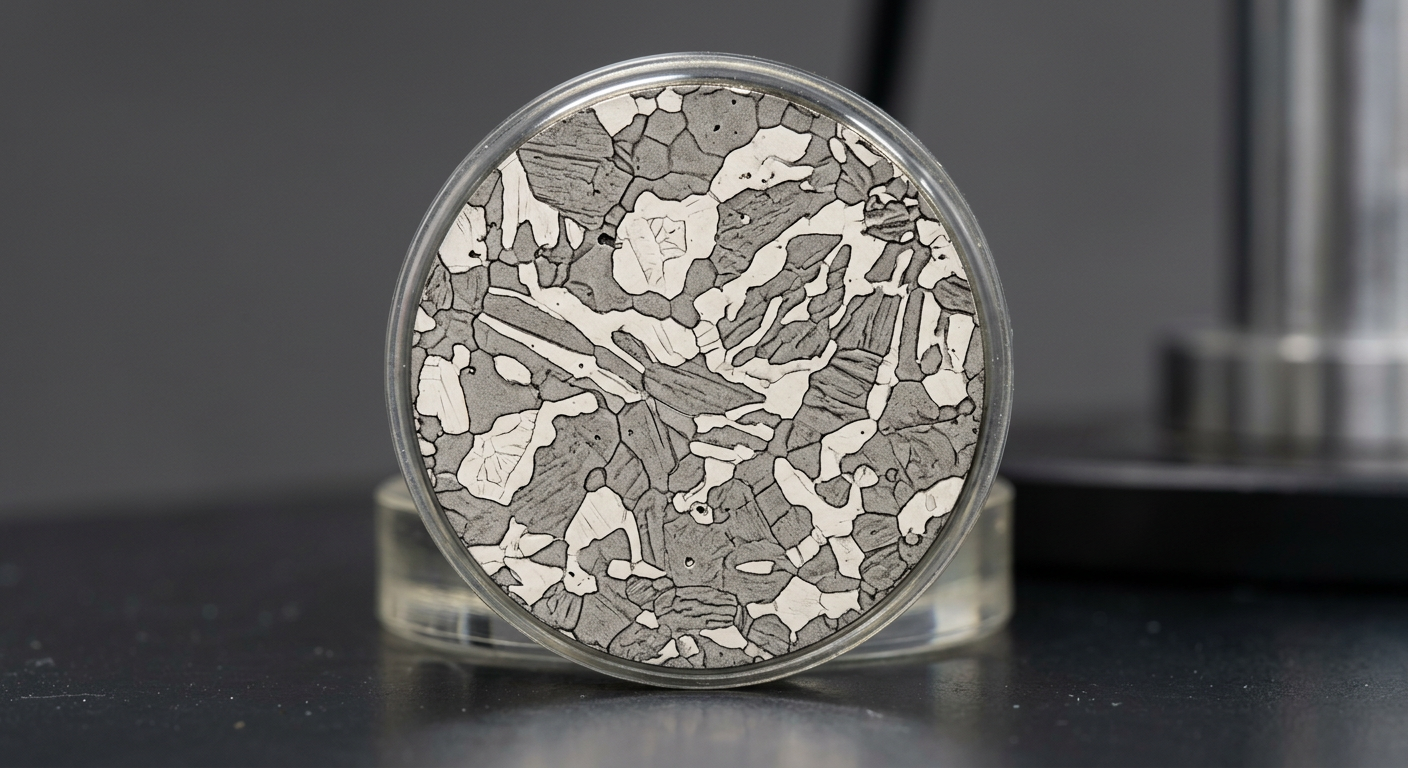
316L is a fully austenitic stainless — around 16–18% Cr, 10–14% Ni, 2–3% Mo, carbon capped at 0.03%. Duplex 2205 is roughly half austenite, half ferrite — 22% Cr, 5% Ni, 3% Mo, with nitrogen added deliberately. That dual-phase microstructure is where all the performance differences come from.
The ferrite phase gives duplex its high strength and resistance to chloride stress corrosion cracking (SCC) — the single biggest failure mode for 316L in hot seawater. The austenite phase keeps toughness and general corrosion resistance in line. 316L, being fully austenitic, is tougher at cryogenic temperatures and easier to weld, but it pays for that with lower strength and real vulnerability to SCC above about 60 °C in chloride environments.
If you want a deeper refresher on the grade families, our overview of stainless steel grades and their applications lays out the bigger picture.
PREN — Pitting Resistance Equivalent Number — is the shorthand every offshore engineer uses. Formula: %Cr + 3.3×%Mo + 16×%N.
The rule of thumb in the North Sea and Gulf of Mexico: you want PREN ≥ 40 for ambient seawater service without cathodic protection. That rules 316L out for direct seawater piping almost immediately. It also explains why duplex 2205 is fine for hot produced-water handling but super duplex gets specified for raw seawater lift pumps and firewater ring mains.
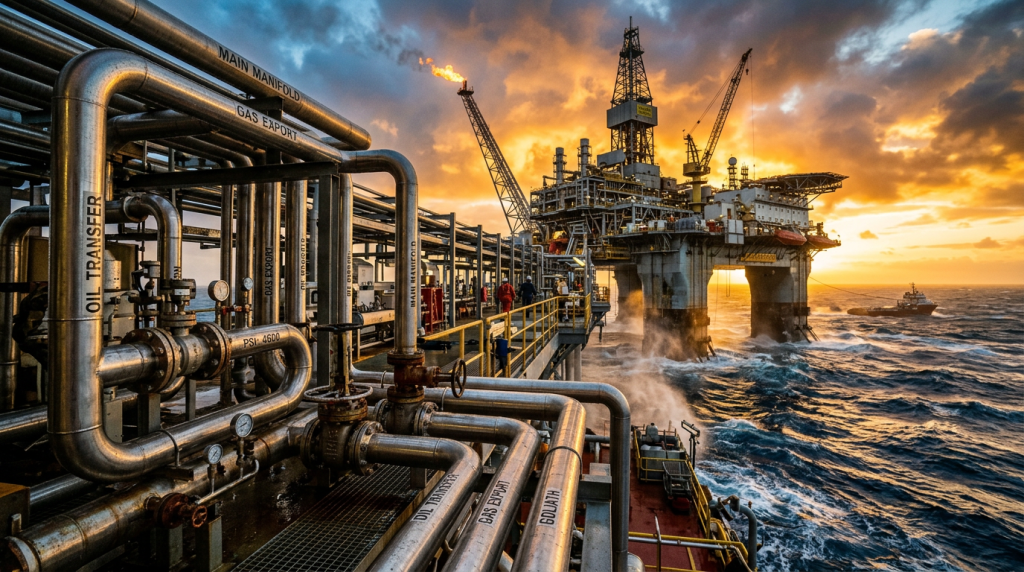
Real example: a FPSO operator we worked with initially specified 316L for a topside cooling water line at 55 °C. Within 18 months they had pinhole pits at weld HAZs. Replacing those spools with 2205 ended the problem — same geometry, same pressure rating, no more unplanned shutdowns.
This is where people underestimate duplex. Minimum specified yield strength:
That is 2.6x the yield. In pressure vessel or pipe design, wall thickness scales roughly with yield, so duplex can cut section thickness by 20–30% for the same pressure rating. Less steel, less weld metal, lighter modules lifted by crane — those savings partly offset the higher per-ton cost of duplex.
For a 12-inch seawater header running 300 m across a topside, switching from 316L schedule 40 to 2205 schedule 20 can save 3–4 tonnes of steel and a meaningful chunk of welding hours. On a weight-constrained FPSO or jack-up, that matters.
Here is the side-by-side at a glance:
| Criteria | 316L | Duplex 2205 |
|---|---|---|
| PREN | 24–26 | 34–38 |
| Min. yield strength | 170 MPa | 450 MPa |
| Chloride SCC resistance | Poor above 60 °C | Excellent to ~150 °C |
| Weldability | Easy | Moderate — procedure critical |
| Cost premium | Baseline | +20–40% |
| Weight savings | None | 20–30% thinner sections |
| Best use case | Topside, splash zone | Subsea, hot seawater, brine |
| Lead time | Excellent | Good, longer for plate |
One nuance the table cannot capture: duplex is magnetic because of the ferrite phase, while 316L is effectively non-magnetic. That matters for instrument housings and certain subsea sensor enclosures. If you want the background, see our explainer on magnetic behaviour in stainless steel.
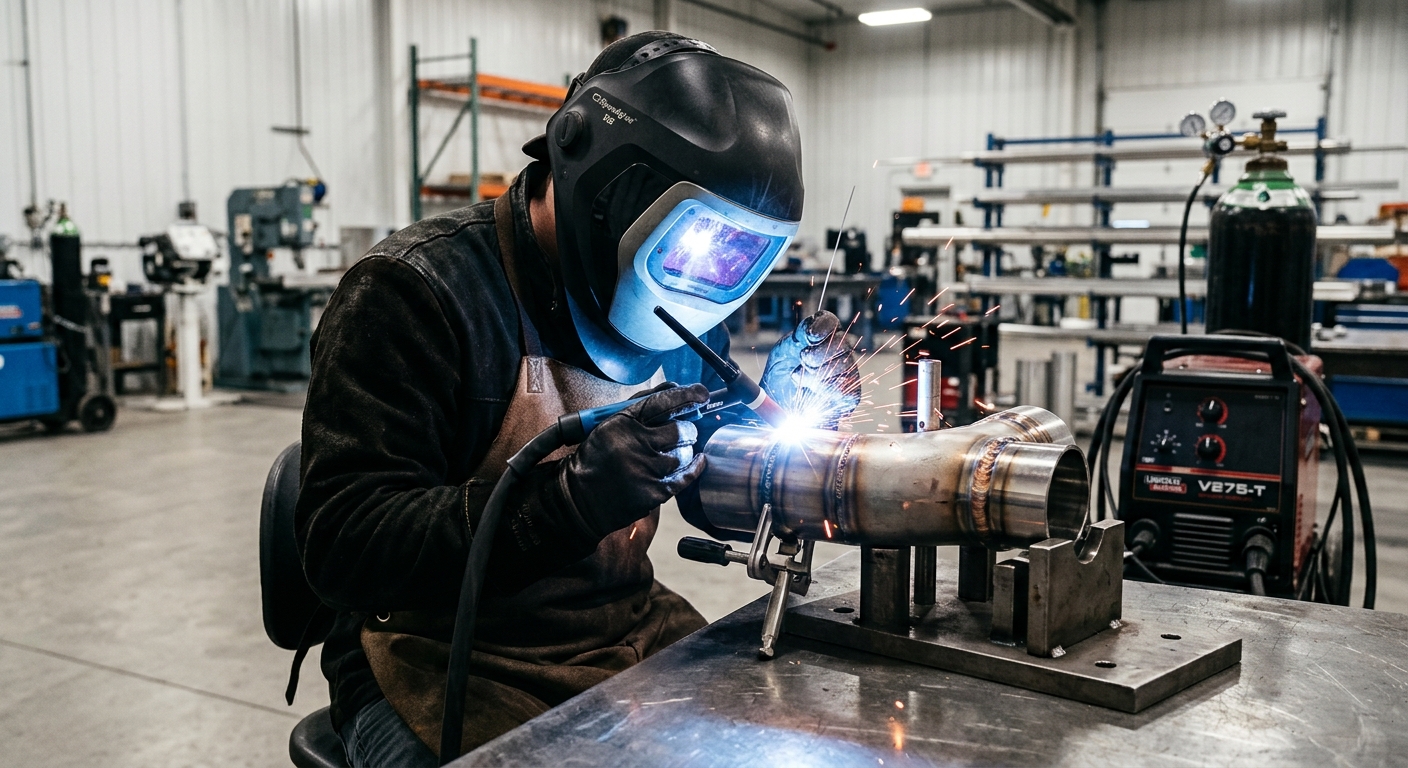
316L is forgiving. Almost any competent welder can TIG or MIG it with matching filler, no preheat, minimal post-weld cleanup, and it comes out fine. Duplex is a different animal.
Get the heat input wrong on 2205 and you destroy the phase balance. Too low — excessive ferrite in the HAZ, brittle and corrosion-prone. Too high — intermetallic precipitation (sigma phase) that wrecks toughness and pitting resistance. Typical window: 0.5–2.5 kJ/mm, interpass temperature below 150 °C, nitrogen-purged root, and qualified procedures with ferrite counts verified on every weld coupon.
Practical consequence: a fabrication yard that runs 316L all day may quote duplex 30–50% higher in labour, not just material. For short production runs or yards without duplex experience, that can flip the total cost equation. If your yard is set up for it, the premium shrinks.
For buyers comparing forming behaviour more broadly, our piece on hot rolled vs cold rolled steel covers how processing route affects what you can actually do with a plate or coil.
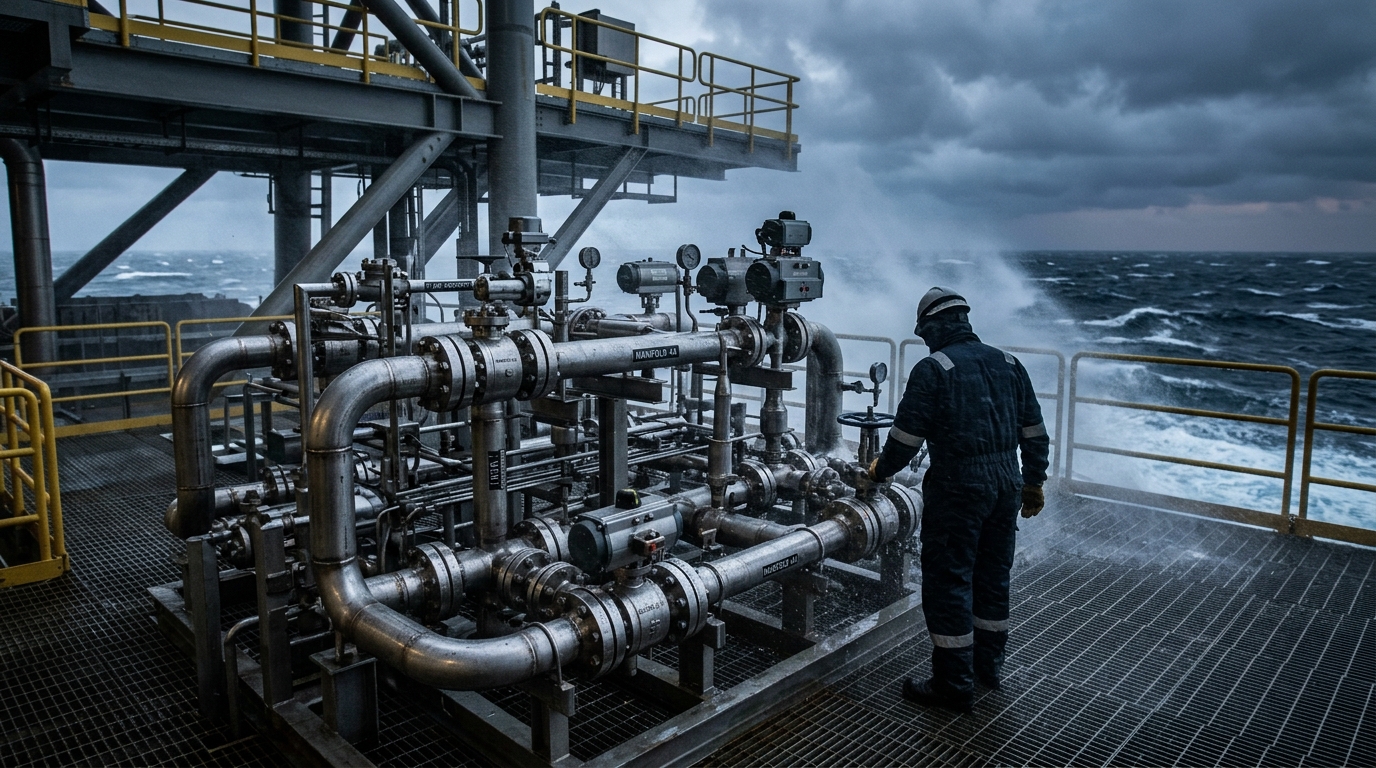
316L is not a compromise grade — it is genuinely better than duplex in several offshore scenarios:
For a supply-vessel operator refitting an accommodation deck, spending duplex money on handrails and galley fixtures is just burning budget.
Flip side — there are services where specifying 316L is asking for a failure report:
Mini case: a Middle East desalination project we supplied plate for switched the high-pressure reject header from 316L to 2205 after the first-of-kind unit developed SCC within 14 months. The replacement 2205 header is now at 8 years, zero issues, and the owner standardised 2205 across the fleet.
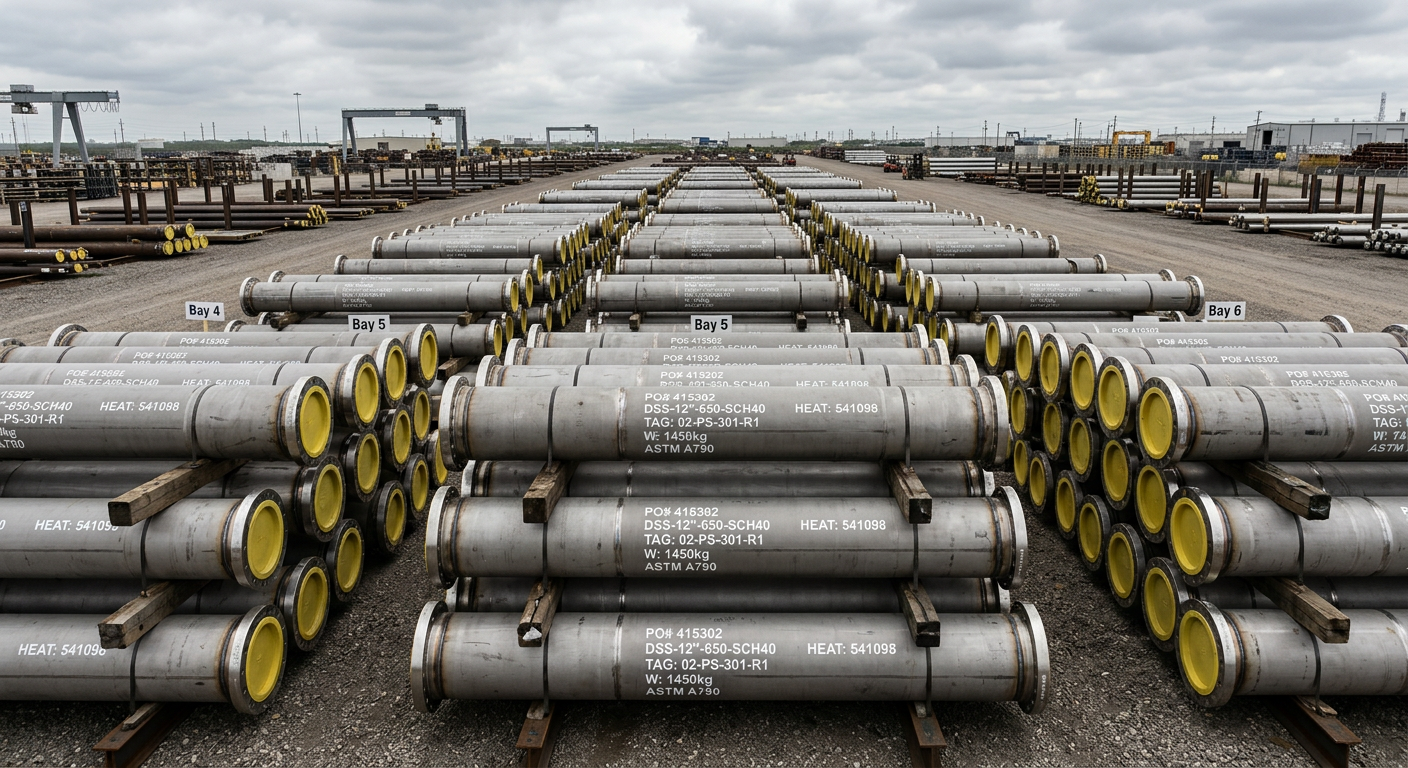
Per-ton pricing can mislead. Duplex 2205 plate typically runs 20–40% above 316L on a weight basis, driven mainly by nitrogen and the tighter processing controls — nickel content is actually lower, which sometimes makes duplex less sensitive to nickel price swings.
But installed cost is what matters. Factor in:
Over a 20-year offshore asset life, duplex often comes out cheaper than 316L once you count repairs, downtime, and inspection. For short-life facilities — a 5-year early-production system, say — 316L can still win on CAPEX alone.
Skip the spec-by-committee approach. Ask four questions:
For mixed-service projects, it is completely normal to use both — 2205 for the wet, hot, chloride-loaded lines, 316L for topside utility and architectural work. That is how most modern offshore platforms are actually built.
Grade selection is only half the battle. The other half is making sure the plate, pipe, or coil you receive actually meets spec — correct PREN, verified ferrite balance for duplex, proper solution annealing, and a mill test certificate you can trust. Cheap duplex with out-of-spec nitrogen or skipped solution anneal will fail in service no matter how good your engineering is.
Walmay Metal Group supplies both 316L and duplex 2205/2507 for offshore, marine, and desalination projects worldwide, with EN 10204 3.1 certification and optional third-party witnessed testing. If you are weighing a grade decision for a specific project — or need mixed-grade packages for a topside plus subsea scope — talk to our technical team and we will help you spec it properly the first time. You can also browse relevant project work on our applications page.
 Industry Knowledge
 Industry Knowledge
 Industry Knowledge
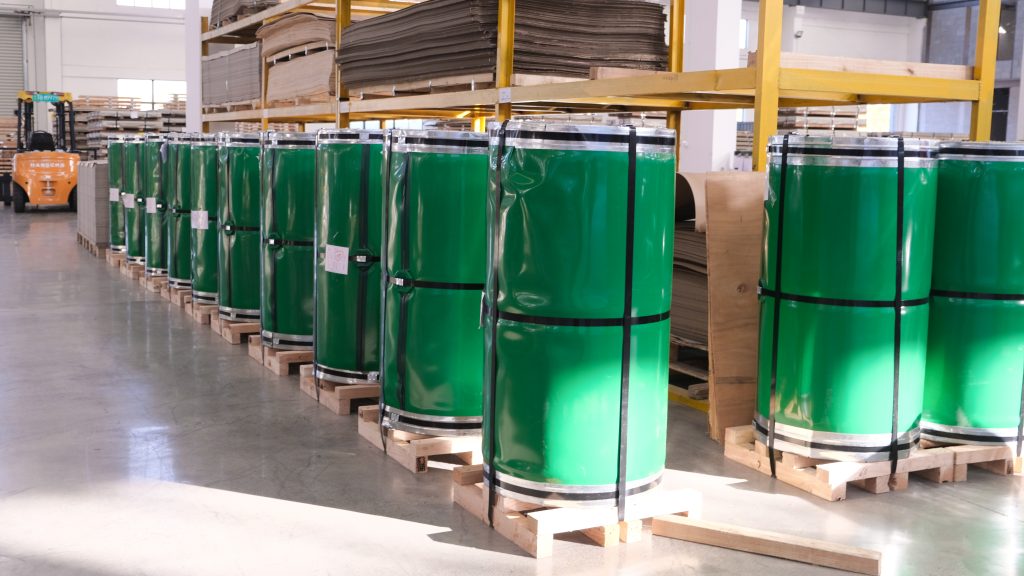
Walmay will help match the right stainless product form and specification for your application, confirm quantities and packing needs, and provide requested documents based on order requirements.