
 By Walmay
 05 Jun, 2026
 8 Minutes Read
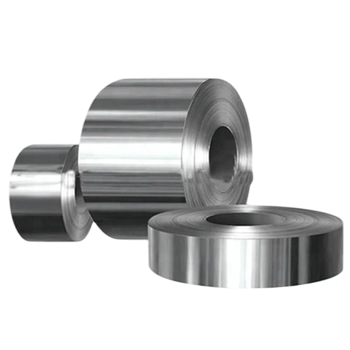
Short answer: buy 304 for indoor, food-grade, and general-purpose use — both grades are available as 304 and 316L stainless steel coils in cold and hot rolled form. That’s the rule nine out of ten buyers should follow in 2026. The rest of this guide shows you the exact thresholds, real prices, and application examples so you don’t overpay for 316 when 304 would last 20 years — or save pennies on 304 and watch it pit in a year.
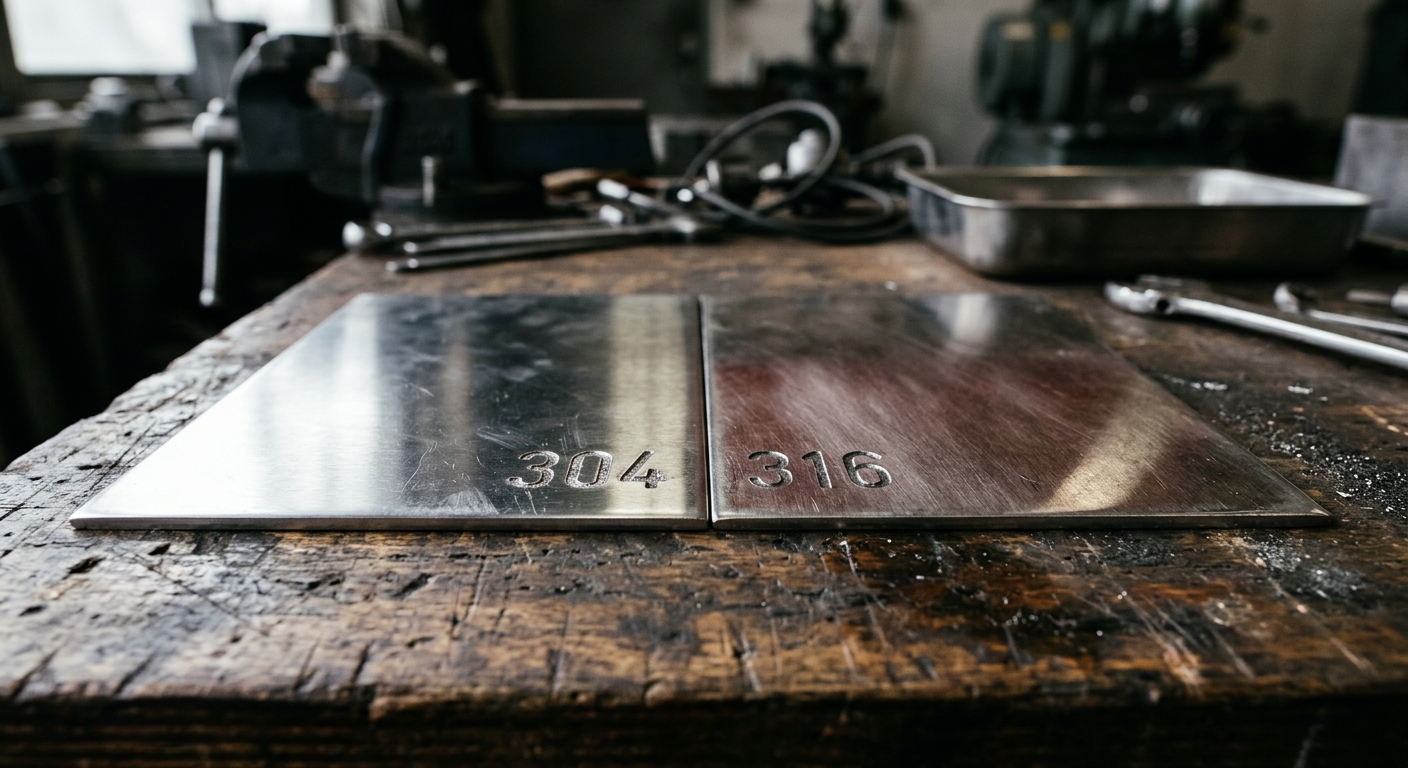
304 and 316 look identical. They weld the same. They polish the same. Put them side by side and no buyer can tell them apart without a spark test or an XRF gun. The difference is 2–3% molybdenum in 316 — and that tiny addition is why one grade survives in a chloride bath and the other pits in months.
Standard chemistry looks like this:
Molybdenum stabilizes the passive chromium-oxide film against chloride attack. In plain English: chlorides (salt, bleach, pool chemicals, seawater, de-icing brine) punch holes in 304’s protective layer. On 316, the Mo patches those holes before pitting corrosion can take hold. Everything else — strength, ductility, weldability — is nearly identical. This is a corrosion decision, not a mechanical one.
For a broader view of how the austenitic 300-series fits into the full stainless family, see our complete engineering guide to stainless steel grades.
Here’s the number most buyers don’t know: 304 is reliable up to roughly 200 ppm chlorides at ambient temperature. 316 pushes that to 1,000 ppm or higher, depending on temperature and pH.
Why does this matter? Because ‘chloride exposure’ hides in places people don’t expect:
Temperature is the multiplier. Corrosion roughly doubles every 10°C rise. A 304 tank holding 150 ppm brine at 20°C is fine. Heat it to 60°C and you’ll see pitting within a year. This is the single biggest mistake we see in procurement — specifying 304 based on room-temperature data when the process actually runs hot.
In early 2026, 316 carries a 25% to 45% price premium over 304, driven almost entirely by nickel and molybdenum spot prices. Mo has stayed above $22/kg through most of 2025–2026, and 316 contains roughly twice the nickel of 304 on top of that.
Translation into real numbers for a typical sheet order:
That gap shrinks on tube and pipe (processing cost dominates) and widens on thick plate (raw material dominates). If you’re buying coil or sheet in volume, the molybdenum premium is the number to watch — not the headline nickel price everyone quotes.
Our ongoing stainless steel selection guide walks through how to balance grade, finish, and form against total installed cost rather than just per-ton price.
| Criteria | 304 | 316 |
|---|---|---|
| Key alloy difference | 18Cr / 8Ni, no Mo | 16Cr / 10Ni, 2–3% Mo |
| Chloride resistance | Limited (~200 ppm) | Excellent (~1,000+ ppm) |
| 2026 price premium | Baseline | +25% to +45% |
| Best use case | Kitchens, interiors, food tanks | Marine, coastal, chemical, pharma |
| Weldability | Excellent | Excellent |
| Lead time | Short, widely stocked | Moderate |
304 is the right call for most indoor, dry, or low-chloride jobs. Specifically:
Real-world example: a mid-sized brewery in Germany standardized its entire fermenter skid — tanks, piping, valve bodies, walkways — on 304. Wort, beer, and CIP caustic are all non-chloride. They saved roughly €180,000 versus a blanket 316 spec and have seen zero corrosion issues in eight years. The only 316 components are the sanitizer injection line and the seawater-adjacent dock railing.
If you’re working mostly with cold-rolled product for these applications, our piece on what cold rolled steel is used for covers the form-factor decisions that sit alongside the grade choice.
These are the applications where 304 will bite you. Specify 316 — or better — and don’t negotiate:
Real-world example: a rooftop HVAC installer in Miami originally bid 304 brackets to save on cost. Within 14 months, visible rust streaks were running down the building facade and three brackets showed pitting deep enough to fail inspection. The retrofit to 316 cost 3.2× the original material savings — before labor, access equipment, and reputational damage. Moral: if the postcode sees salt air, start with 316.

The ‘L’ variants (304L, 316L) have lower carbon — max 0.03% versus 0.08% standard. Why care? Because during welding, carbon in the heat-affected zone can combine with chromium to form chromium carbides, which strip corrosion resistance at grain boundaries. This is sensitization, and it’s why welded 304 tanks sometimes rust in a neat line exactly along the weld.
Rule of thumb for 2026 buyers:
And don’t forget duplex 2205. When chloride exposure exceeds 316’s limits — think brackish water, seawater cooling, heavy chemical service — 2205 gives you roughly double the yield strength of 316 and superior chloride resistance, often at only a 15–25% premium over 316. For thick-wall pressure vessels, the strength advantage lets you spec thinner walls and actually save money versus 316L.
You received a shipment. How do you verify it’s 316 and not 304 with a certificate swap?
The test that does not work: the magnet. Both annealed 304 and 316 are non-magnetic. Cold-worked 304 (bent, formed, stamped) often becomes slightly magnetic, which confuses buyers. A magnet tells you the material isn’t ferritic or martensitic — it does not distinguish 304 from 316. If a supplier uses the magnet test to ‘prove’ a grade, walk away.
For more buyer-level diligence points, our piece on facts every stainless buyer must know goes deeper on certification and traceability.
Run your application through these four questions in order. The first ‘yes’ decides your grade.
One extra filter: lifecycle. If the part is buried, embedded, or inside a wall — where replacement cost is 10× the material cost — upgrade one grade. Nobody regrets spending an extra $400 on 316 bolts they’ll never see again. Plenty regret ripping out a tiled pool deck to replace corroded 304 anchors.
304 covers roughly 80% of stainless applications and should be your default. 316 is not ‘better’ — it’s specialized, and you pay for that specialization in cash and lead time. Use the chloride question as your gatekeeper, insist on XRF verification on high-value orders, and upgrade to L-grades for critical welds.
At Walmay, we stock both grades across sheet, coil, plate, tube, and bar, with full 3.1 mill certs and XRF verification on request. Whether you need a truckload of 304 2B for a kitchen fabrication run or a precision lot of 316L for a pharmaceutical skid, our team can help you match grade, finish, and tolerance to the job — and flag when a different grade would serve you better. Talk to us before you place the order; the 15-minute conversation usually pays for itself. Explore our applications library or reach out for a grade-specific quote.
 Industry Knowledge
 Industry Knowledge
 Industry Knowledge
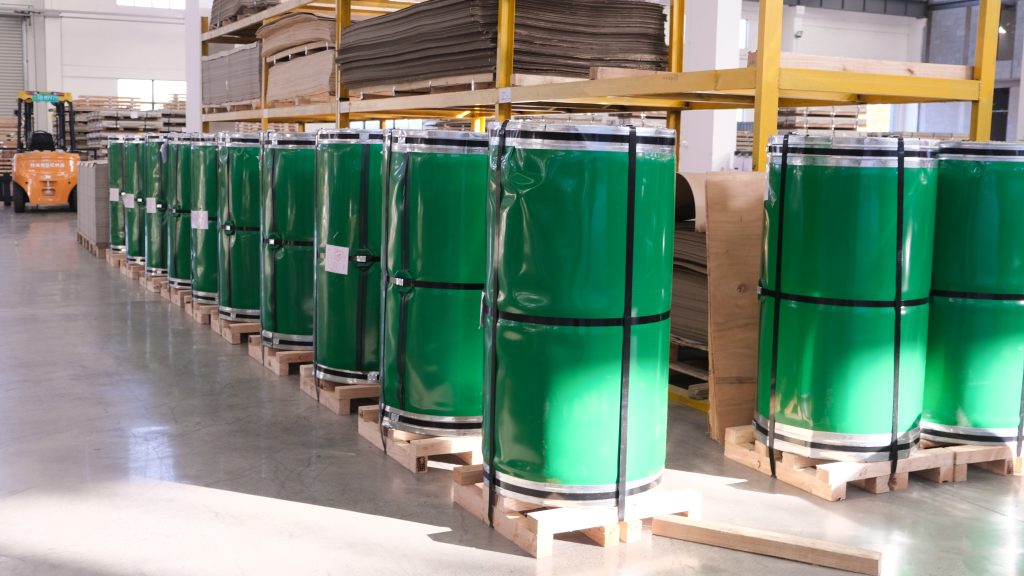
Walmay will help match the right stainless product form and specification for your application, confirm quantities and packing needs, and provide requested documents based on order requirements.
Loading form…