 By Walmay
 06 Jul, 2026
 7 Minutes Read
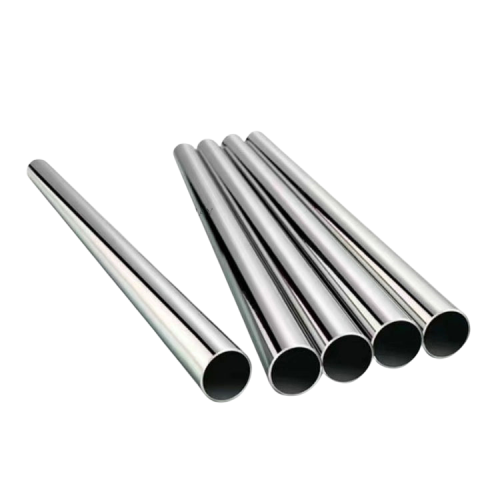
A stainless steel pipe is sized by its internal diameter and rated by schedule for pressure-carrying service; a tube is sized by its exact outside diameter and wall thickness, built for structural precision rather than flow capacity. Mix them up on a purchase order and you’ll either get a part that doesn’t fit your fittings, or one that fails a pressure test it was never designed to pass. The difference isn’t marketing semantics — it’s a dimensioning system, a tolerance class, and a standard, all rolled into two words that sound interchangeable but aren’t.
Here’s the mistake almost every first-time buyer makes: they assume ‘pipe’ and ‘tube’ just describe hollow round metal of different sizes. Wrong. The real split is in how each product is measured and specified.
Pipe is sized by Nominal Pipe Size (NPS) or DN, which is based on the inside diameter, not the outside. A 4-inch pipe doesn’t have a 4-inch OD — its actual outside diameter is 114.3mm regardless of wall thickness, because the wall grows or shrinks around a fixed reference bore to maintain flow-rate consistency across schedules. This is why a schedule 40 and a schedule 80 pipe of the same ‘size’ have different walls but the same OD.
Tube, on the other hand, is dimensioned by its actual outside diameter and a specific wall thickness — both stated as real numbers, no lookup table required. A 25mm OD tube with a 1.5mm wall is exactly that. No schedule chart, no rounding convention. This matters enormously for fabricators building structural frames, handrails, or heat exchanger bundles where OD tolerance affects fit-up and welding.
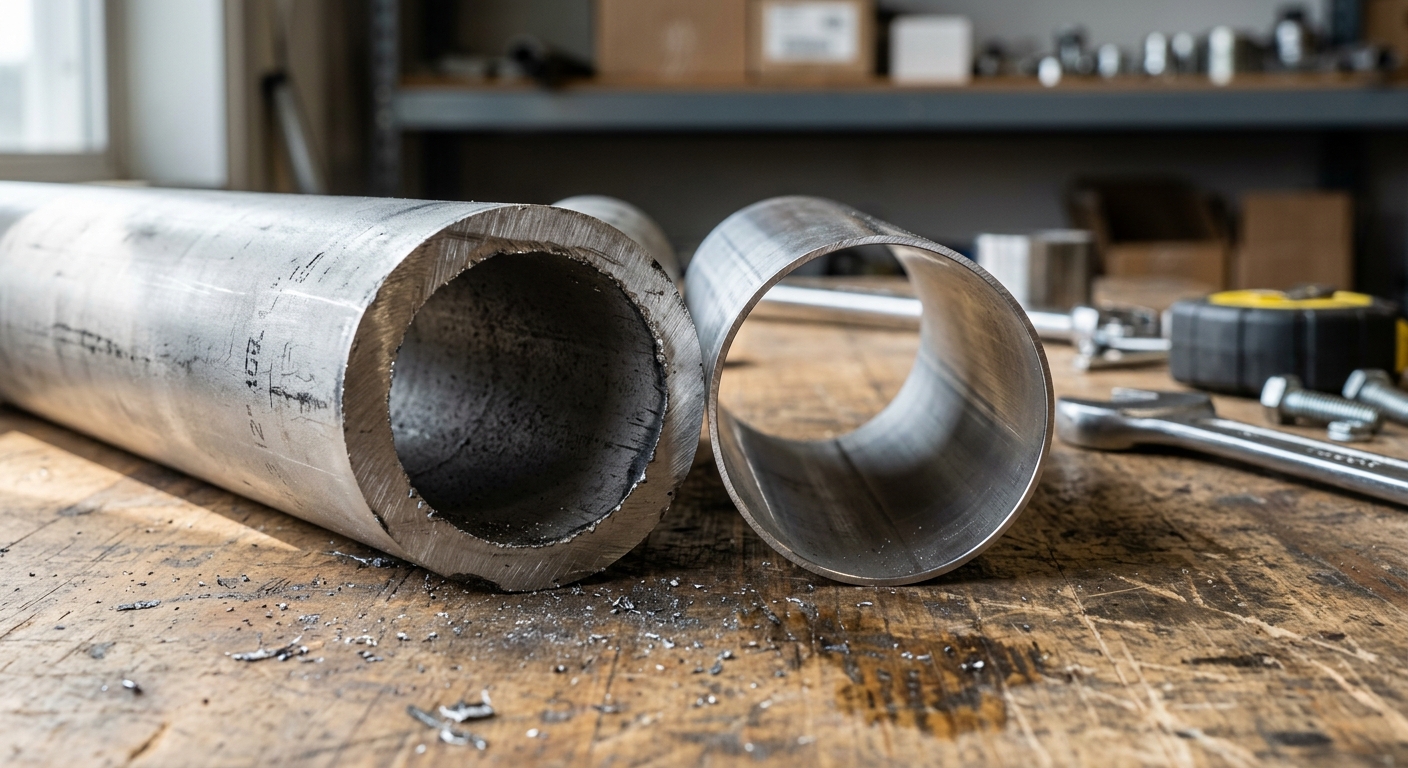
Ask any procurement manager who’s had a shipment rejected at incoming inspection, and wall tolerance is usually the culprit. Pipe schedules under ASME B36.19M allow wall thickness variation up to +/-12.5% — that’s generous, because pipe is engineered around pressure rating with built-in safety margin, not exact wall precision.
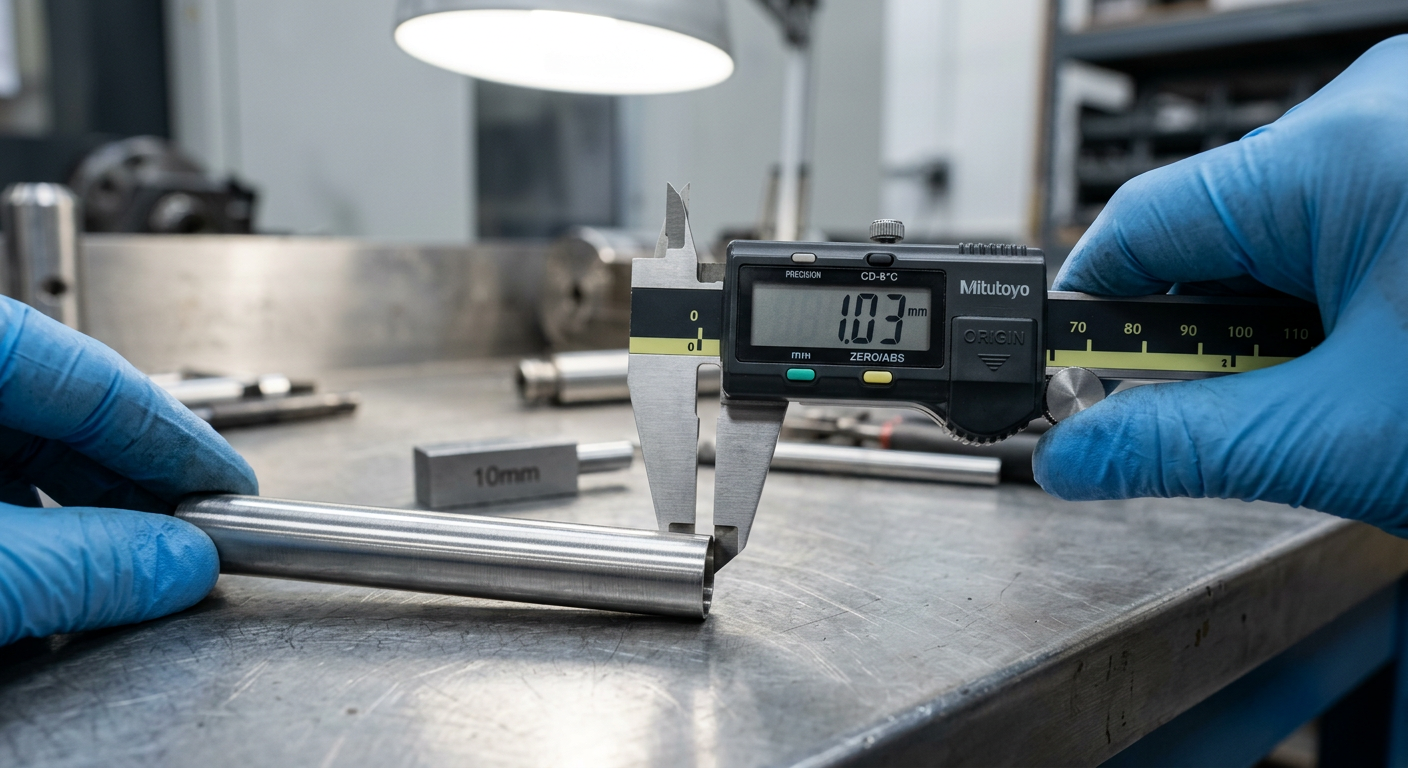
Tube tolerances are a different world entirely. Precision instrumentation tube under ASTM A269 can carry wall tolerances as tight as +/-0.01mm to 0.05mm. That precision costs more per meter, but it’s non-negotiable for applications like hydraulic lines, heat exchanger tubing, or anything requiring exact fit inside a ferrule or compression fitting.
A hydraulic equipment OEM once ordered ‘pipe’ for a fluid-power manifold assembly, assuming schedule-rated wall would be fine. The compression fittings didn’t seal — because the OD tolerance on schedule pipe was too loose for the ferrule to bite consistently. Switching to precision-drawn tube under A269 with tight OD control solved it in one order revision. This is a common enough mismatch that it’s worth cross-checking against guidance in our tolerance discussions on other product forms too — the principle applies across the board.
You can’t just ask for ‘304 stainless pipe’ or ‘316 tube’ and expect a consistent quote — the governing standard changes the mechanical properties, testing requirements, and even the acceptable chemistry range.
If your RFQ doesn’t specify the standard, expect the supplier to ask — and if they don’t ask, that’s a red flag. A responsible mill or stockist will clarify whether you need A312 pipe or A269 tube before quoting, because the price per kilogram and the delivery lead time can diverge significantly between the two.
Pipe is round. Full stop. It has to be, because it’s designed around fluid dynamics and pressure containment — any other shape would complicate flow calculations and fitting standardization beyond practicality.
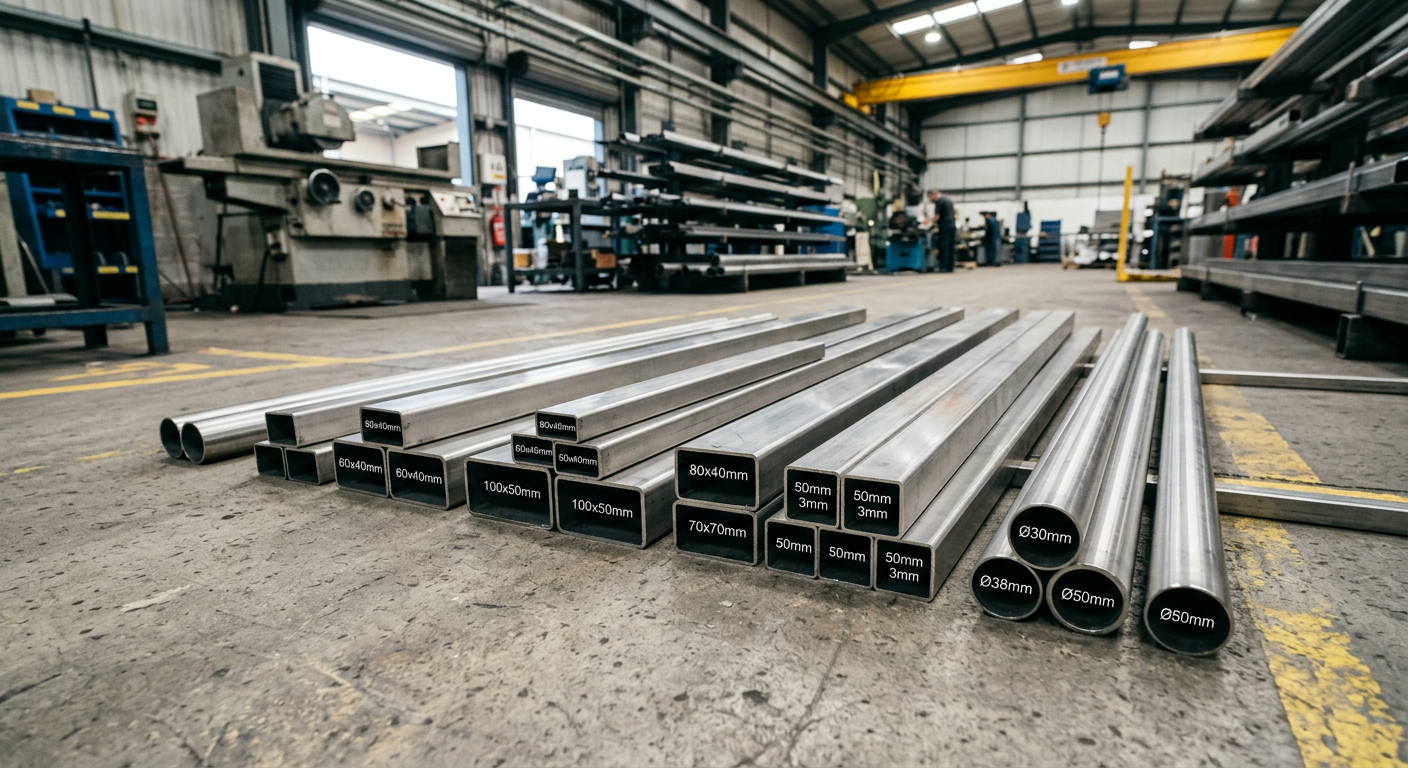
Tube, though, comes in round, square, rectangular, and even oval cross-sections. This is why architects and structural fabricators default to tube for railings, frames, and decorative structural elements. Square and rectangular stainless tube also stacks and welds into frames more predictably than round pipe, which needs coped joints for perpendicular connections.
For a project buyer designing a stainless equipment frame or a balustrade system, tube isn’t just an alternative to pipe — it’s usually the only sensible choice. Round pipe would force awkward joint geometry and waste material at every intersection.
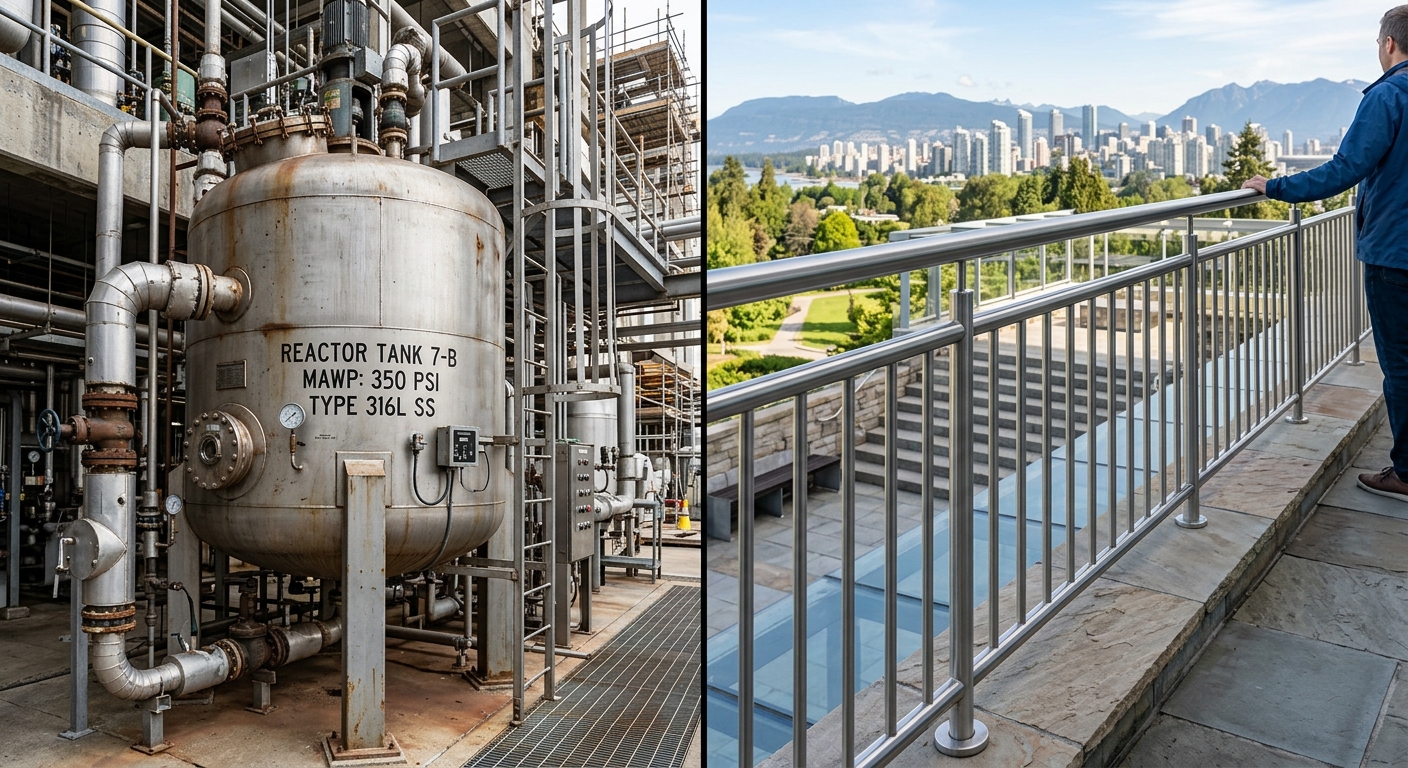
Pipe is rated for internal pressure containment. Every schedule number corresponds to a wall thickness engineered to hold a specific pressure at a given temperature, per ASME B31.3 process piping rules. That’s the entire point of the schedule system — safety margin against burst pressure.
Tube is rated for mechanical and structural performance — tensile strength, bend radius, torsional load, or in the case of heat-exchanger tube, thermal conductivity and fatigue resistance under thousands of thermal cycles. Nobody calculates a ‘schedule’ for a handrail tube, because pressure containment was never the design driver.
This distinction directly affects grade selection too. A chemical processing line under pressure might spec 316L pipe per A312 for corrosion resistance and code-stamped pressure rating, referencing guidance like our 304 vs 316 comparison for the corrosion-resistance tradeoffs. A structural tube frame in the same plant, carrying no pressure, might use 304 tube under A554 because mechanical strength and cost matter more than chloride resistance.
| Criteria | Stainless Steel Pipe | Stainless Steel Tube |
|---|---|---|
| Sizing method | Nominal Pipe Size (NPS/DN), based on ID | Actual OD in mm or inches, precise |
| Wall thickness reference | Schedule (SCH 5S, 10S, 40, 80) | Gauge or exact mm wall spec |
| Dimensional tolerance | Looser, +/-12.5% on wall (ASME B36.19) | Tight, often +/-0.01mm to 0.05mm |
| Common standards | ASTM A312, ASME B36.19M | ASTM A269, A213, A554 |
| Typical use case | Pressure/flow systems, process piping | Structural, mechanical, instrumentation, decorative |
| Fittings compatibility | Standardized threaded/welded fittings | Custom-fit, less standardized |
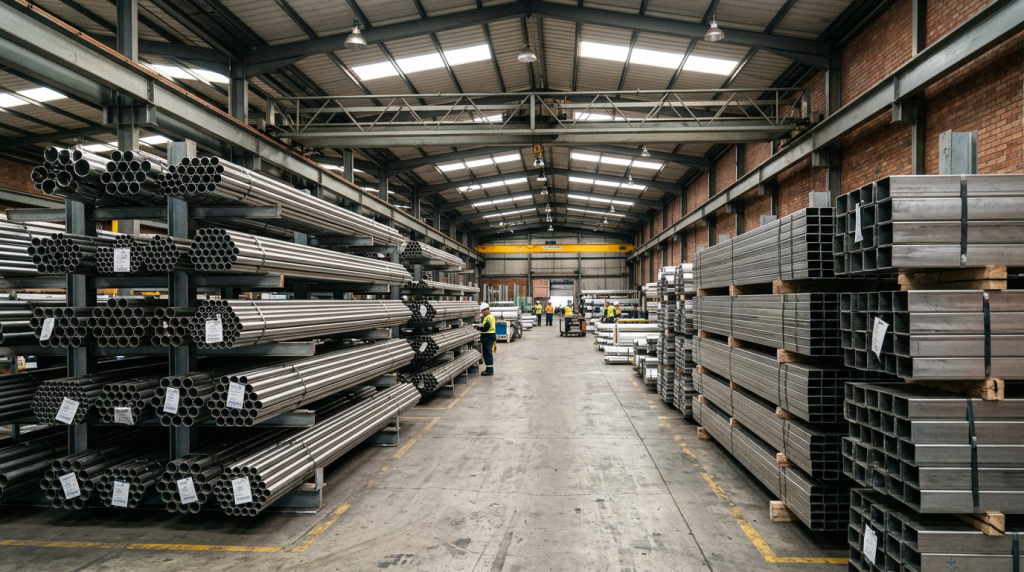
| Shape options | Round only | Round, square, rectangular, oval |
| Typical buyer | EPC contractors, process plants | Fabricators, OEMs, architects |
Print this table and pin it next to your RFQ template. Half the mis-orders we see at Walmay trace back to a buyer using ‘pipe’ and ‘tube’ interchangeably when writing specs for internal approval — the terms carry different engineering assumptions even before a supplier gets involved.
Stop writing ‘2-inch 304 stainless pipe/tube’ on your RFQ — that ambiguity forces the supplier to guess, and guessing leads to quotes for the wrong product entirely.
Vague specs cost everyone time. A supplier who understands both systems — and asks the right clarifying question before quoting — is worth more than one who just quotes the cheapest number on an ambiguous request. Browse our full product range to see how pipe and tube dimensions are broken down by standard before you request a quote.
There’s a gray zone worth knowing about: mechanical tube is sometimes used in low-pressure fluid transfer where code-stamped pressure rating isn’t legally required. And some ‘structural pipe’ products borrow tube-like OD tolerancing for aesthetic architectural work. So yes, overlap exists.
But in code-governed applications — ASME B31.3 process piping, pressure vessels, boiler systems — the distinction is not optional. Using tube where pipe is code-required can get a project rejected at inspection, full stop. Using pipe where tight-tolerance tube is needed leads to fit and sealing failures, as covered above.
If you’re unsure which category your application falls into, that’s exactly the kind of question a technical sales rep should answer before quoting — not after delivery. Check our processing capabilities page for how we handle custom cutting, slitting, and finishing across both pipe and tube product lines.
 Industry Knowledge
 Industry Knowledge
 Industry Knowledge
Walmay will help match the right stainless product form and specification for your application, confirm quantities and packing needs, and provide requested documents based on order requirements.
Loading form…