
 By Walmay
 14 Sep, 2026
 6 Minutes Read
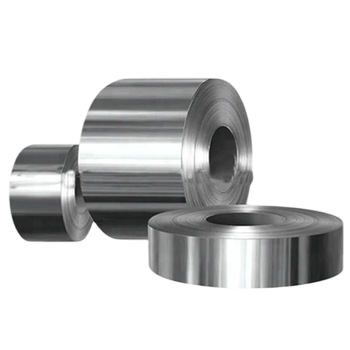
Slit width tolerance on stainless steel strip determines whether your downstream tooling runs clean or fights the material every cycle — a strip that wanders even ±0.05mm outside spec can misalign progressive dies, throw off tube weld seams, or cause uneven edge buildup in roll forming. The tolerance you accept at the slitting stage isn’t a paperwork detail; it’s a direct input into scrap rate, die wear, and cycle time on your shop floor. Get it wrong and you won’t find out until the parts are already failing inspection downstream.
Most buyers treat slit width tolerance as a checkbox — ±0.10mm looks fine on paper, so it gets approved. But that number describes variation within a coil and between coils, and how that variation shows up depends entirely on what you’re doing with the strip next.
If you’re feeding strip into a progressive stamping die, the die’s guide rails are set to a fixed clearance. A strip running consistently 0.08mm narrow will rattle through the guides, causing part-to-part positional drift. A strip running wide will bind, gall the guide edges, and eventually chip the die. Neither failure mode shows up as a rejected coil — it shows up as inconsistent stamped parts three weeks later, and by then nobody’s tracing it back to the slitter.


Three mechanical factors drive most out-of-tolerance strip, and none of them are visible until you measure the finished coil.
Slitter knives dull gradually. As they wear, the shear angle changes and the cut drifts wide by a few microns per pass — multiply that across a long production run and you get a coil that starts in tolerance and ends out of it. Reputable processors check blade clearance every shift, not every batch.
Uneven tension across the mother coil causes the strip to stretch unevenly as it passes through the slitter, producing width variation that has nothing to do with the blades at all. This is one of the same underlying tension-control issues discussed in our piece on flatness problems that show up after cutting, not before — the root cause is often upstream, not at the tool.
Cold-worked strip in grades like 301 or 304 full-hard can vary in hardness across the coil width, and harder zones resist the blade differently than softer zones, producing a subtle width taper across the strip.

Nobody calls to complain about “slit width tolerance.” They call about jammed feeders, cracked flanges, or weld seams that won’t stay centered. Here’s how the same root cause produces different symptoms depending on the process.
For instance, a fabricator producing welded exhaust tube components once traced a recurring OD variance to a supplier slitting strip at ±0.15mm when the weld mill needed ±0.05mm to hold tube tolerance — the strip looked fine on the mill certificate, but it was the wrong tolerance class for that specific downstream process.

Standard slitting tolerance is fine for brackets, trim, general fabrication — anything where a small width drift gets absorbed by clearance in the assembly. Precision slitting is worth the added cost the moment your process has zero tolerance for lateral play: progressive dies, precision welded tube, or automated feeding lines with tight guide clearances.
The price difference is real but usually smaller than buyers expect — typically 8-15% over standard slit pricing depending on width and grade. Compare that to the cost of a jammed stamping line or a batch of tube that fails OD inspection, and precision slitting usually wins on total cost, not sticker price.
Even a strip that measures perfectly within width tolerance can still cause fabrication problems if it has edge camber — a slight bow along the length of the strip rather than across it. Camber is usually specified as maximum deviation over a given length, commonly 6mm per 3-8 meters of strip for standard grades.
Camber matters most in roll forming and tube welding, where the strip needs to track straight through multiple stations. A cambered strip will walk sideways as it feeds, and no amount of width tolerance control fixes that — it’s a straightness spec, not a width spec, and buyers often forget to call it out separately when placing an order.
Not every grade slits the same way, and specifying the same tolerance across all of them is a mistake. Austenitic grades like 304 and 316 in annealed condition slit cleanly and hold tight tolerance well. Full-hard or three-quarter-hard tempers — common in spring and precision stamping strip — are more prone to blade deflection and width drift because the material resists the shear more aggressively.
Duplex and super duplex strip, discussed in our comparison of 2507 versus 2205, present their own slitting challenge — higher strength means faster blade wear, so processors need to check tolerance more frequently mid-run rather than trusting the first-piece inspection to hold for the whole coil.
If your PO just says “stainless steel strip, 304, 2B finish, per ASTM A480,” you’re leaving the tolerance class up to the supplier’s default — which is almost always the loosest one they can justify. Specify explicitly:
This level of detail costs nothing extra to write into a PO, but it’s the difference between getting strip that matches your process and getting strip that technically meets a standard but doesn’t work on your line. For broader context on how these specs interact with material selection overall, see our complete engineering and procurement guide to stainless steel types.
 Industry Knowledge
 Industry Knowledge
 Industry Knowledge

Walmay will help match the right stainless product form and specification for your application, confirm quantities and packing needs, and provide requested documents based on order requirements.