
 By Walmay
 19 Oct, 2026
 7 Minutes Read
Stainless steel pipe is built to move fluids and gases — it’s specified by nominal pipe size (NPS) and schedule, with relatively loose tolerances. Stainless steel tube is built for structure, heat exchange, or precision fit — specified by exact outside diameter and wall thickness, with tight tolerances and a better surface finish. Same metal, different rules. Mix them up on a purchase order and you’ll get steel that physically won’t do the job.
Pipes carry stuff. Tubes hold shape. That’s the cleanest one-liner you’ll get on this topic.
A stainless steel pipe is engineered around its inside diameter because what matters is flow capacity — how many litres per minute of process fluid, steam, or gas it can pass. A stainless steel tube is engineered around its outside diameter because what matters is how it fits with other parts: bearings, fittings, frames, heat exchanger tube sheets.
This single distinction cascades into everything else — how they’re measured, how tight the tolerances are, how they’re finished, and how much they cost. Once you internalise that, the rest of the rules make sense.

Here’s where buyers get burned. A 2-inch stainless pipe is not 2 inches anywhere you can measure it.
Pipe uses Nominal Pipe Size (NPS) — a label, not a dimension. A 2″ NPS Schedule 40 pipe has an actual OD of 60.3 mm and an ID around 52.5 mm. The “2 inch” refers loosely to the bore, but only loosely. Wall thickness is set by the schedule — Sch 5S, 10S, 40S, 80S, and so on. Higher schedule = thicker wall = smaller bore.
Tube is refreshingly literal. A 2″ tube has an OD of exactly 2 inches (50.8 mm), and you specify wall thickness directly in millimetres or in BWG/SWG gauge. What you ask for is what you measure with a caliper.
For instance, a contractor ordering “2-inch stainless tube” expecting it to thread into 2″ NPS fittings will be unpleasantly surprised — 50.8 mm tube does not mate with 60.3 mm pipe fittings. Different worlds.
Tube costs more for one big reason — the mill has to hit a tighter target.
Pipe tolerances under standard specifications like ASTM A312 allow OD variation of roughly ±1% and wall thickness variation of -12.5%. That’s fine for a flange-to-flange chemical line, but useless if you’re sliding a bearing onto the OD.
Tube tolerances under ASTM A269 are typically ±0.1 mm on OD and ±10% on wall, and precision tube grades go much tighter — ±0.05 mm or even ±0.02 mm for hydraulic and instrumentation tube. The mill has to draw, anneal, straighten, and inspect harder. You pay for that work.
Quick rule: if your application involves a seal, a bearing, a press-fit, or a heat exchanger tube sheet, you need tube. If it just needs to hold pressure between two flanges, pipe is fine — and cheaper.
Here’s the side-by-side that sums up everything most buyers actually need:
| Criteria | Stainless Steel Pipe | Stainless Steel Tube |
|---|---|---|
| Primary purpose | Fluid/gas transport | Structural & precision |
| Sizing convention | NPS + Schedule | Exact OD + wall thickness |
| Dimensional tolerance | Loose (±1% typical) | Tight (±0.1 mm or better) |
| Common standards | ASTM A312, A790 | ASTM A269, A554, A213 |
| Shape options | Round only | Round, square, rectangular |
| Surface finish | Mill or pickled | 2B, BA, polished, mirror |
| Typical cost | Lower per kg | Higher per kg |
| Lead time | Usually stocked | Often made-to-order |

The standard reference on your MTC tells you instantly which world you’re in.
If the cert says A312 and you needed A213 heat exchanger tube, that’s a problem — even if the chemistry is identical 304L. The dimensional and inspection regimes are different. Heat treatment and annealing requirements also differ between specs.
A food-processing OEM in the Netherlands once ordered “2-inch 316L stainless steel pipe” for a CIP (clean-in-place) sanitary loop. What arrived was technically correct under A312: 60.3 mm OD, Schedule 10S, mill finish, ±1% OD tolerance.
Problem: their tri-clamp fittings and orbital welder were sized for sanitary tube — 2″ OD = 50.8 mm, polished to a 0.5 µm Ra interior. None of it matched. The shipment couldn’t be used, the line was idle for three weeks, and the buyer ate the restocking fee.
The fix? On the next PO they specified: ASTM A270 sanitary tube, 50.8 mm OD × 1.65 mm wall, 316L, 180-grit polished ID, passivated. Every word mattered. This is one of those situations where knowing the application drives the specification, not the other way around.

Pipe comes round. That’s it. Tube comes in round, square, rectangular, oval — even custom profiles.
Surface finish is another world apart. Pipe typically ships as mill finish or pickled-and-passivated — functional but not pretty. Tube can be specified with 2B, BA, No. 4 brushed, or mirror No. 8 finishes depending on application. An architect spec’ing a stainless handrail wants a uniform No. 4 brushed surface with consistent grain direction. That’s only achievable with tube made under A554.
Manufacturing route matters too. Tube is often cold-drawn after welding to tighten dimensions and refine the grain structure. Pipe is rarely cold-finished beyond the initial forming. This is also why tube tends to be stronger per unit weight — the cold work raises yield strength.
If you compare a 316L pipe at 60.3 mm OD × 3 mm wall against a 316L tube at 60.3 mm OD × 3 mm wall — same alloy, same geometry — the tube will usually run 20–60% more per kg.
Where does the premium go?
Translation: don’t pay tube prices for a pipe job. And don’t try to save money by ordering pipe when the application demands tube — you’ll spend the savings twice over on machining, rework, or warranty claims.

Before you email that purchase order, run through these questions. They’ll catch 90% of pipe-vs-tube mistakes:
One more tip: ask your supplier for the mill test certificate before the material ships, not after. The MTC tells you whether you’re getting pipe or tube and under which standard — and it’s much easier to catch a mismatch on paper than on a forklift.
Pipe and tube are cousins, not twins. Pipe is about flow capacity at a fair price. Tube is about precision, fit, and finish at a premium. Pick by function first, specify by standard second, and verify with the MTC third.
At Walmay we supply both — stainless pipe in A312 and A790 grades for chemical, oil & gas, and process plants, and stainless tube in A213, A269, A270, and A554 for heat exchangers, instrumentation, sanitary, and architectural work. If you’re sitting on a tricky spec or a mixed pipe-and-tube project, send us the drawing and we’ll tell you straight which product fits and what it should cost. Browse our applications library or get in touch through our team page to start the conversation.
 Industry Knowledge
 Industry Knowledge
 Industry Knowledge
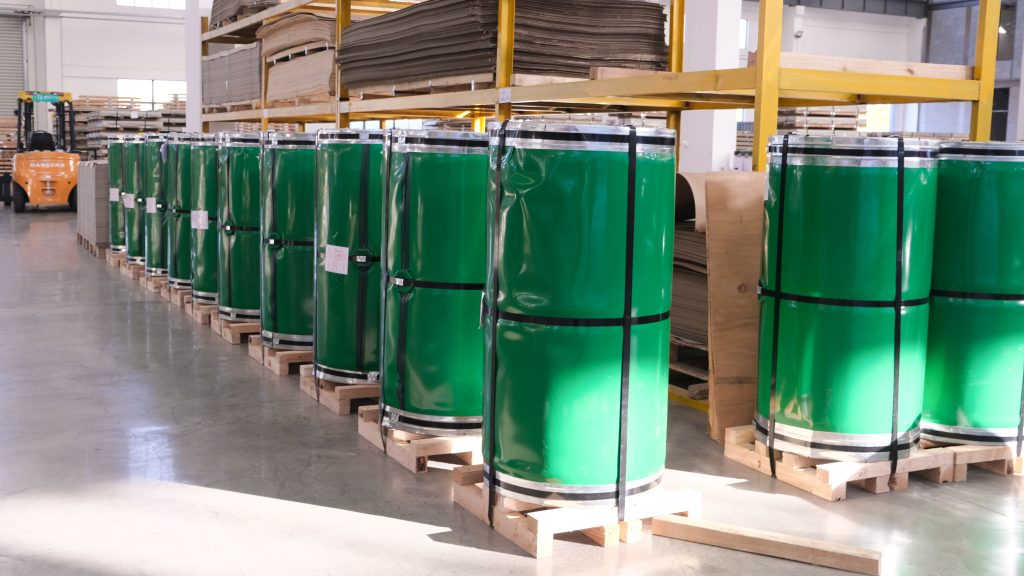
Walmay will help match the right stainless product form and specification for your application, confirm quantities and packing needs, and provide requested documents based on order requirements.