
 By Walmay
 02 Nov, 2026
 9 Minutes Read
In pharmaceutical manufacturing, 316L stainless steel with an electropolished finish is the de facto standard because nothing else reliably handles the trifecta of corrosive cleaning chemistry, hot pure water, and zero tolerance for bacterial harborage. The low carbon content of 316L prevents sensitization during welding, the molybdenum content fights chloride pitting, and electropolishing strips the surface down to a passive, ultra-smooth layer that cleans easily and resists biofilm. Skip either piece — wrong grade or wrong finish — and you’re inviting rouging, FDA observations, or a contaminated batch.
Most buyers know 316 has molybdenum and 304 doesn’t. Fewer understand why the L matters more than the 316.
During TIG welding of a typical pharma piping system, the heat-affected zone hovers between 425°C and 870°C — exactly the window where chromium carbides precipitate at grain boundaries in standard 316. That precipitation pulls chromium out of the surrounding matrix, leaving chromium-depleted zones that corrode preferentially. This is called sensitization, and it’s the silent killer of stainless welds.
316L caps carbon at 0.030% max (versus 0.08% for standard 316). With that little carbon available, there isn’t enough to form damaging carbides. Welds stay corrosion-resistant without post-weld heat treatment — which is impractical on a 200-meter purified water loop anyway.
The 2–3% molybdenum content also matters. Cleaning agents like sodium hypochlorite, peracetic acid, and warm caustic solutions all introduce aggressive chloride or oxidizing chemistry. Mo dramatically improves pitting resistance, pushing the PREN (Pitting Resistance Equivalent Number) of 316L to around 24–26 versus roughly 19 for 304L. For a deeper grade-by-grade view, our guide to stainless steel grades and applications covers the alloying logic in detail.

Mechanical polishing makes steel look smooth. Electropolishing makes it be smooth — at a molecular level.
The process submerges the part in a phosphoric/sulfuric acid bath and runs DC current through it, with the stainless as the anode. Metal ions migrate off the surface preferentially from microscopic peaks, leveling the topography. Two things happen simultaneously:
The practical payoff: a CIP cycle that takes 45 minutes on mechanically polished tubing might clean an EP’d surface in 20 minutes with less detergent. Over a year of batch turnover, that’s real money — and a real reduction in validation risk.

Specs from biotech engineers often read “Ra ≤ 0.4 μm, electropolished.” That single line drives 20% of the project cost. Worth understanding what it means.
Ra is the arithmetic mean roughness over a sampled length. It’s a useful proxy but not the whole picture — a surface with deep but narrow pits can have a low Ra and still harbor bacteria. That’s why ASME BPE (Bioprocessing Equipment) standards layer additional requirements on top: surface finish designations like SF1 through SF4 for mechanical polish, and SF4–SF6 for electropolished surfaces.
SF4 means Ra ≤ 0.51 μm mechanically polished. SF6 means Ra ≤ 0.38 μm electropolished. For Water for Injection (WFI) and final-product-contact surfaces in a sterile fill line, SF4 mechanical is rarely enough — auditors expect SF5 or SF6 electropolished, and they’ll ask for the profilometer reports.
For example, a CDMO building a monoclonal antibody suite recently specified Ra ≤ 0.25 μm EP on all media and buffer hold tanks. The reason wasn’t biofilm in the abstract — it was a prior rouging incident that took eight days to remediate and pushed three commercial batches off schedule.

Rouging is the orange-to-black discoloration that appears on stainless steel exposed to hot pure water or steam over time. It’s iron oxide migrating to the surface — and yes, it happens even on 316L, even on electropolished systems, just much more slowly.
Three classes are recognized in pharma:
EP’d 316L doesn’t make rouging vanish — it delays onset and makes derouging far more effective because the underlying surface comes back to a low-Ra passive state quickly. A poorly finished 316L weld, by contrast, can re-rouge within weeks because the rough oxide film keeps providing nucleation sites. This connects directly to the broader question of whether stainless steel rusts in water — in pharma utilities, the answer is “yes, if you give it the chance.”
Not every component in a pharma plant needs the gold-plated spec. Knowing where to spend matters.
A mid-sized vaccine manufacturer we worked with once tried to value-engineer their CIP return lines down from EP’d 316L to mechanically polished 316L. Six months later, biofilm in the return loop triggered out-of-spec endotoxin readings. The retrofit — including requalification — cost roughly 4x what the EP would have added upfront.

Two mills can both stamp “316L” on a coil and deliver materially different products. Here’s the short list of what to demand from your supplier:
If you’re sourcing internationally, lean on suppliers who understand pharma documentation. Our stainless steel selection guide walks through the procurement-side checks in more depth, and the full engineering guide to stainless types covers grade equivalence across ASTM, EN, and JIS standards — useful when you’re matching specs across global suppliers.
These get conflated in specs all the time. They’re not the same.
Passivation is a chemical treatment (typically nitric or citric acid per ASTM A967) that removes free iron from the surface and lets a chromium oxide layer reform. It doesn’t change the roughness. A passivated weld still looks like a weld.
Electropolishing is electrochemical and removes material — typically 20–40 microns of metal — leveling the surface while also enriching chromium. It includes passivation as a byproduct.
Practical implication: every EP’d part is passivated, but not every passivated part is EP’d. After any field weld or mechanical repair to an EP’d system, the affected zone must be at minimum re-passivated, ideally locally EP’d if geometry allows. Skipping this step is one of the most common audit findings.

EP’d 316L tubing runs roughly 1.8–2.4x the price of plain 304 2B sheet on a per-kilo basis. For a complete pharma piping system including orbital welding, documentation, and validation, the installed cost ratio can hit 4–5x versus commercial-grade plumbing.
Buyers occasionally try to source “316L equivalent” material from unverified mills at 15–25% discounts. The savings evaporate quickly: out-of-tolerance carbon causes weld sensitization, inclusions create EP defects you can’t polish out, and sulfur outside the optimal range produces streaky finishes that auditors reject.
One contract manufacturer in Southeast Asia learned this the hard way — they accepted a substitute lot of 316L for a new bioreactor build. The EP vendor flagged surface defects after the first acid pass, but the project pushed forward. Final Ra readings came in at 0.6 μm in patches versus the 0.3 μm spec. The tank had to be re-polished, requalified, and the project slipped six weeks. Net loss far exceeded the original sheet price difference.
The non-negotiables in pharmaceutical manufacturing aren’t arbitrary regulatory tax — they’re the cumulative lessons of decades of contamination events, rouging incidents, and failed validations. 316L gives you the metallurgy: low carbon for weldability, molybdenum for chloride resistance, predictable performance from MTC to finished part. Electropolishing gives you the surface: low Ra, chromium-rich passive layer, fast and reliable CIP/SIP cycles.
Specify both. Verify both. And work with mills and processors who actually understand what ASME BPE, USP, and EU GMP Annex 1 expect — not just what those acronyms stand for.
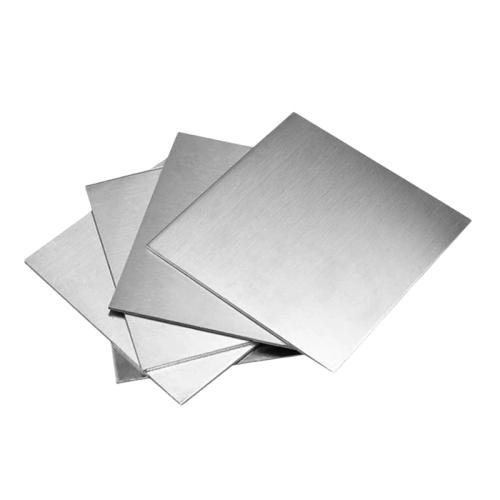
If you’re sourcing 316L coil, sheet, or plate for a pharmaceutical, biotech, or fine-chemical project and want a supplier who’ll deliver verified chemistry, controlled surface condition, and full traceability documentation, the team at walmaystainless works with bioprocess fabricators across more than 40 countries. Send us your spec — we’ll tell you straight what’s achievable and what should be reconsidered before you order.


 Industry Knowledge
 Industry Knowledge
 Industry Knowledge
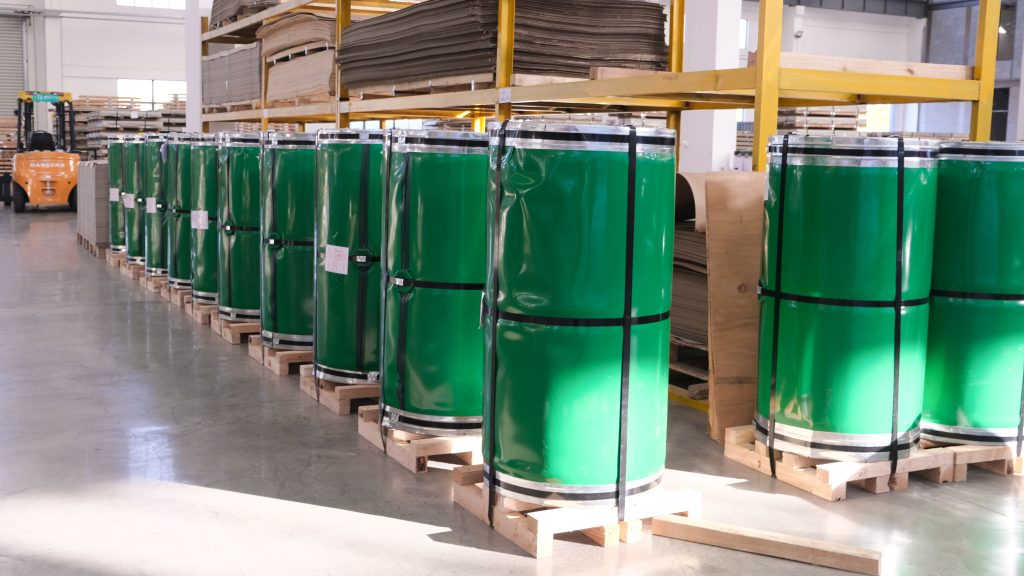
Walmay will help match the right stainless product form and specification for your application, confirm quantities and packing needs, and provide requested documents based on order requirements.