
 By Walmay
 02 Nov, 2026
 20 Minutes Read
Passivation does not remove heat tint or weld scale. Pickling does. A freshly welded 316L tank that rusts within weeks almost always carries a tinted, chromium-depleted weld zone or embedded free iron that was never pickled off, and passivating over that oxide layer does close to nothing for corrosion resistance.
Key takeaways
Heat tint is not a stain sitting on the steel. It is an oxide that grew while the metal was at welding temperature, and the colour bands track its thickness: straw, then brown, then violet, then blue. The heavier the band, the more chromium left the metal to build it.
Directly beneath the tint sits a chromium-depleted zone. That chromium is now locked in the oxide, so the metal just below is too lean to reform a passive film on its own. It will not heal in air, however long you leave it standing.
Free iron is the other half of the story. Carbon steel wire brushes, grinding discs stored next to carbon jobs, shear and press-brake tooling, forklift forks, airborne grinding dust settling on the tank next door. Each particle becomes a tiny anode that rusts while the 316L around it stays bright. This is the same mechanism behind most cases of stainless steel sheets rusting in storage and in service, and it is a handling problem, not a chemistry problem.
Weld spatter and slag leave a crevice at every contact point. Crevices starve the surface of oxygen, so the passive film cannot rebuild exactly where chlorides concentrate. Then chlorides finish the job: a tank washed down with hypochlorite sanitiser, or one holding chloride-bearing process water, will pit at the tint and at the iron particles long before it pits anywhere else. If the service stream is genuinely aggressive, the discussion moves to grade and design selection for chloride exposure, because no surface treatment rescues the wrong alloy.
Watch where the first rust appears. It is usually trapped water in gasket seats, backing strips, unsealed legs and shell-to-bottom lap joints, not the open shell. Those are the places that never drain and never dry.
A tint or free-iron problem shows up fast because the passive film was never there in the first place. There is nothing to break down slowly. A genuinely wrong grade fails on a different clock, with pitting in the parent metal well away from any weld, often after months of service.
Keep the two apart. The 0.03% maximum carbon in 316L exists to limit chromium carbide precipitation in the heat-affected zone. When that limit is missed, or the cooling rate through the anneal is wrong, the grain boundaries lose chromium and the weld zone corrodes from the inside out. The remedy is grade selection (316L, 316Ti, 321) or re-solution annealing, never more acid on the outside. The relationship between thermal cycle and resistance is covered in how annealing temperature affects corrosion resistance in 316L.
One check you can run in the shop: rust in a line along the weld, or a bloom around a spatter ball, means surface contamination. Pits scattered across the parent plate mean environment or grade.

No, and the difference that matters is mechanical: pickling removes metal, passivation does not. Pickling takes off a microscopic layer of the surface along with the scale, the tint, the embedded iron and the chromium-depleted skin. Passivation leaves the surface geometry untouched and only works on steel that is already exposed and clean.
So what is passivation, precisely? It is a chemical treatment that dissolves residual free iron and accelerates regrowth of the chromium oxide film on a clean surface, using nitric or citric acid. It cleans nothing structural. It cannot open a path through an oxide layer to reach the steel underneath.
Passivating a weld that is still discoloured is close to a no-op. The acid never reaches the metal through the tint, so the chromium-depleted zone stays depleted and the free iron stays where it was. A ferroxyl test on a tinted weld can come back clean and mean nothing at all.
Degrease, pickle wherever there is tint, scale or a weld, rinse, passivate, rinse with low-chloride water, dry. Passivation follows pickling and never replaces it. On heavy fabrication the two are frequently run as a single nitric plus hydrofluoric step, which is efficient but makes the certificate harder to read, since you cannot tell which function did what.
Place both steps correctly in the fabrication schedule: after all welding and any post-weld heat treatment, before final polishing of a mirror or hairline face, and after any grinding that exposes fresh metal. Sequence errors cost more than chemistry errors.
| Characteristic | Pickling | Passivation |
|---|---|---|
| Removes heat tint and weld scale | Yes | No |
| Removes embedded free iron | Yes, with the surface layer | Only loose surface iron on clean steel |
| Changes surface dimension | Yes, micrometers of metal | No |
| Typical chemistry | Nitric plus hydrofluoric acid | Nitric acid, or citric acid |
| What it cannot fix | Sensitization, wrong grade, poor weld procedure | Heat tint, scale, crevices, sensitization |
| Standard that governs it | ASTM A380 | ASTM A967 tests, BS EN 2516 for EN work |
Watch the commercial trap. Pickling and passivation are routinely sold as one line item, so two quotes can look comparable while covering different work. Ask which of the two is being performed, on which surfaces, by which method, before you compare price.

Demand an acid system by grade and by scale severity rather than accepting whatever the shop happens to run. The chemistry is not interchangeable, and the differences show up months later.
The workhorse for austenitic and duplex welds. The hydrofluoric acid does the descaling, the nitric oxidises and passivates, and the mixture strips the chromium-depleted layer as it goes. The cost is handling: HF burns are serious, calcium gluconate gel has to be on site, and the spent bath is its own waste stream. A shop that treats HF casually is a shop to audit.
Excellent at passivating and at dissolving free iron, slow against heavy heat tint. This is exactly why the two processes are described separately even when one bath does both jobs. If a supplier offers nitric only on a heavily tinted weld, expect either a long dwell or an incomplete result.
Fast, cheap, effective on thick scale, and the one most likely to leave chloride behind in a pit, a lap joint or a weld toe. Those residues are what appear months later as tea staining on architectural work. Rinse volume and rinse water quality matter more than dwell time with this family.
Passivation only. Milder on operators, no nitrate in the effluent, simpler waste handling. Weak against heavy free iron and useless on tint, and it needs the right concentration, temperature and dwell to function at all. It is not a pickling substitute and should never be sold as one.
Phosphoric or nitric-based electrolytes applied with a brush pad give fast, repeatable results on weld seams and tank corners, with a bright finish that suits exposed work. The pad must be stainless-only and the rinse discipline is identical to any other method.
Ferritic and martensitic grades (409L, 430, 410, 420) pickle more aggressively than the alloy can absorb. Hydrogen picked up in the acid can crack hardened martensite, and thin ferritic coil can be overpickled into a dull, pitted surface. Duplex 2205 and 2507 sit at the other end: pickling after welding is close to mandatory, nitric plus hydrofluoric is normally required, and overpickling preferentially attacks the ferrite phase and leaves a smutty, rough face.
Temperature and dwell are the two variables shops cut when they are behind schedule. A cold bath at half the dwell produces a half-pickled weld that passes a visual inspection and fails within a season. Degrease before any acid touches the part, because oils, layout dye, marker pen, adhesive residue and cutting fluid block contact and cause patchy pickling with hard boundaries. And never let a bath that has seen carbon steel touch stainless: the dissolved iron plates straight onto the next part in the tank.
Method selection is where cosmetic and dimensional surprises come from. Match it to the product form and to what the shop can actually control.
Pickling removes metal, so a 2B sheet comes out duller and matte, a brushed No. 4 or hairline finish softens, and a mirror face is normally polished after treatment or masked off entirely. On the dimensional side, tight-tolerance cold-drawn bar, honed bores and machined faces cannot be pickled back into tolerance. They get masked or excluded, and that decision belongs on the drawing, not in a phone call after delivery.
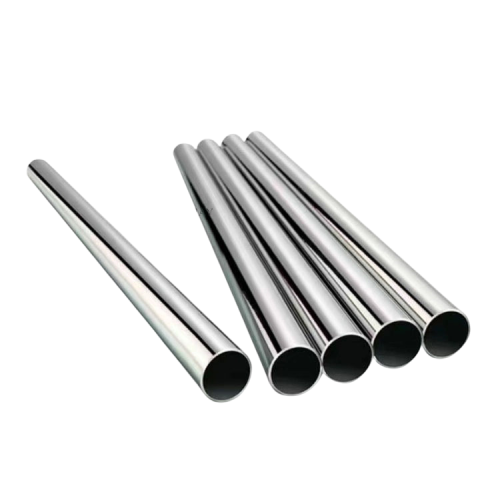
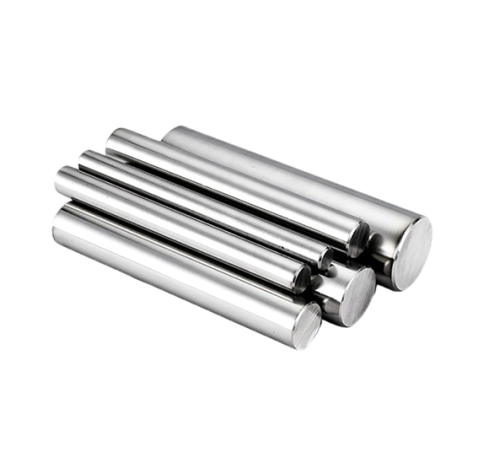
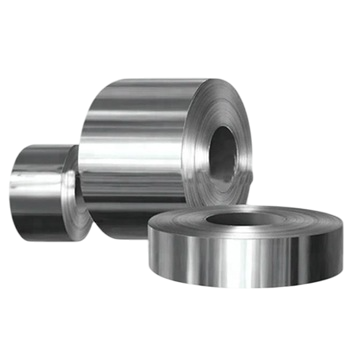
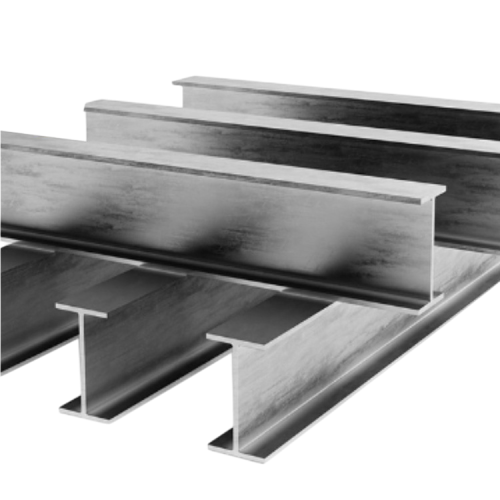
Form drives method. Thin coil and strip is usually treated before slitting, sheet and plate as cut blanks, pipe bores by circulation, bar by immersion. A buyer sourcing several forms on one project should expect several treatment routes and several line items.

ASTM A380 is the practice for cleaning, descaling and passivation of stainless steel parts. It defines the treatments, covers pre-cleaning, and keeps pickling and passivation as separate operations. Read it as accepted practice rather than a recipe: it does not fix one acid, one concentration and one dwell, and it is not written to be enforced line by line.
ASTM A967 is where passivation acceptance lives. It covers nitric and citric passivation and, crucially, the test methods and criteria used to accept the result. If you want a passivation test result on the certificate, cite A967 with a named test class, not A380 alone.
For aerospace and EN-governed work, BS EN 2516 is the passivation reference to name. A global buyer often needs both frames in the same specification package, particularly where a European client specification sits above an ASTM-based supply chain.
Because both documents give ranges, two suppliers can claim full compliance and deliver visibly different surfaces. Your purchase order has to close that gap by fixing the acid system, concentration, temperature, dwell, rinse water chloride limit and acceptance test. The standard tells the supplier what good practice looks like; the clause tells them what you will pay for.
A line reading pickled and passivated per ASTM A380 asserts that the practice was followed. It does not assert that any test passed. Only a named acceptance test does that, which is why the clause and the test belong together.
Keep the scope straight, too. A380 and A967 govern shop surface treatment, while the welding procedure and its qualification sit under separate documents. No amount of acid rescues a bad weld procedure, and the failure modes that start at the arc are covered in why stainless steel welds fail and how to fix it at the source.
Some surfaces must be kept away from acid, and treating them anyway is a self-inflicted nonconformance. Others are simply not worth the risk. This table is the one to copy into your specification review.
| Surface or feature | What acid does to it | Specify instead |
|---|---|---|
| Machined sealing faces, gasket grooves, flange faces | Removes metal, destroys the finish that makes the joint seal | Mask and list by name on the drawing |
| Precision bores, honed cylinders, valve seats | Opens tolerances and leaves smut that is hard to rinse out | Plug and mask, or pickle before final honing |
| Hardened martensitic parts, e.g. 420 plate at HRC 50 to 55 | Hydrogen pickup plus high hardness equals cracking risk | Documented risk decision, citric passivation or mechanical cleaning |
| Precipitation-hardening grades in H900 to H1150 | Same hydrogen concern, worse in the aged condition | Agree the treatment sequence before hardening |
| Already-sensitized material | Cleans the surface, leaves grain-boundary chromium depletion | Re-solution anneal or change grade |
| Assemblies with carbon inserts, springs, bearings, cavities | Acid stays in the cavity and bleeds out weeks later with iron in it | Strip the assembly or exclude it from treatment |
| Thin ferritic and thin austenitic sheet | Each pass removes measurable thickness and dulls the face | Trial a sample, then fix dwell and concentration |
| Mirror, patterned and embossed finishes | Changes the finish permanently | Treat before polishing or mask entirely |
| Installed equipment near sealants, electronics, galvanized steel | Gel runs and fumes attack neighbouring material | Isolate, or treat off site |
| Welded duplex 2205 and 2507 | Leaving it unpickled is a corrosion decision, and usually the wrong one | Pickle, then passivate. No exceptions. |
Picture a buyer who approves a paste treatment across a whole tank bottom to save masking time, then finds the machined outlet flange face leaking at hydro test. Nothing was wrong with the acid. The specification simply never said which surfaces were excluded, and nobody at the shop was paid to guess. For the wider grade-selection logic that sits above this decision, the guide to stainless steel selection and value covers the trade-offs by application.
Most acceptance arguments happen because the test that was specified proves something other than what the buyer assumed. Pick the test that matches the failure mode you actually fear.
| Test | What it detects | What it misses | Require it when |
|---|---|---|---|
| Visual inspection under raking light | Colour bands, smut, paste boundaries, residual spatter, water marks | Sub-microscopic free iron and film integrity | Every delivery, before any test is run |
| Ferroxyl test | Free iron on the area tested | Whether the passive film is intact, and anything in a crevice | Welds and heat-affected zone after treatment |
| Copper sulfate test | Chemically active, incompletely passivated surface | Chloride residue in crevices | Passivation acceptance on flat, accessible faces |
| Boiling water or high-humidity exposure | Rust on inadequately treated coupons within hours to days | Crevice and clean-in-place behaviour | Qualifying a new treatment supplier |
| Salt spray to ASTM B117 | Relative ranking between two surfaces | Your real service electrolyte, crevices, chlorinated wash cycles | Comparing suppliers on coupons, not accepting a vessel |
| Final rinse water chloride check | Chloride carried into the surface at the last step | Everything else | Every treatment lot |
The rinse water test is the one almost nobody writes into a contract, and it is the best single predictor of tea staining. Test the water, not only the surface.
Name the limit plainly: no acceptance test guarantees field performance. Test selection is a choice about which failure mode you are willing to carry risk on, and that choice belongs to the engineer who knows the service environment.

Six elements turn a vague instruction into something enforceable. Lift them, adapt the limits to your service environment, and put them on the order.
Quarantine the part. Photograph it under raking light. Run a ferroxyl test on the suspect area and on clean parent metal for comparison. Then classify the cause, because the four buckets have different remedies and different payers.
The diagnostic rule worth memorising: a treatment defect sits on the treated surface, at a paste boundary, or in a low spot that did not drain. A base-material defect shows up on untreated material too and generally runs with the rolling direction.
Rework has a limit. Every re-pickle removes more metal, so on thin gauge, a polished face or a tight tolerance, one retry may be all the part can take before it becomes scrap. Budget for that possibility when you write the clause, not when you are staring at a failed tank.
One more boundary to set: a 3.1 mill test certificate, which Walmay issues on every heat shipped, certifies heat chemistry and mechanical properties. It is not evidence that pickling or passivation was performed, or performed well. Those are separate documents and a separate inspection.
Treatment is a line on the schedule and a line in the budget, and the cheapest moment to decide it is before the first weld is laid.
Where Walmay fits: we supply 316L in sheet and plate from 0.3 to 150 mm, coil and strip from 0.2 to 6.0 mm, pipe and tube from NPS 1/2 to 24, and bar from 3 to 350 mm, across more than 300 grade and size combinations, with a 3.1 mill test certificate on every heat and more than 10,000 tons of regular stock behind a two-week lead time on standard products. That covers grade, form, finish and documentation. Pickling and passivation of the finished fabrication is a shop or site step that the buyer specifies and inspects, and we will say so plainly rather than let a certificate imply otherwise. Since 2015 we have shipped into more than 100 countries, and the treatment clause is one of the first things worth agreeing. Send the drawing and the service environment, and the team will quote the material within two hours with the full MTR and flag where the surface specification needs tightening.
Yes, usually with paste, gel or spray circulation, and it is common on repair welds and field-erected vessels. It is also a regulated activity in many jurisdictions, with containment, ventilation and spent-acid disposal obligations. Rinse water must be captured rather than drained to the floor, and adjacent sealants, electronics and galvanized steel need protection from runs and fumes.
It removes free iron particles that are causing the rust, and it restores the passive film on clean steel. It will not remove heat tint, weld scale or heavy corrosion product. If the surface is discoloured or pitted, it needs pickling first. Passivation applied over rust or tint leaves both in place and only makes the surface look marginally better.
Thirty to sixty minutes of dwell is typical for weld seams and heat tint, depending on acid strength, temperature and how heavy the oxide is. Cold weather stretches it, direct sun shortens it. Gel on a vertical seam also creeps downward, so the top can be under-treated while the bottom is over-pickled. Rinse fully or the boundary line stays visible.
For passivation of clean steel, citric acid works and is easier on operators and effluent, with no nitrate stream to manage. It is weaker on heavy free iron and useless on heat tint. Nitric remains the safer default where contamination levels are unknown or the surface has seen carbon steel tooling. Either way, passivation is not a substitute for pickling.
 Industry Knowledge
 Industry Knowledge
 Industry Knowledge
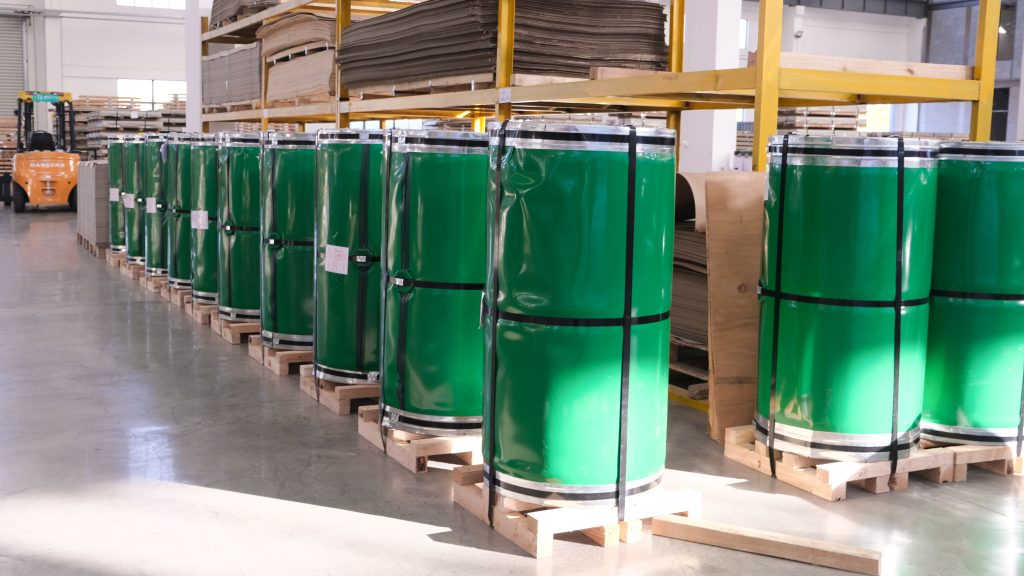
Walmay will help match the right stainless product form and specification for your application, confirm quantities and packing needs, and provide requested documents based on order requirements.