
 By Walmay
 05 Oct, 2026
 8 Minutes Read
The fastest way to spot counterfeit stainless steel is to combine three checks: an XRF analyzer reading on the actual material (not the certificate), a chloride spot test for corrosion resistance, and a careful audit of the mill test certificate against the supplier’s mill of origin. Visual inspection and magnet tests alone will fool you — modern counterfeiters know exactly how to game those. The most common scam isn’t fake steel at all; it’s grade substitution, where 201 or 202 gets sold as 304, or 316L gets swapped for 316 with a forged MTC.
Industry estimates suggest 8–15% of stainless steel sold on secondary markets is misrepresented in some way. That’s not tinfoil-hat territory — it’s the reality of a commodity where nickel alone can account for 60% of raw material cost. Drop nickel from 8% to 1% and you save real money. Buyers usually don’t notice until something rusts.
The damage isn’t just financial. A food processing client we worked with discovered their “304” tanks were actually 201 only after pitting corrosion forced a full FDA-mandated shutdown. The replacement cost was twelve times what they “saved” on the cheaper steel. That’s the real economics of counterfeit stainless: you pay later, and you pay worse.
For a refresher on what you should actually be receiving, our guide on the different types of stainless steel covers the grade families counterfeiters most often abuse.


Almost every buyer’s first instinct is to slap a magnet on the steel. If it sticks, fake. If it doesn’t, real. This is wrong about half the time.
Austenitic grades (304, 316) are non-magnetic in annealed condition. But cold-work them — bending, rolling, deep drawing — and they pick up some magnetism. A 304 sheet that’s been cold-rolled can absolutely tug a fridge magnet. Meanwhile, ferritic grades like 430 are strongly magnetic but still genuine stainless steel.
The cheap substitutes — 201 and 202 — are technically austenitic and slightly magnetic in their as-rolled state, but often barely enough for a casual buyer to notice. A weak pull on a thin sheet means almost nothing.
Use the magnet to flag suspicious material, never to clear it. If 304 shows strong magnetism on a cold-rolled coil, that’s a signal worth investigating. If it’s weakly magnetic, that’s normal.
Here’s a $20 trick that has saved buyers tens of thousands. A drop of ferric chloride solution (10% concentration) on a clean steel surface will reveal corrosion resistance differences within 30–60 seconds.
For instance, a kitchen equipment importer we spoke with started doing spot tests on every incoming coil after one bad shipment. They catch about one questionable batch per quarter — usually 201 dressed up as 304 — and have stopped roughly $400K in claims at the dock instead of after fabrication.
Combine this with a saltwater immersion test (a small sample in 5% NaCl for 48 hours) for higher-stakes orders. Genuine 316L should show essentially no surface change. 304 will show minor tea-staining. Anything pitted is not what the certificate says it is.

A handheld XRF (X-ray fluorescence) gun is the most consequential piece of equipment a stainless steel buyer can own. Point it at the material, pull the trigger, get a full elemental breakdown in 10–30 seconds. Nickel, chromium, molybdenum, manganese — all of it.
If your “304” reads 5% nickel and 7% manganese, it’s 201. No discussion. The XRF doesn’t care what the paperwork says.
XRF can’t reliably measure carbon, which means it can’t distinguish 316 from 316L on its own. For that, you need lab spectrometry. But for the 95% of counterfeit cases that involve nickel-poor substitutes, XRF is the answer.
Decent used units start around $8,000. New ones run $15K–$40K. If you import more than 100 tons a year, the ROI is almost embarrassing.
A mill test certificate (MTC) is supposed to be your proof of authenticity. In practice, MTCs are forged constantly — often badly enough that a careful reader can spot it.
Call the mill. Real mills (Outokumpu, POSCO, Tsingshan, Aperam, Acerinox, Baosteel) have verification departments. Give them the heat number and the certificate number. They will tell you within an hour whether it’s real. This single step kills the majority of paperwork scams.

Most counterfeit problems are predictable from the supplier behavior before the material ships. Watch for these patterns:
A construction contractor sourcing 316L handrails for a coastal hotel project used these criteria to reject three suppliers and select a fourth. The chosen supplier passed XRF on arrival without a single non-conforming coil — across 80 tons.
Counterfeiters aren’t creative. They run the same swaps over and over because they work.
The big one. 201 uses manganese to replace most of the nickel. Looks identical, costs 25–35% less, fails in chloride environments within months. Common in cookware, sinks, decorative tube, and budget construction.
The carbon difference (0.08% vs 0.03% max) is invisible without a lab test. Matters enormously for welded applications because higher-carbon 316 sensitizes during welding and corrodes at the heat-affected zone. Common in pharma and food pipework.
Less common because 430 is obviously magnetic, but still happens in cookware exports. The 430 vs 304 comparison walks through the legitimate trade-offs — but only when the buyer actually knows which one they’re getting.
For coastal or offshore projects, this is the worst one. Our piece on stainless steel in seawater explains why even genuine 304 fails in chloride exposure, let alone substituted grades.


Catching one bad shipment is luck. Catching them consistently requires a system. Here’s the workflow that actually works:
This sounds heavy, but for a buyer moving 500+ tons a year, it adds maybe 0.3% to landed cost and eliminates the catastrophic-loss risk that defines the alternative.
You ran XRF on incoming material and it’s wrong. Now what?
If the material hasn’t been accepted into your warehouse, you have far more leverage. Halt unloading, document everything with photos and video, and notify the supplier in writing within the same business day.
A handheld XRF reading is strong evidence but not court-grade. Send a sample to an accredited lab (SGS, Intertek, BV) for OES or wet chemistry analysis. Cost: $80–$200. This becomes your legal proof.
Bank transfers gone to fraudulent suppliers are rarely recoverable. This is exactly why pre-shipment verification matters more than post-arrival remedies.

The cheapest counterfeit detection method is choosing a supplier who doesn’t sell counterfeits. Sounds obvious, but most counterfeit headaches trace back to buyers chasing the lowest quote on Alibaba or a stranger’s WhatsApp message. Reputable mill-direct or vetted-distributor channels cost 5–10% more and eliminate roughly 95% of the risk.
If you’d like to discuss verification protocols for a specific order, or want to see our standard MTC and inspection process, browse our stainless steel product range or get in touch through our team page. We’d rather help you ask the right questions upfront than help you write a dispute letter six months later.
 Industry Knowledge
 Industry Knowledge
 Industry Knowledge
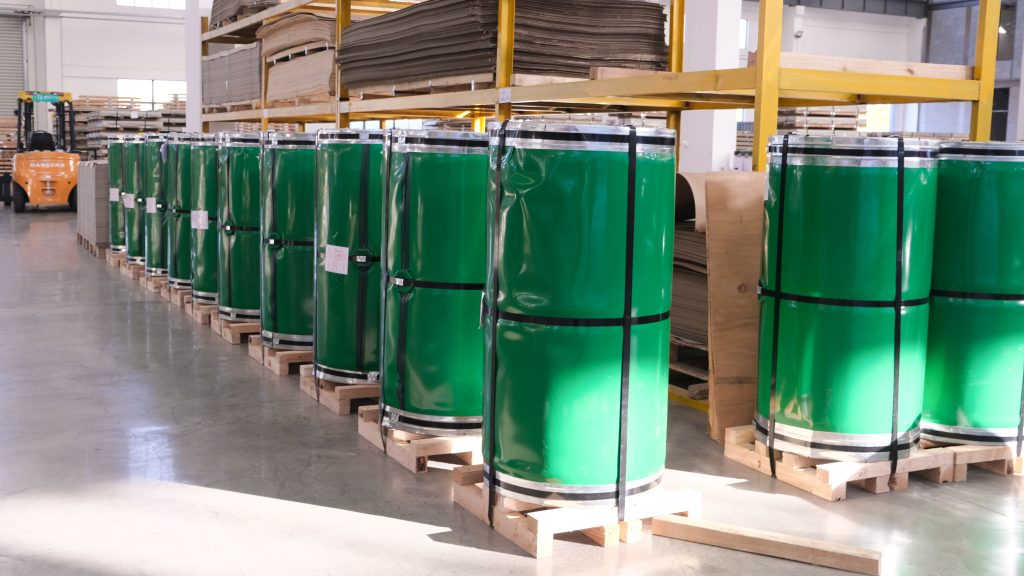
Walmay will help match the right stainless product form and specification for your application, confirm quantities and packing needs, and provide requested documents based on order requirements.