
 By Walmay
 12 Oct, 2026
 11 Minutes Read
Annealing temperature controls corrosion resistance in 316L because it determines whether chromium carbides dissolve back into the matrix or precipitate at grain boundaries, starving adjacent areas of the chromium needed for passive film formation. The correct solution-anneal window for 316L is roughly 1040-1150°C (1900-2100°F) followed by rapid cooling. Anneal too low or cool too slowly and you get sensitization and pitting at welds and grain boundaries; anneal too high or hold too long and you risk grain growth and sigma phase that hurt corrosion performance just as badly.
Key Takeaways
Every 316L sheet, bar, or tube arrives at the mill with carbides already formed from hot rolling. Solution annealing exists to dissolve those carbides back into the austenite matrix before the material ever reaches a fabricator. Skip that step, or do it wrong, and the carbon sits at grain boundaries waiting to cause trouble later.
The ‘L’ in 316L means low carbon, typically capped around 0.03%, which slows carbide formation compared to standard 316. But low carbon buys you margin, not immunity. It widens the safe cooling window; it doesn’t eliminate the physics. Corrosion resistance in any austenitic grade depends on an unbroken, chromium-rich passive film covering the surface. The moment chromium gets tied up in a carbide instead of staying dissolved in the matrix, the adjacent zone drops below the roughly 10.5% chromium threshold needed to repassivate. That thin depleted band becomes the weak point, not the bulk material.
Cooling rate after the anneal matters just as much as peak temperature. Slow cooling through the 425-870°C range gives carbides time to re-precipitate even after a perfect solution anneal. That’s why rapid water quench or forced-air cooling is specified, not optional, especially on heavier sections where the core cools slower than the surface.

The standard solution-anneal window for 316/316L is 1900-2150°F (1040-1175°C), though most mill technical sheets tighten that to 1900-2100°F (1038-1149°C) followed by air cooling or quenching. That’s the number to look for on a technical data sheet, and it’s the number your supplier should be able to confirm was actually used, not just referenced.
Additive-manufactured 316L follows the same principle with different specifics. EOS’s data sheet for powder-bed 316L calls for a solution anneal at 1150°C, minimum 1.5 hour hold once the part is thoroughly heated through, followed by water quenching. The target temperature sits near the top of the wrought range because the as-built microstructure from laser melting is different, but the underlying goal, redissolve carbides and quench fast, is identical.
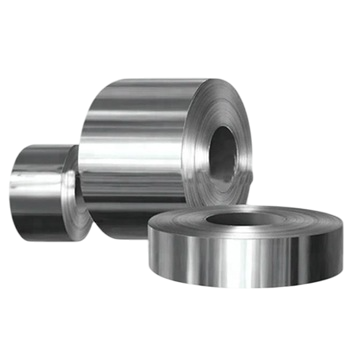
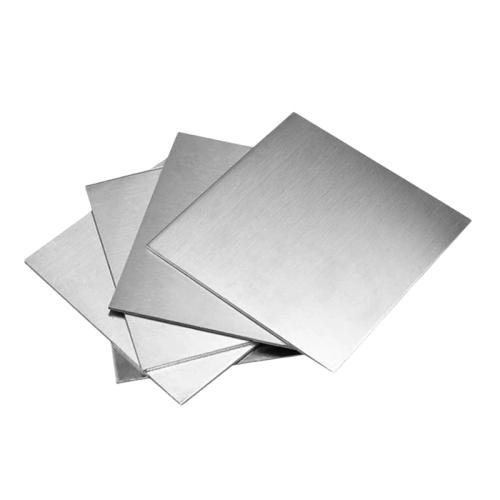
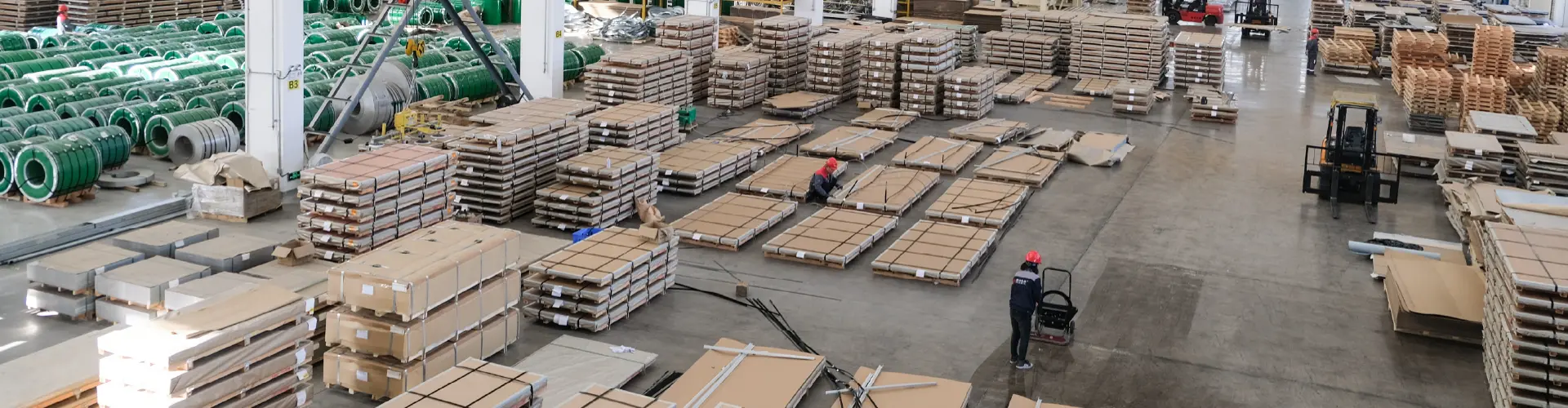
A 1.5 mm coil doesn’t need anywhere near the soak time of a 100 mm plate. Walmay’s sheet and plate range runs 0.3-150 mm thick, up to 2,000 mm wide, across grades including 316L and 2205, and the heavier end of that range needs proportionally longer hold times to get the full cross-section through the carbide-dissolution temperature before quenching starts. Heat treatment options including solution anneal and stress relief are specified by section, not applied as a blanket recipe.

Solution annealing 316L is a controlled furnace operation, not something achievable with a handheld torch on a finished part. The sequence matters and skipping a step defeats the purpose.
This is why coil annealing lines and plate furnaces are built into mill and service-center production rather than being a shop-floor option. Walmay operates as a mill-backed service centre with production relationships to major mills including POSCO and Tsingshan.
One important distinction: post-weld or post-forming stress relief is a different, lower-temperature operation. It relaxes residual stress but does not fully redissolve carbides the way a true solution anneal does. Don’t confuse the two when specifying heat treatment on a purchase order.
If a 316L vessel starts pitting, look at the weld seams first. Sensitization happens when chromium carbides precipitate at grain boundaries during slow cooling or reheating, and the heat-affected zone next to a weld is exactly where that slow thermal cycle occurs naturally.
The chromium-depleted zone next to each carbide loses its ability to maintain a passive film. It becomes anodic relative to the surrounding, chromium-rich metal, and the result is intergranular corrosion that can be invisible to a visual inspection until the part is already in service in a chloride or acidic environment. By the time it shows up as a weeping seam or a failed pressure test, the damage is already structural.
This is precisely why welded 316L fabrications headed for chemical or marine duty often specify post-weld annealing, and why low-carbon chemistry alone is not a guarantee against sensitization. It raises the time and temperature window needed to cause the problem; it doesn’t remove the window entirely. For related reading on why weld zones specifically need attention, see how 316L performs across different weld-exposed industries, and if the ultra-low carbon route is on the table, 304L’s low-carbon chemistry serves the same welding-corrosion purpose for food and chemical vessels where full 316L performance isn’t required.

More annealing is not automatically safer. That assumption trips up a lot of procurement decisions, and it’s worth correcting directly.
Annealing above roughly 1200°C, or holding at temperature too long, coarsens the austenite grain structure. Coarser grains mean fewer grain boundaries overall, which sounds like it should help, but it also reduces mechanical strength and can concentrate corrosion-relevant precipitates differently than expected. Efremenko et al. (2025, MDPI) studied laser powder-bed fused 316L and found that annealing at 900-1200°C measurably reduced corrosion resistance compared to the as-built condition, directly contradicting the assumption that heat treatment always improves a part. Ura-Bińczyk et al. (2022, ScienceDirect) examined wrought 316L corrosion behavior after annealing at 1100°C and 1200°C and documented similar degradation, tied to microstructural changes during the thermal cycle rather than the final hold temperature alone.
Sigma phase is the other risk. It forms in the 600-1000°C range during slow transit through the furnace, not just at a low final target temperature, and it embrittles the material while locally depleting chromium in a way that mirrors carbide precipitation. A furnace that heats or cools slowly through that band can introduce sigma phase even if the peak temperature and final cooling were textbook correct.
The practical takeaway for buyers: a mill certificate that simply says “solution annealed” without stating the temperature and cooling method is not enough to confirm corrosion performance. You’re buying a process outcome, not a checkbox.
316L’s baseline corrosion resistance comes from its molybdenum addition, typically 2-3%, which resists chlorides and pitting noticeably better than straight 304, combined with the low carbon content that raises its resistance to sensitization during welding and fabrication.
Properly annealed 316L resists mild acids, moderate chloride concentrations, and most food and pharmaceutical cleaning chemicals without issue. That’s the performance baseline everyone assumes when they order the grade.
But poorly annealed 316L can actually underperform 304 in chloride service, because sensitized grain boundaries create preferential attack sites regardless of how much molybdenum is sitting in the bulk alloy. The molybdenum doesn’t help a spot that’s already chromium-depleted.
Pitting resistance equivalent, or PRE, is a bulk composition number calculated from chromium, molybdenum, and nitrogen content. It assumes the microstructure is correct and uniform. Annealing is the variable that determines whether the material actually delivers that theoretical PRE in service or falls short of it at every grain boundary that wasn’t properly treated. For a broader look at how 316L stacks up against grade alternatives, see this grade comparison guide.
Green or colored discoloration on 316L is almost always surface contamination, not a sign that the bulk material was badly annealed. Heat tint from welding without proper shielding gas, or free iron pickup from contact with carbon steel tooling, are the usual culprits.
Heat tint specifically forms when a weld is run without adequate inert gas coverage, letting the surface oxidize in a rainbow or green-tinted band around the weld. It’s fixed by pickling or passivation, not by reheating the whole part through a solution anneal cycle. The underlying metallurgy is unaffected; it’s a surface chemistry problem.
True annealing-related corrosion failure looks completely different. It shows up as pitting or intergranular attack at grain boundaries, not as a uniform color change across the surface. If you’re inspecting a coil or plate, don’t assume a discolored patch means the whole heat was poorly heat treated. The two issues have separate root causes and separate fixes, and conflating them leads to either unnecessary rejections or, worse, overlooking an actual sensitization problem because it doesn’t look as dramatic as a heat-tinted weld.
A certificate without specifics is just paperwork. Before accepting a 316L heat for corrosive service, push for the details that actually confirm proper annealing happened.
Walmay ships to more than 100 countries with an EN 10204 3.1 mill test certificate on every heat, produced to ASTM, ASME, EN, DIN, and JIS standards, across a coil and strip range from 0.2-6.0 mm up to 1,500 mm wide in 316L and other grades. As a mill-backed service centre, Walmay can walk through the certificate details with you rather than just handing over a spec sheet number, and typically returns an official quotation with full MTR within two hours of inquiry.

316L resists mild acids, chlorides at moderate concentration, and most food and pharmaceutical cleaning chemicals, thanks to molybdenum addition and low-carbon chemistry. But that resistance is only fully delivered when the material is properly solution annealed; sensitized grain boundaries can underperform even 304 regardless of bulk molybdenum content.
316 is heated to 1040-1150°C (1900-2100°F), soaked long enough for the full section thickness to equalize, then rapidly cooled by water quench or forced air to pass quickly through the 425-870°C carbide-precipitation zone. This is a controlled furnace operation done at the mill, not a shop-floor task.
316/316L maintains useful mechanical and corrosion properties up to roughly 870°C for continuous service, though oxidation resistance and strength drop above that. For annealing purposes specifically, the solution-anneal target is 1040-1150°C, a separate and much higher temperature than its service limit.
Green discoloration on 316L is almost always surface contamination, such as heat tint from unshielded welding or free iron pickup, not a sign of bulk annealing failure. It’s fixed with pickling or passivation. True annealing-related corrosion shows up as pitting or intergranular attack, not uniform color change.
 Industry Knowledge
 Industry Knowledge
 Industry Knowledge
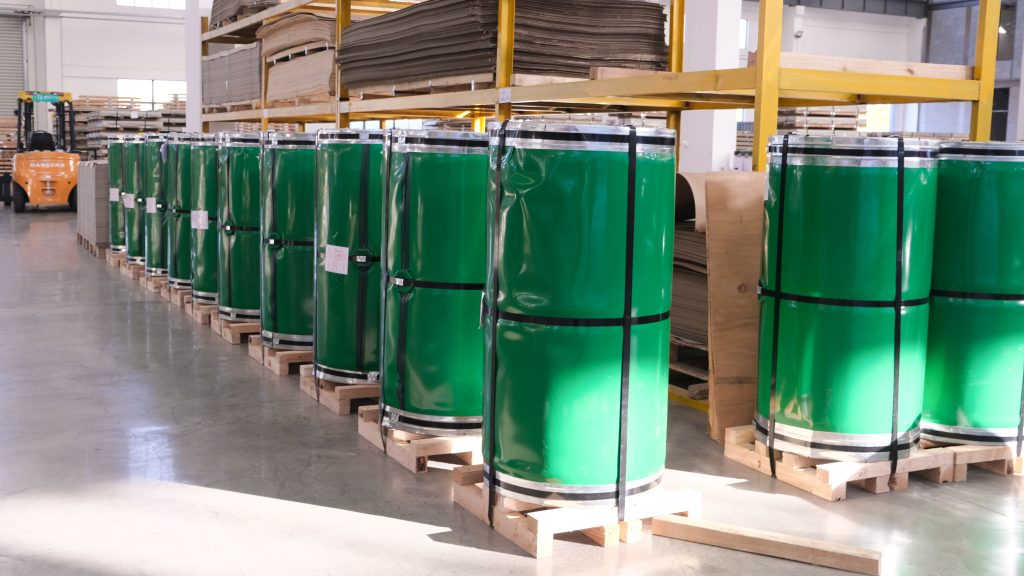
Walmay will help match the right stainless product form and specification for your application, confirm quantities and packing needs, and provide requested documents based on order requirements.